

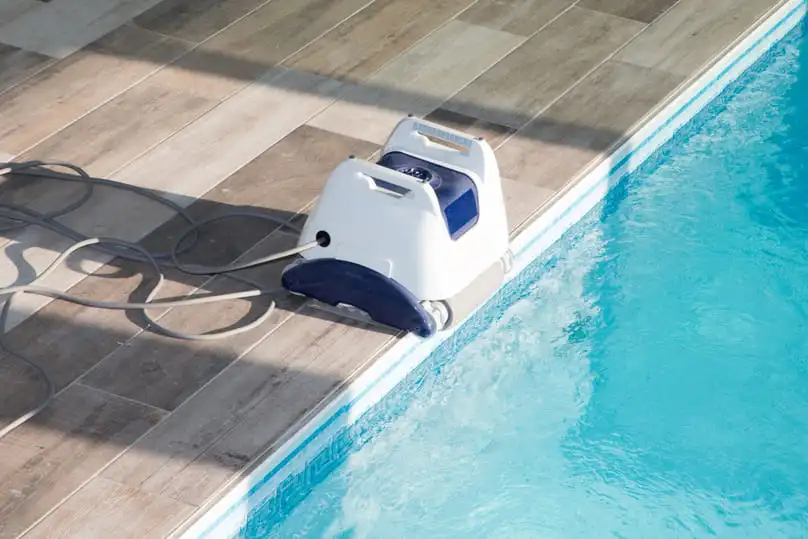
Keeping a pool free from leaves, sand, insects, and fine debris can take more time than expected. A robot may reduce the hands-on work, but choosing among the best pool vacuum robots is not as simple as buying the model with the most features. The wrong cleaner may struggle with your pool’s surface, miss the waterline, fill too quickly, or run out of power before completing a cycle.
The solution is to compare the cleaner with the pool, not just with other products. This guide explains the features, trade-offs, and use cases that help determine which robotic pool cleaner fits your pool. While the robot handles submerged debris, Yorleny’s house cleaning services help South Florida homeowners maintain the indoor spaces surrounding their everyday routines.
How to Choose the Best Pool Vacuum Robots: Quick Steps
- Confirm whether the cleaner supports an inground or above-ground pool.
- Match its rated coverage to the pool’s dimensions and shape.
- Check compatibility with the floor and wall materials.
- Identify whether leaves, sand, silt, or mixed debris is the main problem.
- Verify floor, wall, step, and waterline capabilities separately.
- Compare corded power, cordless runtime, filter access, weight, and support.
Important Note: There is no universal best model, and Yorleny’s has not independently tested or ranked these products. Verify current compatibility, specifications, safety instructions, warranty, and operating requirements before purchasing.
What Are Pool Vacuum Robots and How Do They Work?
Pool vacuum robots are self-contained devices designed to scrub and vacuum swimming-pool surfaces. They use brushes to loosen dirt and an internal filtration system to trap debris.
Unlike traditional systems, a swimming pool robot cleaner operates independently of the pool’s main pump and filter. Its electric motor powers movement and water flow, while the navigation method may range from basic programmed movement to sensor-assisted route planning.
For a closer explanation of manual, suction-side, pressure-side, and robotic systems, understanding how each type of pool vacuum moves water and collects debris makes the differences easier to compare.
How Robotic Pool Vacuums Differ From Manual and Suction Models
A robotic pool cleaner works independently from the pool’s primary circulation system. Manual vacuums demand physical guidance, while suction-side models rely on the pool pump and usually send debris toward the main filter.
Robotic cleaners collect debris in their own basket, bag, or cartridge. However, their coverage varies: some clean only the floor, while others may climb compatible walls, scrub the waterline, or skim the surface.
When Are Pool Vacuum Robots the Right Choice?
Pool vacuum robots can help homeowners who want a lower-effort way to collect recurring debris. They may be especially useful for medium or large pools, frequent use, or locations that receive leaves and windblown material.
A robot may be less practical when the pool is very small, contains unusual steps or ledges, has an incompatible surface, or needs chemical treatment and repairs rather than routine debris removal.
Which Robotic Pool Cleaner Fits Your Pool?
| Pool condition | Feature to prioritize | What to verify |
| Above-ground pool | Lightweight, floor-focused cleaner | Wall material, maximum dimensions, slope limits |
| Large inground pool | Sufficient coverage and runtime | Rated pool length or area, cord length or battery runtime |
| Heavy leaves | Large, accessible debris basket | Intake opening, basket capacity, emptying frequency |
| Sand or fine silt | Compatible fine-filtration option | Filter rating and replacement availability |
| Walls and waterline | Proven climbing and scrubbing modes | Surface compatibility and waterline coverage |
| Irregular shape or obstacles | Suitable navigation and maneuverability | Steps, drains, ledges, curves, and shallow zones |
This table is more useful than choosing solely by price. The best pool vacuum robots are the units that can complete the required coverage without creating unnecessary setup, retrieval, or maintenance work.
When comparing the best pool vacuum robots, eliminate any model that does not explicitly support the pool’s construction, dimensions, surface, and primary debris type.
Benefits of Using a Robotic Pool Cleaner
Save Time and Energy
- Saves hands-on time: Robotic pool cleaners can collect debris without the continuous guidance required by a manual vacuum.
- Scheduled operation: Some models support recurring cycles, although scheduling features and how long the unit may remain in the water vary.
- Independent filtration: The robot’s motor and filter operate separately from the pool’s main pump and filter system.
Improve Cleaning Efficiency With Smart Technology
Some modern robotic cleaners use sensors, gyroscopes, cameras, sonar, or programmed routes to improve movement. These features can reduce unnecessary passes, but they do not guarantee complete coverage of every pool.
Pool robots are one example of a broader move toward smart cleaning tools that automate repetitive maintenance. In every setting, automation works best when the device is matched to the surface, maintained correctly, and supported by manual attention where needed.
Understand the Potential Savings
Because a robotic cleaner does not depend on the primary pool pump for movement and debris collection, it may reduce some circulation-system workload during cleaning. Actual electricity, chemical, repair, or labor savings depend on the equipment, operating schedule, local utility rates, and the maintenance the pool still requires.
A robotic cleaner does not replace water testing, disinfection, brushing, filtration, or professional equipment service. It also cannot be expected to reduce chemical use unless the water is tested and managed appropriately.
Must-Have Features in a Robotic Pool Cleaner
Corded vs. Cordless Models
Corded robotic pool cleaners provide continuous power and can support longer cleaning cycles, making them practical for some large pools. However, the cable must be managed and connected according to the manufacturer’s safety instructions.
Cordless variants remove the cable from the water and may be easier to deploy, but battery runtime, charging time, retrieval, and eventual battery replacement become important. Suction strength and coverage cannot be predicted from the power type alone.
Filtration and Debris Capacity
Compare the debris basket or cartridge with what normally falls into the pool. Large leaves need sufficient intake and storage capacity, while sand and fine particles may require a compatible fine-filter insert. Avoid relying on an unsupported micron claim; manufacturers measure and describe filtration differently.
Floor, Wall, Step, and Waterline Coverage
Treat each surface as a separate capability. A model advertised as a wall climber may still have difficulty with sharp transitions, narrow steps, raised drains, slippery surfaces, or unusual geometry. Confirm the pool material and read the limitations in the current manual.
Cleaning Cycles and Navigation
Useful options may include floor-only, wall, waterline, quick, deep, or scheduled cycles. More modes do not automatically produce better results; the cleaner still needs enough runtime and suitable navigation for the pool’s dimensions and obstacles.
Weight, Retrieval, Parts, and Support
Check the cleaner’s wet weight, handle design, retrieval method, filter access, warranty, authorized service options, and availability of brushes, tracks, baskets, cables, batteries, and other replacement parts. A capable robot that is difficult to lift or repair may become inconvenient over time.
Pool Vacuum Robots to Compare in 2026
The following examples remain from the original article’s research, but they are organized by use case instead of presented as universal winners. Confirm every current specification with the manufacturer before selecting a model.
This shortlist is a starting point for researching the best pool vacuum robots, not a claim that one product will perform best in every installation.
| Use case | Example to research | Primary checks before buying |
| Above-ground, floor-focused cleaning | Dolphin E10 | Pool dimensions, cord length, floor material, wall coverage |
| Cordless inground cleaning | Aiper Scuba S1 | Runtime, pool size, slope, wall and waterline capability |
| Premium multi-surface automation | Beatbot AquaSense 2 Ultra | Weight, modes, filtration, retrieval, service and support |
| Compact above-ground use | Polaris Pixel | Pool shape, surface, debris capacity, floor-only limitations |
Best Pool Robot for Inground Pools
An inground model should match the pool’s length, depth transitions, surface material, and geometry. If wall and waterline cleaning matter, verify those functions rather than assuming every inground robot includes them. Large or complex pools may also need longer runtime, continuous corded power, or a battery rated beyond the minimum expected coverage.
Best Pool Robot for Above-Ground Pools
For above-ground pools, prioritize surface compatibility, low weight, simple retrieval, and reliable floor cleaning. Aggressive wall climbing may not be necessary or suitable for flexible walls. Confirm the maximum pool dimensions and whether the cleaner can handle the cove where the floor meets the wall.
Best Pool Vacuum for Leaves, Sand, or Algae Residue
For leaves, look for a wider intake and a basket that will not fill too quickly. For sand and silt, verify the fine-filtration option. A robot may collect loose algae residue after brushing and appropriate treatment, but it does not kill algae or correct sanitizer and pH levels.
How to Maintain and Care for Your Pool Robot
Clean the Filter After Each Cycle
Remove the cleaner according to its manual, switch it off, empty the debris, and rinse the basket or cartridge before material dries onto it. Maytronics’ official robotic pool cleaner maintenance guidance also recommends prompt filter cleaning because restricted water flow can reduce performance.
Inspect Brushes, Tracks, Intake, and Cable
Check for hair, leaves, or string wrapped around moving components. Inspect the cable, charger, seals, brushes, wheels, tracks, and impeller only as directed by the manufacturer. Disconnect power before performing maintenance on a corded unit.
Rinse, Dry, and Store the Robot Correctly
Rinse pool-water residue from the unit when recommended, allow the required components to dry, and store the cleaner in a shaded, protected location. Remove the robot before chemical shock treatments unless its manufacturer explicitly states otherwise. Battery storage and charging instructions vary by model.
When a Pool Vacuum Robot Is Not Enough
Even the best pool vacuum robots cannot balance water chemistry, repair a pump, diagnose a leak, remove every stain, or guarantee sanitary water. Continue skimming, brushing, testing disinfectant and pH, maintaining the circulation system, and arranging qualified pool service when equipment or water conditions require it.
Yorleny’s Cleaning Service does not specialize in pool maintenance. Instead, our team provides residential cleaning throughout South Florida, helping maintain kitchens, bathrooms, bedrooms, and other indoor living areas while homeowners manage their pool separately. To confirm the right cleaning option for your property, contact Yorleny’s Cleaning Service.
FAQs About the Best Pool Vacuum Robots
Can I Use a Robot in a Saltwater Pool?
Some pool vacuum robots are compatible with saltwater pools, but compatibility and maximum permitted salinity vary. Check the manufacturer’s documentation, maintain the required water balance, rinse the unit when instructed, and do not leave it in the pool longer than approved.
Do Robots Clean Stairs or Waterlines?
Some do, but those functions depend on the cleaner and pool geometry. Wall climbing does not automatically mean that a robot can clean narrow steps, benches, sharp corners, or the complete waterline. Verify each surface separately.
How Long Do Pool Vacuum Robots Last?
There is no reliable universal lifespan. Longevity depends on build quality, frequency of use, water chemistry, storage, maintenance, battery or cable condition, replacement-part availability, and whether the cleaner is operated within its specifications.
Can a Robotic Pool Cleaner Remove Algae?
It may brush surfaces and collect loose algae residue, but it cannot sanitize the water or replace appropriate algae treatment. Water chemistry, circulation, filtration, and brushing must address the underlying condition.
Should I Choose a Corded or Cordless Pool Robot?
Choose corded power when continuous runtime and larger coverage outweigh cable management. Choose cordless when simple deployment matters and the rated battery runtime can cover the pool. Also compare charging time, wet weight, retrieval, replacement-battery options, and the cleaning modes included.

Reviewed by:
Tony Loeffler is the Co-Founder of Yorleny's Cleaning Service and a leader in residential cleaning services. As a content reviewer and writer, he is an expert around the cleaning services in Florida, specifically West Palm Beach County.
Recent Articles

How to Clean Seasonal Decorations and Holiday Decor Safely
The holiday season is the perfect time to decorate our homes with lights, ornaments, and magical touches. However, before reusing decorations that…

How to Clean Up Glitter From Floors, Carpet, and Furniture
Glitter is a frustrating holiday mess, clinging to fabrics and sticking via static electricity. Knowing how to clean up glitter quickly prevents…

How to Get Food Coloring Off Skin, Clothes, Carpet, and Counters
If you or your children are dyeing Easter eggs or getting creative with crafts, it is very likely that some of the…
See below to check if our top-quality house cleaning services are available in your city and book your first appointment with just a few clicks.