

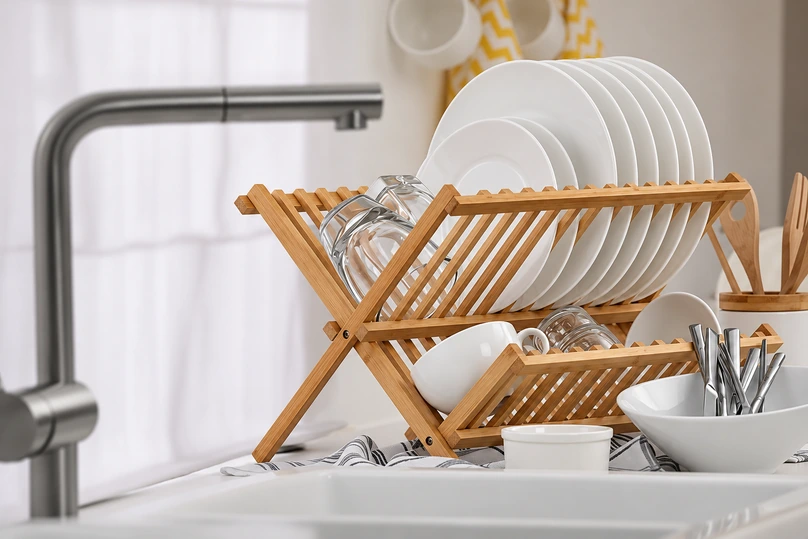
When was the last time you disinfected your dish rack? Knowing exactly how to clean a dish drying rack properly is essential because it might look clean at a glance, but in reality, it often provides the perfect environment for bacteria and mold to grow. Because moisture constantly accumulates from dripping dishes—along with the occasional small food scrap—the surface can easily become contaminated.
Furthermore, in areas with hard water, limescale or mineral deposits create rough surfaces that trap even more dirt and germs. If you need to figure out how to remove hard water stains from dish rack surfaces, YCS gives you these simple, homemade tricks that allow for a deep clean without the need for harsh chemicals or a great deal of effort. Take note!
What’s the Best Way to Clean a Dish Drying Rack?
To thoroughly clean a dish rack and completely remove the buildup of limescale (calcium deposits), mold, and grease, the most effective and safe method is to use a combination of white vinegar and baking soda. This gentle approach is especially helpful if you need to know how to clean bamboo dish rack materials without warping the natural wood.
- Check the Care Instructions and Remove Detachable Parts
- Wash the Rack and Utensil Holder
- Clean the Drip Tray, Drain Spout, and Counter Underneath
- Rinse and Dry Every Part Before Reassembling
Important note: Water that collects in the tray eventually leaves behind a slippery film, limescale marks, and dark patches. Emptying and drying the tray daily reduces this buildup. If you are wondering how to clean dish rack tray components effectively, regularly wash the tray in warm, soapy water, clean the corners with a scrubbing brush, then rinse and dry it. For trays that drain into the sink, be sure to also clean the drain outlet with a brush.
What’s That Buildup on Your Dish Drying Rack?
The mysterious buildup on your dish drying rack is typically a mix of bacterial biofilm, hard water mineral deposits, and mold or mildew. Because dish racks are continually exposed to dampness, pooled water, and organic food particles, they create microclimates that attract unsanitary guests right next to your clean dinnerware.
How to Clean Your Dish Drying Rack Step by Step
Thoroughly cleaning a dish rack requires taking it apart and using descaling products to remove accumulated limescale, grease, and mold. Whether you need to figure out how to clean plastic dish drying rack models or stainless steel versions, the structural teardown remains exactly the same for a successful deep wash.
1. Disassemble All Parts
- Separate the main frame, the bottom water-collection tray, and the cutlery holder or compartment.
- If there are any non-slip rubber feet or removable gaskets, take those off as well, as moisture and grease tend to accumulate in these areas.
2. Prepare the Cleaning Solution (For Limescale and Mold)
- Vinegar and hot water method: Fill the sink or a large container with equal parts hot water and white vinegar. Submerge the parts for at least an hour.
- For areas with heavy limescale or stains: Sprinkle baking soda, sodium percarbonate, or citric acid over the affected areas, then spray or pour white vinegar on top. Let it fizz to help loosen caked-on grime.
3. Scrub the Frame and Tray
- Use a stiff-bristled brush (an old toothbrush works very well) or a sponge to scrub the corners, crevices, and wires of the frame.
- For the bottom tray, make sure to remove any sticky residue left by standing water. If you want to master how to remove limescale from plastic dish drainer trays, aggressive scrubbing combined with the vinegar soak is essential.
- If the plastic tray is heavily discolored or has stubborn black mold that won’t come off, it is best to replace it.
4. Rinse and Dry
- Rinse all parts thoroughly with plenty of clean water.
- Dry them completely with a microfiber cloth before reassembling to prevent moisture from causing mold to grow again.
- You can apply a light coat of mineral oil or furniture polish (depending on the material) to create a protective barrier, which will make it harder for limescale to build up again quickly.
Adjust the Cleaning Method to Your Rack’s Material
Knowing exactly how to clean a dish drying rack properly means your cleaning method will depend heavily on what your specific rack is made of. Adapting your approach is essential to prevent permanent corrosion, chipping, or finish damage on these frequently used kitchen accessories. Choosing the wrong chemical or abrasive scrubber can easily ruin the protective factory coating.
Plastic Dish Racks and Trays
According to the University of Florida, when cleaning mold from non-porous surfaces, the unit should be washed by hand using warm water and dish soap; if the manufacturer permits, it may also be cleaned in a dishwasher. Use a scrubbing brush to remove residue from corners and grooves; for greasy buildup, apply a little liquid dish soap to a sponge. Steel wool, abrasive cleaners, and bleach can scratch the plastic and cause it to lose its shine. Replace any plastic parts that are cracked or heavily scratched.
Stainless Steel and Coated Wire Racks
If you are researching how to clean a dish drying rack made of chrome, stainless steel, or painted metal, it should be cleaned using a sponge dampened with warm water and dish soap. To minimize water spots on the racks, wipe them dry with a microfiber cloth immediately. Do not use steel wool, abrasive cleaners, degreasers, or descaling agents on chrome-plated or painted surfaces, as these can permanently damage the finish or paint.
Bamboo and Wooden Dish Racks
Understanding how to clean bamboo dish rack materials requires extra care. Bamboo and wooden dish racks should be cleaned using a well-wrung sponge dampened with warm water and dish soap, wiped down with a clean, damp cloth, and dried immediately. Do not soak bamboo or place it in the dishwasher; it can absorb water, causing it to swell, crack, and darken. Position the bamboo dish rack in a place where water cannot accumulate underneath it.
How to Remove Hard Water Buildup from a Dish Rack
When learning how to clean a dish drying rack that looks crusty, you must address mineral deposits. To remove hard water buildup (also known as limescale) from a dish rack, use an acid to dissolve the minerals, as normal soap and water will not work. If you want to know how to remove hard water stains from dish rack frames, targeted white vinegar soaks are the most effective strategy. White vinegar dissolves the crusty white coating without damaging the finishes.
What to Do About Mold or Persistent Odors
Water can collect in the drip tray and around the rack’s joints. If you notice visible mold or a musty smell, start by checking those spots and the area beneath the rack.
How to Clean Mold Off a Dish Rack
- Plastic, stainless steel, and silicone: Scrub affected areas with warm water, dish soap, and a soft brush. Pay attention to the joints and corners of the drip tray. Rinse and dry each piece completely.
- Wood and bamboo: Wipe the rack with a cloth dampened with mild soapy water, then dry it immediately. Avoid soaking it. If mold has penetrated the material or you can’t remove it completely, replace the rack.
Important note: The U.S. Environmental Protection Agency (EPA) recommends scrubbing mold off hard surfaces with detergent and water, then drying them thoroughly. EPA mold cleanup guidance
How to Remove Persistent Odors From a Dish Rack
Empty the drip tray and wash it with warm water and dish soap. Clean the utensil holder, drain spout, and counter underneath the rack, where water and residue can collect. Rinse the removable parts and let them dry completely before reassembling.
Know When to Replace Parts or the Whole Rack
If you have a hardwood or bamboo dish rack with structural black mold embedded deep within the grain, it cannot be safely sanitized and should be discarded. If a wire rack’s protective plastic or vinyl coating is peeling away in huge sheets, or if the metal frame has rusted through to the point where it stains your clean dishes or tabletop, it has reached the end of its useful life.
When Your Kitchen Needs More Than a Dish Rack Cleanup
Mastering how to clean a dish drying rack is a great first step toward maintaining a spotless West Palm Beach kitchen. However, tackling individual chores quickly becomes an exhausting battle when hidden grease and food splatters continuously spread across your surrounding countertops.
Even if you know exactly how to clean a dish drying rack, sticky floors and greasy cabinets indicate your home requires deeper attention. Instead of fighting stubborn grime alone, let our expert team handle the meticulous sanitization your valuable property deserves. We deliver the heavy-duty scrubbing required for a pristine home. Stop sacrificing your weekends to chores and contact Yorleny’s Cleaning Services today!
FAQs About Cleaning Dish Drying Racks
Can I Put My Dish Drying Rack in the Dishwasher?
You can safely put hard plastic or stainless steel models on the top rack of your dishwasher. When learning how to clean a dish drying rack, this mechanical method saves valuable time. Extreme heat and strong detergents effortlessly melt away hard water stains and gross food particles completely without tedious scrubbing.
Can I clean a dish rack without vinegar?
You can absolutely use a thick paste of baking soda and warm water instead of acidic liquids. If you wonder how to clean a dish drying rack naturally, this gentle abrasive works perfectly. Scrubbing the plastic base with this odorless mixture completely eliminates slippery pink slime without leaving harsh chemical smells behind.
Can I use bathroom mold remover on a dish rack?
You must never use toxic bathroom chemicals on surfaces that touch your daily eating utensils. When researching how to clean a dish drying rack, avoiding poisonous residential bleach is absolutely critical. These aggressive bathroom solutions leave dangerous residue that can easily contaminate your clean cooking plates and cause severe food poisoning.
Do I need to replace a stained dish rack?
You only need to buy a replacement if the thick metal wires show signs of deep rusting. Before throwing it away, mastering how to clean a dish drying rack often saves money. Vigorously scrubbing hard water discoloration with natural citric acid easily restores the original bright color almost instantly.
How often do you have to clean your dish rack and keep it dry?
You should thoroughly scrub the entire plastic base once every single week to prevent dangerous bacterial growth. Understanding how to clean a dish drying rack includes proper daily maintenance. Wiping the wet tray completely dry every night stops disgusting pink mold from forming underneath your clean drinking glasses.

Tony Loeffler is the Co-Founder of Yorleny's Cleaning Service and a leader in residential cleaning services. As a content reviewer and writer, he is an expert around the cleaning services in Florida, specifically West Palm Beach County.
Recent Articles

How to Wash Reusable Grocery Bags: Cotton, Plastic, and Insulated
Since the battle against plastic began, using eco-friendly totes for grocery shopping has become the norm. Beyond helping to protect the planet,…
Should a Cleaning Company Be Licensed and Insured in Florida?
When homeowners ask, “Should a cleaning company be licensed and insured?” they often see this claim across cleaning service websites. However, simply…

How to Clean Copper Pans: Keep Them Looking Their Best
Copper pots and pans are highly valued by culinary experts because the material is an excellent heat conductor, which allows food to…
See below to check if our top-quality house cleaning services are available in your city and book your first appointment with just a few clicks.