

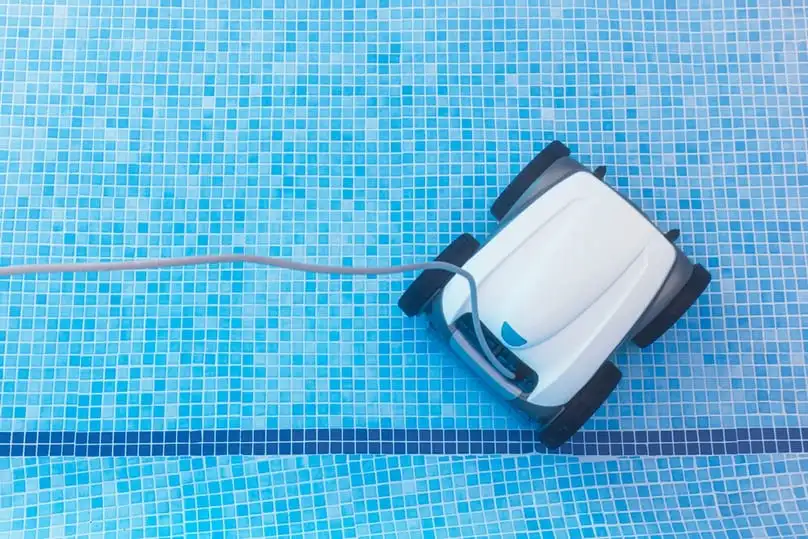
Have you ever watched dirt settle on the bottom of your pool and wondered, “How does a pool vacuum work?” A skimmer can collect floating leaves, but sand, fine dust, and other debris may sink before the circulation system can remove them. If that buildup stays in place, the pool can look cloudy or dirty even when the pump is running.
A pool vacuum solves that problem by moving water and settled debris into either the pool’s filtration system or a separate collection container. This guide answers “how does a pool vacuum work?” by explaining manual, suction-side, pressure-side, and robotic systems and how to use them correctly. While these tools maintain the pool, a consistent house cleaning routine helps keep the surrounding indoor living spaces ready for everyday use.
How Does a Pool Vacuum Work? Quick Steps
- The vacuum head or cleaner loosens and collects settled debris.
- Moving water carries that debris through a hose or internal intake.
- A pool filter, debris bag, or onboard basket captures the material.
- Filtered water returns to the pool through the circulation system or the cleaner.
Important Note: A pool vacuum removes debris; it does not sanitize water. Continue testing disinfectant and pH according to manufacturer instructions and the Centers for Disease Control and Prevention (CDC) guidance on home pool water treatment.
What Is a Swimming Pool Vacuum?
A swimming pool vacuum is a cleaning device designed to remove dirt, leaves, and debris from your pool floor and walls. Some models use the suction or pressure created by the pool’s circulation equipment, while robotic and handheld models may use their own motor and collection filter.
Understanding how a pool vacuum works is useful because the debris destination changes by system. Manual and suction-side vacuums generally send debris toward the pool filter or a waste setting. Pressure-side cleaners usually collect it in an attached bag, while robotic cleaners hold it in an onboard basket or cartridge.
Pool Vacuum Types at a Glance
| Vacuum type | Power source | Where debris goes | Level of supervision |
| Manual | Pool pump suction or a separate handheld motor | Main filter, waste line, or built-in container | High |
| Suction-side automatic | Pool pump suction | Pool pump basket and filter | Moderate |
| Pressure-side automatic | Return-line water pressure; some systems use a booster pump | Attached debris bag | Moderate |
| Robotic | Corded electricity or rechargeable battery | Onboard filter basket or cartridge | Low, but setup and maintenance remain necessary |
The exact capabilities depend on the model. Floor coverage is common, but wall climbing, stair cleaning, waterline scrubbing, scheduling, and mapping should never be assumed without checking the manufacturer’s specifications.
Therefore, the answer to “how does a pool vacuum work?” depends on which system creates the water flow and where that system sends the collected debris.
How Do Manual Pool Vacuums Work?
Manual vacuums connect to a floating hose and filtration system, creating suction that removes dirt from the pool floor and walls. When you understand how a manual pool vacuum works, you’ll see that the user must guide the head slowly across each dirty surface.
The pool pump pulls water and debris through the vacuum head and hose. Depending on the valve and filter setting, the debris then travels into the pool’s filtration system or exits through the waste line. Vacuuming to waste can lower the water level, so follow the pool equipment manufacturer’s instructions.
How a Hose-Based Pool Vacuum Works
A hose-based manual pool vacuum attaches to the filtration system, using water flow to generate suction that removes debris. Before vacuuming, the hose must normally be filled with water to remove trapped air and help the pump maintain its prime.
Knowing how pool vacuums work in hose-based models helps you guide the vacuum head efficiently. Move it slowly; rapid movements can disturb fine material and suspend it in the water again.
How Do Automatic Pool Cleaners Work?
Automatic pool cleaners move around the pool with less direct guidance than a manual vacuum. However, “automatic” covers three different mechanisms: suction-side, pressure-side, and robotic cleaning.
How a Suction-Side Pool Cleaner Works
Suction-side models connect to the skimmer or a dedicated suction port. The pool pump pulls water through the cleaner, which uses that flow to move and carry debris toward the pump basket and main filter. A clogged basket, dirty filter, air leak, or incorrectly adjusted valve can reduce its movement and suction.
How a Pressure-Side Pool Cleaner Works
Pressure-side cleaners connect to a pool return line. Pressurized water propels the cleaner and helps direct debris into an attached collection bag. Some installations need a booster pump, while others operate from the existing return pressure; compatibility should be confirmed before purchasing.
How Robotic Pool Vacuums Operate
Robotic pool vacuums function independently of the pool’s primary filtration system, using motors, pumps, and onboard filters to collect dirt and leaves. Corded models use a manufacturer-approved low-voltage power supply, while cordless models operate from a rechargeable battery.
Debris is trapped inside a filter basket, bag, or cartridge, which the user removes and cleans. Sensors and programmed movement can improve coverage, but navigation differs considerably between models and does not guarantee that every step, corner, wall, or waterline will be cleaned.
If you are comparing automation, filtration, pool compatibility, and cleaning coverage, our guide to choosing the best pool vacuum robot for your pool continues with the buying factors that matter most.
How to Use a Manual Pool Vacuum Step by Step
Step 1: Inspect the Pool Equipment
Turn off the pump before connecting equipment when the manufacturer requires it. Empty the skimmer and pump baskets, check the filter pressure, and confirm the correct valve and filter settings for the job.
Step 2: Assemble the Vacuum
Attach the vacuum head to a telescopic pole. Connect the swivel end of the hose to the vacuum head if the equipment instructions identify one end for that connection.
Step 3: Fill the Hose With Water
Lower the vacuum head into the pool. Feed the hose into the water or place its free end against a return jet until air stops bubbling from the head.
Step 4: Connect the Suction Line
Connect the filled hose to the skimmer vacuum plate or dedicated suction port. Follow the pool and filter manufacturer’s directions because valve positions vary between systems.
Step 5: Vacuum Slowly
Guide the vacuum head across the floor in slow, overlapping passes. If sediment clouds the water, pause and allow it to settle before continuing.
Step 6: Restore the System
Disconnect the vacuum, return the valves and filter to their normal operating settings, empty the baskets, and clean or backwash the filter when required. Replace any water lost while vacuuming to waste.
Why Is My Pool Vacuum Suction Low?
Low suction usually means that water flow is restricted or air is entering the system. Check the simplest causes before assuming the cleaner has failed:
- A skimmer basket, pump basket, vacuum bag, or robot filter is full.
- The pool filter needs cleaning or backwashing.
- The hose contains air, has a crack, or is not connected securely.
- The water level is too low for the skimmer to operate correctly.
- A valve is set incorrectly or the pump is running at an unsuitable speed.
- The cleaner’s intake, brushes, wheels, tracks, or impeller are obstructed.
Stop the system and consult the appropriate manual if the pump loses prime, makes unusual sounds, leaks, or fails to restore normal circulation.
Are Pool Vacuums Effective? Pros and Cons
Benefits of Using an Automatic Pool Vacuum
A pool vacuum offers a convenient way to collect debris that settles below the surface. Depending on the system and the pool, an automatic cleaner may:
- Reduce the amount of manual vacuuming required.
- Collect leaves, sand, insects, and other compatible debris.
- Provide more consistent floor coverage between detailed cleanings.
- Keep some debris out of the primary filter when the cleaner has its own bag or basket.
Limitations You Should Know
A vacuum cannot replace water testing, disinfection, filter maintenance, brushing, skimming, or repairs. Some cleaners also struggle with steps, tight corners, unusual shapes, large leaves, or fine sediment. Performance depends on pool design, surface material, circulation, water balance, and the cleaner’s specifications.
Choosing a Pool Vacuum for Florida Conditions
South Florida pools may collect windblown sand, leaves, insects, and storm debris. Instead of choosing a product solely because it is advertised for Florida, match the cleaner to the material that enters your pool most often. A large top-loading basket can be helpful for leaves, while a compatible fine filter may perform better with sand or silt.
For Florida homeowners asking “how does a pool vacuum work after a storm?”, the mechanism stays the same, but the basket or filter may fill sooner and require more frequent inspection. Remove large debris first when necessary and follow the equipment instructions.
Also confirm the pool’s dimensions, surface, slope, steps, and waterline requirements. Cordless operation can simplify setup, but battery runtime must cover the intended cleaning area. Corded systems provide continuous power but require safe cable management and a suitable electrical connection.
Pool Cleaning and Whole-Home Maintenance
A pool vacuum maintains submerged surfaces; it does not clean the home, balance the water, repair equipment, or guarantee sanitary conditions. Yorleny’s Cleaning Service focuses on residential cleaning throughout South Florida rather than specialized pool maintenance. When the indoor areas need detailed attention, contact Yorleny’s Cleaning Service to confirm the appropriate service for your home.
How Does a Pool Vacuum Work? FAQs
Can I Use a Pool Vacuum Without a Filter?
It depends on the equipment. A robotic or handheld cleaner may have its own filter, while a manual vacuum can sometimes send water through the pool filter or directly to waste. Never operate the pool’s filtration equipment without the required filter components, and follow the manufacturer’s instructions before changing valve or filter settings.
How Often Should I Run My Pool Vacuum?
For basic maintenance, you may vacuum the pool weekly. Increase the frequency after storms, periods of heavy use, or visible debris accumulation. Automatic and robotic cleaning schedules should follow the manufacturer’s instructions and the conditions in your pool.
Does a Pool Vacuum Remove Algae?
A vacuum can collect loose algae and residue after appropriate treatment, but it does not kill algae or correct the water chemistry that allowed it to grow. Brush affected surfaces, maintain filtration, test the water, and follow an appropriate treatment plan.
What Is the Difference Between Vacuuming to Filter and Vacuuming to Waste?
Vacuuming to filter sends water through the pool’s filter before it returns to the pool. Vacuuming to waste bypasses the filter and discharges the water, which may help with material that should not return through the system but also lowers the pool level. Equipment and local discharge requirements vary.
What’s the Best Vacuum for Florida Pools?
There is no single best model for every Florida pool. Choose according to pool size, construction, surface, debris type, wall and waterline coverage, available power, maintenance requirements, and manufacturer support. For model-selection criteria, compare the features that determine which pool vacuum robot fits your pool.

Reviewed by:
Tony Loeffler is the Co-Founder of Yorleny's Cleaning Service and a leader in residential cleaning services. As a content reviewer and writer, he is an expert around the cleaning services in Florida, specifically West Palm Beach County.
Recent Articles

How to Clean Before Fall Guests Arrive: Quick Tips for Busy Hosts
Welcoming friends and family into your home for the autumn holidays can be a rewarding experience. However, figuring out exactly how to…

The Benefits of Property Management Cleaning Services for Florida Hosts
As a landlord, you run a business where tenants are customers and rental units are assets, meaning you must maintain your property…
How to Clean Concrete Floors Without Damaging the Surface
Polished concrete is known for being durable, low-maintenance, and attractive. However, “low-maintenance” does not mean “no maintenance.” Knowing how to clean concrete…
See below to check if our top-quality house cleaning services are available in your city and book your first appointment with just a few clicks.