

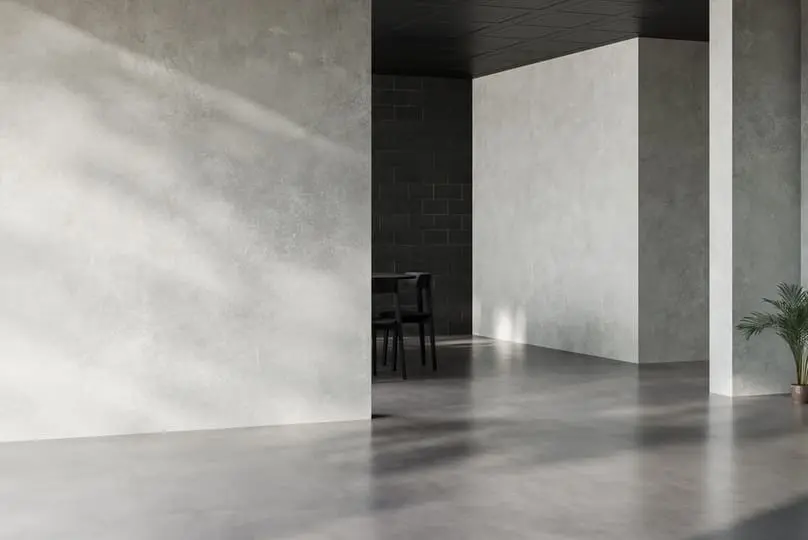
Polished concrete is known for being durable, low-maintenance, and attractive. However, “low-maintenance” does not mean “no maintenance.” Knowing how to clean concrete floors is essential to keep the floors safe, dry, and in good condition.
This deep-cleaning guide provides step-by-step instructions for the best way to clean concrete floors using accessible tools and specialized products that ensure great results without damaging the material. From preparation to ongoing care, each stage will help you master the process of cleaning concrete floors with ease.
How to Clean Concrete Floors?
To clean a cement or concrete floor without damaging it, sweep away the dust, use a pH-neutral soap with warm water, and scrub with a brush, choosing either stiff or soft bristles depending on the surface finish. Follow this quick step-by-step guide to concrete floor cleaning.
- Remove Loose Dirt and Debris
- Choose the Right Cleaner for the Concrete Finish
- Mop or Scrub, Rinse, and Let the Floor Dry
Important note: To clean concrete floors without damaging the surface, the absolute key is to avoid strong acids (such as hydrochloric acid) and metal scouring pads, as they corrode the material and break the seal. The Florida Department of Environmental Protection strictly regulates what you can use to clean exterior concrete floors and driveways due to stormwater runoff rules.
What to Use to Clean Concrete Floors
Before starting to learn how to clean concrete floors, it is essential to have the right materials and floor cleaner at hand. This will not only make the process easier but also ensure effective cleaning without damaging the floor.
Basic materials for cleaning concrete floors:
- Sturdy broom or vacuum cleaner to remove dust and surface debris.
- Bucket of warm water.
- Neutral soap or a detergent specifically designed for concrete floors.
- Mop.
- Stiff-bristled brush for stubborn stains.
- Baking soda and white vinegar (optional, for specific stains).
Best Way to Clean Concrete Floors Step by Step
The fact is that cleaning each type of flooring requires specific methods; cleaning concrete floors is not the same as cleaning surfaces like granite, stoneware, or tiles. Here is how to clean concrete floors effectively:
1. Remove surface dirt from the concrete floors
Before using water or cleaning products, sweep the floor with a stiff-bristled broom or use a vacuum cleaner to remove dust, sand, and other debris. This step prevents particles from scratching the surface during the cleaning process.
2. Prepare a mild cleaning solution for the concrete
Add a little neutral soap or a detergent specifically designed for concrete to a bucket of warm water. The ideal ratio is one tablespoon of soap per liter of water. Mix well until completely dissolved.
3. Clean the concrete floor carefully
Dip your mop or brush into the prepared solution and scrub the surface using circular motions. For indoor floors, it is important not to saturate the surface to avoid moisture issues, whereas for outdoor floors, you can apply more pressure and use more water. You can also learn how to maintain and clean terrace and patio floors to keep your outdoor areas looking spotless.
4. Rinse and dry the concrete floor
Once you have scrubbed the entire surface, remove any soap residue with clean water. Change the water in the bucket and use a clean mop to rinse. Finally, dry the floor with a cloth or allow it to air dry.
How to Clean Different Types of Concrete Floors
The process of how to clean cement floor varies slightly depending on whether the concrete is polished or rustic. Because concrete varies from very porous raw stone to delicate glossy coatings, employing the incorrect chemical might permanently etch, dull, or remove the surface.
| Concrete Type | Safest Cleaner | Tools to Use | What to Avoid |
| Polished Concrete
(Living room) |
pH-neutral cleaner (pH 7) | Microfiber mop, soft-pad auto-scrubber | Vinegar, bleach, ammonia, citrus cleaners, harsh abrasive scrub pads |
| Stained Concrete
(Kitchen) |
pH-Neutral Cleaner or mild dish soap | Damp microfiber mop, soft-bristle broom | Vinegar, bleach, citrus, ammonia, steam mops, harsh scrub pads |
| Sealed / Stamped
(Patio) |
Mild dish soap or pH-neutral cleaner | Damp string mop or microfiber mop | Excessive water, high-pressure washers, stiff-bristle brushes |
| Painted / Epoxy
|
Warm water with a squirt of mild dish soap | Soft microfiber mop or sponge mop | Ammonia, bleach, solvent-based cleaners, harsh chemical strippers |
| Unsealed / Raw
(Garage) |
Trisodium Phosphate (TSP) or concrete degreaser | Stiff nylon brush, pressure washer (outdoor use only) | Letting pools of dirty rinse water sit and dry back into porous stone |
How to Remove Stains and Heavy Buildup from Concrete
Just like hardwood floors or vinyl floors, stains on concrete floors can be challenging, but there are effective methods for each type of problem:
Grease or Oil Stains on Concrete Floors
- Sprinkle baking soda directly onto the stain.
- Let it sit for 10–15 minutes to absorb the residue.
- Scrub with a stiff-bristled brush dampened with warm water.
- Rinse with clean water and dry.
Rust Stains on Concrete Floors
- Apply white vinegar directly to the stain.
- Let it sit for 5–10 minutes.
- Gently scrub with a stiff-bristled brush, clean with water, and dry the area.
Paint or Dried Cement Stains
- Use a plastic scraper to remove solid residue.
- Apply a specialized concrete cleaner if necessary.
- Scrub with a damp cloth and rinse with warm water.
What Not to Use on Concrete Floors
Although cleaning concrete floors seems simple, it is important to avoid certain mistakes that can damage the surface:
- Using harsh chemicals: avoid bleach, strong acids, or ammonia, as they can damage the concrete finish and cause discoloration.
- Neglecting to seal the concrete floor: an unsealed floor is more vulnerable to stains and wear.
- Over-wetting indoor floors: excess water can seep into the concrete and cause moisture-related issues, such as mold or cracks.
- Using unsuitable tools: do not use wire brushes or abrasive scouring pads, as they can scratch the concrete surface.
How to Keep Concrete Floors Clean Longer
Understanding how to clean concrete floors is vital for preventing long-term damage from Florida’s sandy environment. However, keeping up with constant sweeping and gentle mopping is an incredibly demanding task. Relying on professional deep cleaning services removes this exhausting burden from your weekly schedule. Our team ensures your surfaces stay pristine without the risk of accidental chemical damage.
Even if you know exactly how to clean concrete floors, tackling stubborn stains requires intense, back-breaking labor. Our expert team provides the heavy-duty sanitization necessary to flawlessly restore your home’s foundation. Stop sacrificing your precious weekends to endless scrubbing and exhausting household upkeep. Contact Yorleny’s Cleaning Services today to schedule your professional cleaning!
Concrete Floor Cleaning FAQs
How Do You Clean Polished Concrete Floors?
You must use a pH neutral cleaner and a soft microfiber mop to maintain the glossy finish. When learning how to clean polished concrete floors, avoiding harsh acidic chemicals is absolutely critical. Acidic solutions will instantly etch the sleek surface and permanently destroy the expensive protective shiny sealant.
How Do You Clean Stained Concrete Floors?
You should wipe away spills immediately and wash the area with a mild liquid dish soap. If you wonder how to clean stained concrete floors properly, never use abrasive scrubbing pads. Rough tools will aggressively scratch the delicate color dye and ruin the beautiful decorative finish of your living space.
Can You Use a Steam Cleaner on Concrete Floors?
Yes, utilizing a steam machine is incredibly effective for sanitizing unsealed garage or basement surfaces. However, when figuring out how to clean concrete floors inside your home, avoid applying intense heat to sealed areas. The extreme temperature can easily melt the protective topcoat and leave ugly cloudy white spots permanently.
Can You Mop Concrete Floors?
Yes. Damp mopping is an effective method for routine concrete floor cleaning when the mop and cleaner are appropriate for the finish. Wring out the mop thoroughly on indoor concrete and avoid leaving standing water on polished, sealed, painted, or coated surfaces.
How Often Should Concrete Floors Be Cleaned?
The cleaning frequency depends on traffic, location, and the type of concrete. High-traffic areas may need sweeping or vacuuming several times a week, while lower-traffic rooms may need less frequent maintenance. Damp mop the floor when visible dirt or residue begins to accumulate rather than following an unnecessarily rigid schedule.

Reviewed by:
Tony Loeffler is the Co-Founder of Yorleny's Cleaning Service and a leader in residential cleaning services. As a content reviewer and writer, he is an expert around the cleaning services in Florida, specifically West Palm Beach County.
Recent Articles

How to Remove Honey Stains from Clothes, Carpet, and Fabric
Have you spilled honey on your favorite garment or on your carpet? Knowing exactly how to remove honey stains quickly is essential…

Deep Cleaning the House Before Selling: The Ultimate Guide and Checklist
Selling a home depends on more than location and size; buyers are heavily influenced by atmosphere. Factors like lighting, temperature, and cleanliness…

How to Clean a Toothbrush Holder (And Keep Mold Away)
When cleaning the bathroom, the toilet and shower usually take priority, leaving one highly contaminated item completely overlooked. A dirty toothbrush holder…
See below to check if our top-quality house cleaning services are available in your city and book your first appointment with just a few clicks.