

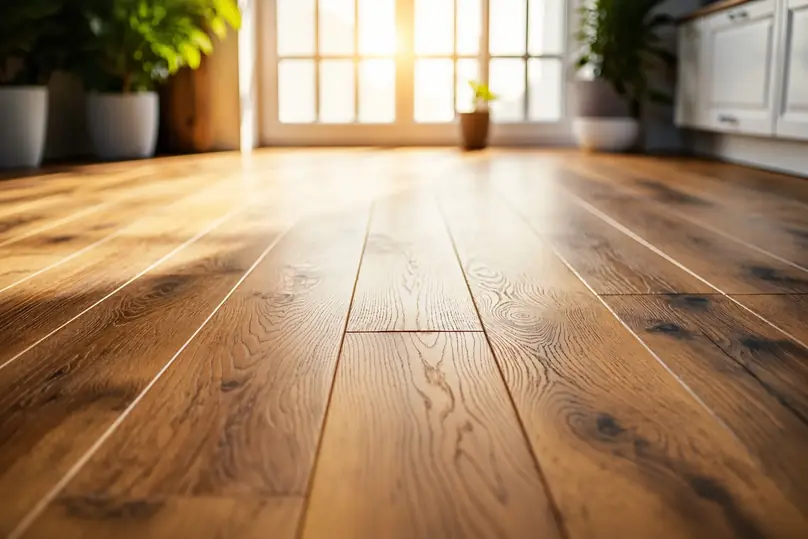
A hardwood floor can look dull even after mopping—and adding another coat of “shine” may make cloudy residue worse. The best hardwood floor cleaner is the one that matches the existing finish, removes ordinary soil with minimal moisture, and dries without leaving wax, oil, or film. Before comparing products, identify whether the surface is polyurethane-coated, oiled, waxed, unfinished, or engineered wood.
That distinction protects both the floor’s appearance and its care warranty because a product made for one finish may exclude another. When the finish is unknown, check the flooring paperwork or ask the installer before treating the whole room. For recurring care beyond product selection, Yorleny’s house cleaning services can maintain accessible finished floors as part of a broader home-cleaning visit; sanding, refinishing, and repairs belong to flooring specialists.
Quick Steps: Choose the Best Hardwood Floor Cleaner
For most sealed, unwaxed, and unoiled hardwood floors, choose a manufacturer-approved cleaner that is pH-neutral or formulated specifically for that finish. It should dry quickly, require little moisture, and leave no waxy or oily film. Use this checklist before buying:
- The label specifically names your floor material and finish.
- The product does not require soaking or wet mopping.
- The instructions explain whether rinsing is necessary.
- The formula does not promise polish when you only need cleaning.
- The cleaner is compatible with your flooring warranty.
- Fragrance and ingredient preferences suit your household.
Once you have selected a compatible product, the correct sequence for cleaning wood floors without damaging the finish is to remove grit, control moisture, and dry the surface promptly.
Compare Hardwood Floor Cleaners by Finish
The table below offers a starting point rather than a universal prescription. Flooring manufacturers may impose different care requirements, even when two floors look similar. Always compare the cleaner’s label with the care instructions for your particular flooring before using it.
| Floor or finish | Cleaner to look for | What to avoid unless approved |
|---|---|---|
| Sealed polyurethane | Ready-to-use, residue-free cleaner made for sealed wood | Wax, oil soap, abrasive powders, excess water |
| Oiled wood | Cleaner approved by the oil-finish manufacturer | Standard polyurethane-floor cleaner, degreasers |
| Waxed wood | Product specifically labeled for waxed wood | Water-heavy methods, polyurethane polish |
| Engineered hardwood | Cleaner approved by the flooring manufacturer | Steam, wet mopping, unapproved all-purpose products |
| Unfinished wood | Instructions from a flooring professional | Routine liquid cleaning and experimental DIY mixtures |
| Unknown finish | Spot test after identifying the finish | Applying a new cleaner across the entire floor |
Use the table to narrow the options, then confirm the finish before treating the full room. If the finish remains unknown, test only after checking the flooring paperwork or speaking with the installer.
Best Cleaner for Polyurethane-Finished Hardwood
Many modern hardwood floors use a surface finish such as polyurethane. The best hardwood floor cleaner for this category is usually a water-based, ready-to-use formula labeled for sealed, unwaxed, and unoiled wood. Bona, for example, states that its standard cleaner covers those surfaces but excludes floors finished with wax or oil. Check the manufacturer’s floor cleaner compatibility FAQ before treating that product—or any brand—as universally suitable.
A spray format helps control moisture. Apply the directed amount and remove it with a clean microfiber pad instead of pouring cleaner onto one area. If haze returns, check for overapplication, a dirty pad, or residue from an earlier polish or detergent.
Best Cleaner for Oiled or Waxed Hardwood
For oiled wood, the best hardwood floor cleaner is compatible with the oil system already on the floor. Choose the product named by the flooring or finish manufacturer whenever possible, and keep routine cleaning separate from periodic maintenance oil. Strong degreasers and generic hardwood products may disturb the protective treatment.
Waxed floors also require finish-specific care. A polyurethane-floor cleaner may not maintain wax correctly, while adding wax to polyurethane can create cloudy buildup. Bona notes that polyurethane-finished floors generally do not need wax. If the floor is genuinely waxed, use a cleaner approved for waxed wood and add polish only when its care instructions call for it.
Best Cleaner for Engineered Hardwood
Engineered hardwood usually has a real wood wear layer, but its construction and finish vary. The best hardwood floor cleaner for engineered boards is the one listed in the floor’s care documentation. Shaw’s hardwood care and maintenance instructions, for example, warn against wet mopping, abrasive cleaners, wax, polish, and strong ammoniated products.
Never interpret “engineered” as waterproof. Moisture can enter the joints and affect the layers beneath the surface. A controlled spray and slightly damp microfiber pad generally expose the floor to less liquid than a saturated mop, but the exact manufacturer instructions should determine the method.
Ready-to-Use Spray or Concentrated Cleaner?
Ready-to-use sprays make it easier to control moisture and dilution. For many sealed floors, this makes a ready-to-use formula a practical best hardwood floor cleaner for routine work, small homes, and high-traffic areas. Its main drawbacks are the higher cost per application and the possibility of overusing product when the spray pattern is too heavy.
Concentrates may be more economical for large homes or frequent cleaning, but only when measured correctly. An overly strong mixture can leave residue or increase the risk of finish damage. If the label calls for dilution, use the stated ratio instead of estimating, and do not assume that extra concentrate produces a better result.
When building a compact cleaning supplies list, keep one finish-compatible floor cleaner, clean microfiber pads, and a hard-floor vacuum attachment rather than several overlapping formulas.
| Format | Best suited for | Main consideration |
| Ready-to-use spray | Routine cleaning and controlled application | Convenient but often costs more per use |
| Concentrate | Larger areas and frequent cleaning | Requires exact measurement and dilution |
| Spray-mop cartridge | Fast maintenance with a compatible system | Confirm formula and pad compatibility |
| Homemade mixture | Only when the floor manufacturer permits it | Acidity, alkalinity, oils, and residue can affect finishes |
How to Evaluate a Hardwood Floor Cleaner
Marketing terms such as “natural,” “professional,” and “maximum shine” do not prove compatibility with your floor. Evaluating the best hardwood floor cleaner starts with a label that clearly identifies the intended surfaces, prohibited finishes, dilution method, drying instructions, and safety precautions. The same surface-first approach used to choose the best cleaning products for a home matters even more on wood because the wrong formula can affect the finish.
Confirm the Floor and Finish Compatibility
Start with the exact finish rather than the wood species alone. The best hardwood floor cleaner cannot be chosen from “oak” or “maple” alone because those floors may have polyurethane, oil, or wax finishes. When the label does not clearly include your finish, contact the flooring or cleaner manufacturer before proceeding.
Look for Low Residue and Controlled Moisture
Residue can make a clean floor appear cloudy, sticky, or streaked. Choose a formula intended to evaporate or dry without leaving a film, and use the recommended amount. A clean microfiber pad also matters because a pad loaded with old product can redistribute haze even when the cleaner itself is compatible.
Moisture control is equally important in Florida homes. High humidity can slow drying, so avoid saturating the surface and improve airflow after cleaning. However, a fast-drying claim does not override the floor warranty or make a product appropriate for unfinished, waxed, or otherwise excluded wood.
Consider Children, Pets, Fragrance, and Sensitivities
Households with children, pets, or fragrance sensitivities may prefer products with clearer ingredient information or reduced fragrance. The EPA’s Safer Choice program evaluates qualifying products against human-health, environmental, performance, packaging, and other criteria. Its label can support product selection, but you must still confirm that the specific product suits hardwood and its finish.
“Pet-friendly” also does not mean that animals should walk across a wet floor or ingest the solution. Follow the label, ventilate the room when directed, and keep pets away until the surface is ready for normal use. Our guide to pet-safe cleaning products provides additional considerations for other areas of the home.
Hardwood Floor Cleaner vs. Polish: What Is the Difference?
The best hardwood floor cleaner removes dirt, spills, and ordinary residue without pretending to be polish. Polish or refresher products alter the surface appearance by adding or renewing a temporary layer. They are not interchangeable, and a dull floor does not automatically need polish. Applying the wrong coating may create haze, uneven sheen, slippery spots, or complications during future refinishing.
Clean the floor and inspect it under consistent lighting before deciding that the finish needs restoration. If the dull area remains after proper cleaning, determine whether the protective finish is worn. A flooring professional can distinguish between removable buildup, a finish that needs recoating, and wood that requires refinishing.
Are Natural or DIY Hardwood Floor Cleaners Safe?
A homemade cleaner is not automatically safer for the floor because it uses familiar ingredients. Vinegar is acidic, baking soda is abrasive, oils can leave a film, and dish soap may create residue when used too heavily. The result depends on the concentration, finish, application method, and manufacturer’s instructions.
Use a DIY solution only when the flooring manufacturer permits its ingredients and ratio. Test it in an inconspicuous area and wait until the spot dries before assessing the result. The same material-first approach applies when cleaning with vinegar elsewhere in the home.
Avoid combining vinegar and baking soda in the belief that the foaming reaction creates a stronger cleaner. The reaction largely neutralizes their acidity and alkalinity, while undissolved particles may remain. Essential oils can also leave residue, affect traction, or conflict with the finish, so they should not be added without manufacturer approval.
Do You Need a Hardwood Floor Cleaning Machine?
Most routine hardwood cleaning does not require a powered washing machine. A vacuum with a hard-floor attachment, microfiber mop, and the best hardwood floor cleaner for the finish can handle common dust and surface soil. A machine may help in a large home, but only if its manufacturer explicitly lists compatibility with your sealed wood floor.
Check the brush or pad material, moisture output, suction, cleaning solution, and warranty restrictions. “Hard floor” is a broad category that may include tile and vinyl but exclude wood. Avoid steam unless the flooring manufacturer expressly allows it, because heat and moisture can affect finishes, seams, adhesives, and the wood itself.
What Should You Avoid in a Hardwood Floor Cleaner?
The best hardwood floor cleaner should also be defined by what it leaves out. The safest exclusion list comes from your flooring manufacturer, but many care guides caution against excessive water, abrasive powders, steel wool, harsh ammoniated products, and unapproved waxes or polishes. Never use a bathroom, grout, or all-purpose cleaner on wood simply because it removes dirt effectively elsewhere.
Choosing the right product always depends on the surface. A formula made for tile, grout, soap scum, or mineral deposits may damage a wood finish or leave residue. A bathroom cleaner should therefore remain in the room and on the materials named by its label rather than being transferred to hardwood.
Avoid these common product-selection mistakes:
- Buying by fragrance or shine claim instead of finish compatibility.
- Using an all-purpose cleaner without checking the wood exclusion list.
- Applying polish when the floor only needs cleaning.
- Increasing the concentration beyond the label instructions.
- Combining two cleaners in the same container or application.
- Using a steam machine because it is marketed for “hard floors.”
- Skipping the inconspicuous-area test.
When a Cleaner Cannot Fix the Problem
Cleaner can remove surface soil, but it cannot reverse deep water stains, worn finish, cupping, scratches through the coating, or structural moisture damage. Repeatedly applying stronger products may make these conditions worse. Identify the problem before assuming that the floor simply needs a more aggressive formula.
For a localized discoloration, first identify how to remove a stain from wood without conflicting with the existing finish. Call a flooring professional when boards are swollen, warped, loose, blackened beneath the finish, or affected by a persistent leak.
Yorleny’s Cleaning Service does not sand, refinish, or repair hardwood floors. However, our team can include compatible routine floor care within a broader residential cleaning visit when the surface and requested work fall within our service scope. Contact Yorleny’s Cleaning Service to discuss your home and confirm availability.
Choose the Cleaner That Matches the Floor
The best hardwood floor cleaner is the one that matches the existing finish, removes the soil you actually have, and complies with the flooring manufacturer’s care requirements. Prioritize compatibility, controlled moisture, low residue, clear directions, and household safety needs over broad claims about strength or shine.
Once you select the appropriate product, use it consistently and avoid layering incompatible formulas. Place routine floor care within a realistic home cleaning schedule, and use the correct preparation, mopping, and drying sequence when you clean wood floors.
Frequently Asked Questions About Hardwood Floor Cleaners
What is the best cleaner for polyurethane hardwood floors?
Choose a residue-free cleaner labeled for sealed, unwaxed, and unoiled polyurethane-finished wood. Confirm the flooring warranty and product directions because not every hardwood formula covers every finish. Apply only the recommended amount with a clean microfiber pad, and do not add wax or polish unless the finish manufacturer specifically allows it.
Can I use an all-purpose cleaner on hardwood floors?
Only use an all-purpose product when both the cleaner label and the flooring instructions explicitly permit it. A formula that works on tile or vinyl may contain ingredients or require moisture levels that do not suit wood. When compatibility is unclear, select a finish-specific hardwood cleaner instead of experimenting across the entire floor.
What hardwood floor cleaner is best for pets?
Look for clear directions, appropriate hardwood compatibility, and ingredient information that fits your household’s needs. EPA Safer Choice certification may help identify formulas made with ingredients that meet the program’s safer-chemistry criteria, but it does not replace floor compatibility. Keep pets away during application and until the label says normal use can resume.
Why does my hardwood floor look cloudy after cleaning?
Cloudiness may come from too much cleaner, dirty mop pads, detergent residue, inappropriate polish, wax, or moisture beneath the finish. Stop layering additional products until you identify the source. Review the flooring manufacturer’s removal instructions or consult a professional when haze persists, because another coating may make buildup harder to correct.
Is a hardwood floor cleaner the same as polish?
No. Cleaner removes soil, while polish or refresher adds or renews a surface layer to change appearance. Using polish as a substitute for cleaning may trap dirt or create uneven shine. Determine the existing finish and follow its maintenance instructions before adding wax, polish, refresher, or another restorative coating.
Should I rinse hardwood floor cleaner?
Follow the product label. Some ready-to-use formulas are designed to dry without rinsing, while other products require a specific removal step. Adding unnecessary water can create its own risk, but leaving behind a product that requires rinsing may produce residue. Never substitute a generic procedure for the cleaner and flooring instructions.

Reviewed by:
Tony Loeffler is the Co-Founder of Yorleny's Cleaning Service and a leader in residential cleaning services. As a content reviewer and writer, he is an expert around the cleaning services in Florida, specifically West Palm Beach County.
Recent Articles
How to Clean Before Fall Guests Arrive: Quick Tips for Busy Hosts
Welcoming friends and family into your home for the autumn holidays can be a rewarding experience. However, figuring out exactly how to…

The Benefits of Property Management Cleaning Services for Florida Hosts
As a landlord, you run a business where tenants are customers and rental units are assets, meaning you must maintain your property…
How to Clean Concrete Floors Without Damaging the Surface
Polished concrete is known for being durable, low-maintenance, and attractive. However, “low-maintenance” does not mean “no maintenance.” Knowing how to clean concrete…
See below to check if our top-quality house cleaning services are available in your city and book your first appointment with just a few clicks.