

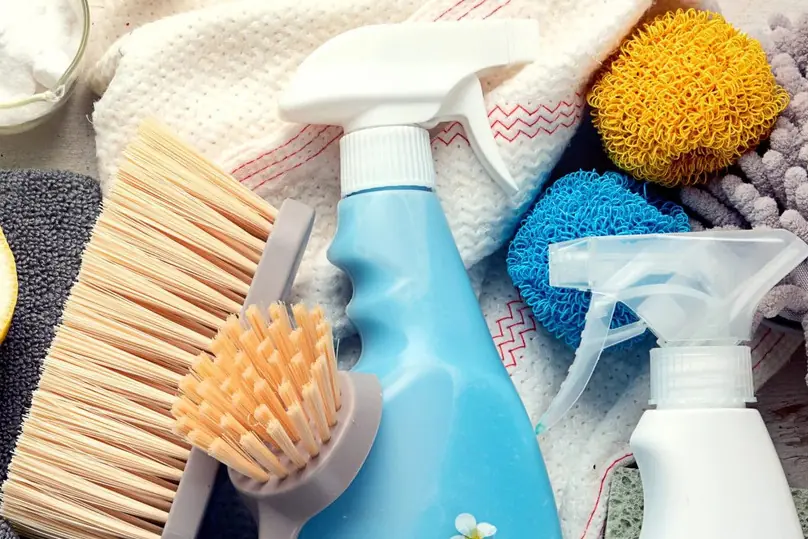
One wrong cleaner can dull natural stone, discolor wood, or leave permanent streaks on stainless steel. With so many sprays, powders, and disinfectants available, choosing the right formula can become confusing. The best cleaning products are not necessarily the strongest or most expensive. They are the ones suited to the surface, the type of buildup, and the directions on the label.
Fortunately, you do not need a different bottle for every corner of the house. A small, carefully selected kit can handle most routine dust, grease, fingerprints, and bathroom buildup. The sections below match products to common tasks, identify what can damage delicate materials, and explain when a specialty formula earns its place. If you prefer professional help, Yorleny’s house cleaning services can maintain your floors, kitchens, bathrooms, and frequently used surfaces.
Best Cleaning Products: Quick Guide
Use this sequence before buying or applying a cleaner:
- Identify the surface. Check whether it is sealed wood, natural stone, laminate, stainless steel, glass, tile, fabric, or another material.
- Identify the soil. Dust, grease, soap scum, mineral buildup, food residue, and stains respond to different formulas.
- Read the product label. Confirm approved surfaces, dilution, ventilation, contact time, and protective-equipment instructions.
- Choose the mildest suitable option. Save specialty products for jobs that an everyday cleaner cannot handle.
- Test a hidden spot. This is especially important on stone, wood, painted finishes, fabric, and coated fixtures.
- Never combine cleaners. Use one product at a time and rinse when the label requires it.
If you are building the entire kit rather than choosing one formula, a room-by-room cleaning supplies list can help separate essential tools from specialty products.
How to Choose the Best Cleaning Products for the Job
Product labels often promise shine, freshness, or heavy-duty performance, but those claims do not tell you whether a formula belongs on your counter, floor, or shower. Start with four practical questions.
Is It Approved for the Surface?
The manufacturer’s care instructions take priority. An acidic cleaner may work on compatible mineral deposits but etch marble or other acid-sensitive stone. An abrasive powder may lift residue from a durable surface yet scratch acrylic, polished metal, or a delicate coating.
When the surface is unknown, begin with a soft microfiber cloth and a small amount of mild, pH-appropriate cleaner in an inconspicuous area. Do not assume that “natural” means compatible with every material.
Does It Match the Type of Soil?
Routine dust and light fingerprints usually need less chemistry than kitchen grease or hard-water buildup. Detergents lift ordinary dirt, degreasers break down oily residue, and mineral-deposit removers target scale on compatible surfaces. Disinfectants serve a separate purpose and are not a replacement for everyday cleaning.
Can You Follow the Directions Completely?
A suitable product is one you can use with the required dilution, ventilation, dwell time, rinsing, and protective equipment. More concentrate does not automatically create a better result. It may leave residue, damage a finish, or increase exposure.
Best Cleaning Products for Everyday Surfaces
The following compact tables separate everyday cleaners from products that solve more specific problems.
When and Where Use It:
| Surface or task | Useful product type | What to check |
|---|---|---|
| Sealed counters and washable hard surfaces | Mild all-purpose cleaner | Confirm the exact material is listed |
| Kitchen grease | Dish soap or compatible degreaser | Avoid residue on food-contact surfaces; rinse if directed |
| Mirrors and glass | Glass cleaner | Use a lint-free cloth and avoid overspray on nearby finishes |
| Finished floors | Manufacturer-approved floor cleaner | Check dilution and whether rinsing is required |
Specific Surface Needs:
| Specialized need | Useful product type | Main caution |
| Soap scum and bathroom buildup | Bathroom cleaner formulated for the surface | Do not use acids on incompatible stone or metal |
| Natural stone | Stone-specific, pH-appropriate cleaner | Avoid vinegar and unapproved acidic products |
| Carpet or upholstery spot | Care-label-compatible spot cleaner | Blot and test first; do not oversaturate |
| Disinfection when appropriate | EPA-registered disinfectant | Clean first and follow the full contact time on the label |
These are product categories, not universal approvals. Always check the appliance, flooring, stone, fabric, or fixture manufacturer’s instructions before treating an unfamiliar finish.
The Best Cleaning Products by Room
Kitchen: Degreasing Without Damaging Finishes
The best cleaning products for routine kitchen care often begin with mild dish soap and an approved all-purpose cleaner for washable surfaces. A dedicated degreaser can help on compatible range hoods, backsplashes, and appliance exteriors when oily buildup resists ordinary detergent.
Natural-stone counters need a stone-safe formula, while wood, quartz, laminate, stainless steel, and glass cooktops each have their own care limits. Clean food residue promptly and rinse food-contact surfaces whenever the product label instructs you to do so. Because every material has different limits, match the formula to the surface when cleaning kitchen countertops.
Bathroom: Soap Scum, Minerals, and Moisture
The best cleaning products for a bathroom usually follow two approaches: a mild cleaner for routine soil and a compatible specialty formula for soap scum or mineral deposits. The shower wall, grout, glass, stone, acrylic tub, and metal fixture may not tolerate the same product.
Ventilate the room and give the cleaner only the dwell time shown on its label. The safest shower tile cleaner depends on whether the surface is ceramic, porcelain, glass, grout, or natural stone.
Floors: Start With the Finish, Not the Mess
Vacuum or sweep first so grit does not become an abrasive under the mop. The best cleaning products for floors are formulas approved for the installed finish. Tile, luxury vinyl, laminate, sealed hardwood, and natural stone can have very different moisture and pH requirements.
Use the amount listed on the label. Excess product can leave a dull film that attracts more dirt, while too much water may enter seams or affect moisture-sensitive flooring.
Glass and Stainless Steel: Control Residue
For glass, the best cleaning products control residue without requiring aggressive scrubbing. Work in small sections with a clean microfiber cloth and buff away remaining moisture before streaks dry.
For stainless steel, first confirm whether the surface has a protective coating. Wipe in the direction of the grain with a product approved by the appliance manufacturer. Avoid abrasive pads that can leave visible scratches.
Upholstery and Carpet: Let the Care Code Lead
Vacuum loose debris before using a spot treatment. Check the fabric care label or manufacturer’s instructions, test the product in a hidden area, and blot instead of rubbing. A product that is suitable for one fiber, dye, or backing may cause discoloration or water marks on another.
Large stains, unknown fabrics, and widespread odors may need professional evaluation rather than repeated wet treatments.
All-Purpose Cleaner vs. Specialty Cleaner
| Question | All-purpose cleaner | Specialty cleaner |
| Best use | Routine soil on listed washable surfaces | A defined problem such as grease, scale, stone, or fabric stains |
| Main advantage | Fewer bottles and simpler maintenance | More targeted chemistry for a stubborn job |
| Main limitation | May not solve heavy or material-specific buildup | Can damage the wrong surface if misused |
| Smart buying rule | Choose one compatible with your most common surfaces | Buy only when a recurring task justifies it |
An all-purpose cleaner is not truly “all surface.” The label’s approved-use list is the boundary. Likewise, a specialty product should not become the default for daily wiping simply because it feels stronger.
What “Safer” and “Eco-Friendly” Labels Really Mean
Words such as natural, green, non-toxic, and eco-friendly can be vague unless a brand explains the standard behind them. Rather than relying only on front-label claims, review the directions, warnings, ingredient information when available, packaging, and independent certifications.
The U.S. Environmental Protection Agency’s Safer Choice program evaluates every intentionally added ingredient and also considers performance, pH, and packaging. The label can help shoppers identify options that meet the program’s criteria, but it does not remove the need to follow directions or check surface compatibility.
Homemade ingredients also have limits. Vinegar may help with some compatible mineral residue but can etch natural stone. Baking soda can deodorize and provide gentle abrasion, yet it may scratch some finishes. Essential oils add fragrance; they do not automatically clean or disinfect a surface.
Cleaning and Disinfecting Are Different Jobs
Cleaning uses water, detergent, and physical action to remove dirt and many germs. Disinfecting uses a registered product to kill specified microorganisms under the conditions stated on its label. Most routine household surfaces need regular cleaning; targeted disinfection may make sense after illness, contamination, or according to a specific household need.
When disinfecting, clean visible soil first unless the label says otherwise. Keep the surface wet for the stated contact time and follow ventilation, rinsing, and protective-equipment directions. The CDC warns never to mix household bleach—or any disinfectant—with another cleaner because dangerous vapors can result. Read the CDC’s bleach safety guidance before using a bleach-based product.
Common Product Mistakes to Avoid
- Choosing by scent alone. Fragrance does not measure cleaning performance or surface compatibility.
- Using more than the label recommends. Overuse can leave residue and increase the chance of damage.
- Applying acids to natural stone. Vinegar and other acidic formulas can etch acid-sensitive materials.
- Scrubbing delicate finishes with abrasive pads. Test tools as carefully as products.
- Assuming one product cleans and disinfects instantly. Follow the listed cleaning step and contact time.
- Mixing formulas. Never combine bleach, ammonia, acids, disinfectants, drain openers, or other cleaners.
- Transferring products into drink containers. Keep products labeled and in their original containers.
Build a Routine That Uses Fewer Products Better
The best cleaning products support a repeatable routine: remove loose debris, clean from higher areas to lower ones, give the right formula time to work, and finish the floors last. This process often matters more than collecting additional bottles.
Start with a mild all-purpose cleaner, dish soap, bathroom cleaner, glass cleaner, and floor product compatible with your home. Add a degreaser, stone cleaner, disinfectant, or spot treatment only when a surface and recurring task require it. Replace duplicate products as they run out instead of keeping several formulas for the same job.
Turn Your Products Into a Practical Cleaning Schedule
Once you have selected the right formulas, decide when each area actually needs attention. A house cleaning schedule groups routine tasks by daily, weekly, monthly, and seasonal frequency so your products support a plan instead of sitting unused.
Following a schedule also reduces unnecessary disinfecting and heavy-duty cleaning. You can reserve specialty products for the buildup or surface they were designed to treat.
Need Help Maintaining the Whole Home?
Choosing products is only one part of keeping kitchens, bathrooms, floors, and living areas consistently clean. If the routine is taking more time than you have—or delicate finishes make the work uncertain—Yorleny’s Cleaning Service can create a professional plan around your home and priorities.
Contact us to discuss recurring house cleaning, a one-time appointment, or the areas that need the most attention.
FAQs About Choosing Cleaning Products
What cleaning products does every home need?
Most homes can begin with mild dish soap, a compatible all-purpose cleaner, bathroom cleaner, glass cleaner, and a floor cleaner approved for the installed finish. Add specialty formulas only for surfaces or problems you actually have. Tools and safety items are covered in our cleaning supplies list.
Are natural cleaners always safer for surfaces?
No. Natural describes origin, not universal compatibility. Vinegar can damage acid-sensitive stone, abrasive powders may scratch finishes, and essential oils can leave residue. Check the surface manufacturer’s instructions and test a hidden area.
Do I need a disinfectant for daily cleaning?
Usually, routine cleaning with soap or detergent is the first step for ordinary household soil. Use a registered disinfectant when the situation calls for it, and follow its label for approved surfaces, contact time, ventilation, and rinsing.
How can I choose products for a home with children or pets?
Look beyond marketing claims. Review warnings and directions, consider products carrying credible certifications such as EPA Safer Choice, ventilate as directed, allow surfaces to dry when required, and store every cleaner in its original container in a locked or inaccessible location.
Is an all-purpose cleaner safe on every surface?
No. “All-purpose” means the product has several listed uses; it does not mean every material. Natural stone, unsealed wood, electronics, fabrics, and coated fixtures may require a different method.
Should I buy concentrated or ready-to-use cleaners?
Concentrates may reduce packaging and cost per use, but only if you can measure and dilute them accurately. Ready-to-use products can be simpler for occasional household tasks. In either case, follow the label rather than estimating the amount.

Reviewed by:
Tony Loeffler is the Co-Founder of Yorleny's Cleaning Service and a leader in residential cleaning services. As a content reviewer and writer, he is an expert around the cleaning services in Florida, specifically West Palm Beach County.
Recent Articles

How to Clean Before Fall Guests Arrive: Quick Tips for Busy Hosts
Welcoming friends and family into your home for the autumn holidays can be a rewarding experience. However, figuring out exactly how to…

The Benefits of Property Management Cleaning Services for Florida Hosts
As a landlord, you run a business where tenants are customers and rental units are assets, meaning you must maintain your property…

How to Clean Concrete Floors Without Damaging the Surface
Polished concrete is known for being durable, low-maintenance, and attractive. However, “low-maintenance” does not mean “no maintenance.” Knowing how to clean concrete…
See below to check if our top-quality house cleaning services are available in your city and book your first appointment with just a few clicks.