

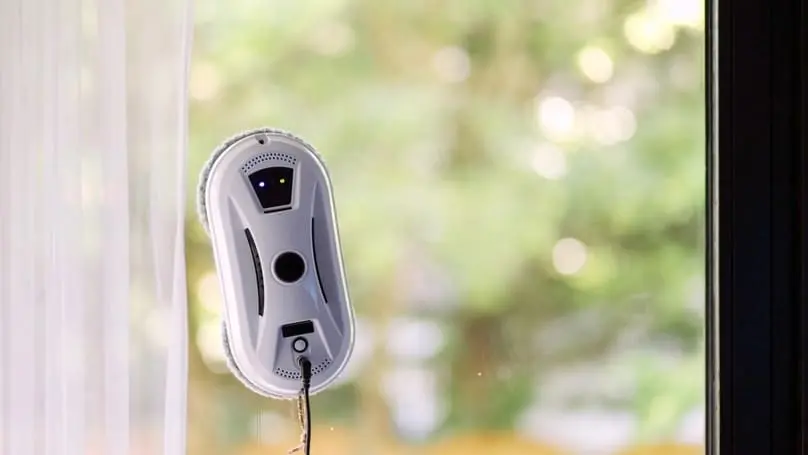
Cleaning the windows in your Florida home can be difficult, especially when exterior glass is hard to reach. Window cleaning robots can reduce repetitive wiping on compatible panes, but they are not completely autonomous: the user must set up the device, secure it, supervise the cycle, and move it between panes. Choosing the wrong model or glass type can also result in streaks, missed edges, or an unsafe setup.
This guide explains how the robots work, where they perform well, what they usually miss, and which features matter before buying one. If you prefer help with the surrounding glass and household surfaces, you can always turn to professional house cleaning in Palm Beach County, because exterior or high-access windows may require a separate service.
Do Robot Window Cleaners Really Work?
Yes, window cleaning robots do work for regular maintenance and light dirt, but with limitations. Window cleaning robots work well for routine dust, fingerprints, light grime, and large flat glass surfaces, but they do not fully replace manual or professional cleaning for frames, tracks, corners, mineral deposits, or heavy buildup.
- Where they excel: They usually perform best on routine dust, fingerprints, light grime, and maintaining large flat glass surfaces.
- Where they fall short: They do not fully replace manual or professional cleaning for frames, tracks, tight corners, mineral deposits, or heavy grime buildup.
Important Note: A robotic window cleaner should not be treated as a set-and-forget appliance. Follow the manual for the specific model, secure its safety tether to an approved stable anchor, supervise the device, and keep people, pets, and valuable objects away from the area below. Manufacturer requirements vary, but the ECOVACS WINBOT safety instructions also warn against unattended operation and use on broken or uneven glass.
How Do Window Cleaning Robots Work? Quick Steps
Window cleaning robots are semi-automated devices that use suction technology and microfiber cloths to clean compatible glass surfaces.
Step 1: Confirm That the Glass Is Compatible
Check the minimum pane size, glass type, surface condition, frame configuration, and permitted operating conditions in the manufacturer’s manual.
Window cleaning robots usually work best when the glass meets these conditions:
- Best fit: Large, flat, smooth glass, including some framed and frameless windows.
- Often difficult: Narrow, curved, textured, or grille-covered glass.
- Check the layout: Thick frames, handles, muntins, and narrow sections can interrupt the cleaning route.
- Watch surface conditions: Wet, cracked, uneven, heavily condensed, coated, tinted, or filmed glass may not be compatible.
- Always verify the model: Do not assume a surface is safe because another robot supports it.
Important Note: If the glass does not meet the model’s size, surface, or safety requirements, do not use the robot on that window.
Step 2: Prepare and Secure the Robot
A window washing robot adheres to glass surfaces using a powerful suction system that creates negative pressure against the surface, ensuring a firm hold. Install the correct pad, add only a manufacturer-approved liquid when required, connect the power system, and secure the tether exactly as instructed before attaching the unit.
Step 3: Let the Robot Follow Its Cleaning Route
These automated window cleaners move across the glass using motors and sensors to identify edges or frames, depending on the model. Controlled by a remote control or mobile app, they follow programmed cleaning routes while the microfiber pad wipes the surface and compatible models apply cleaning solution through spray nozzles.
Step 4: Move It Between Panes and Maintain the Pads
The user must retrieve the robot at the end of the cycle, move it to the next pane, and inspect the result for missed edges or streaks. Replace or wash dirty pads according to the care instructions; continuing with a loaded pad can redistribute dirt across the glass.
Window Cleaning Robot Performance by Dirt & Task Type
The results below describe typical limitations rather than guaranteed performance. Pad condition, cleaning liquid, glass type, robot design, and the amount of buildup can change the outcome.
Typical Results by Dirt or Residue
| Dirt or Residue | How the Robot Typically Performs | Manual Follow-Up |
| Fine dust | Often effective on compatible flat glass when the pad is clean | Inspect for remaining dust or streaks |
| Fingerprints | Good for routine maintenance | A second pass may be needed on oily marks |
| Light smudges | Often suitable for lightly soiled glass | Inspect the finish after the cycle |
| Pollen film | Microfiber pads may collect light surface pollen | Change the pad if it becomes loaded |
| Dried water spots | Removes light, recent rain spots, but may leave faint outlines if the water contained heavy minerals. | Sometimes |
| Hard-water deposits | Usually poor because wiping alone may not remove mineral buildup | Use a glass-compatible method after checking the manufacturer’s guidance |
| Bird droppings | Hardened material may remain or smear during the pass | Yes |
| Paint residue | Not an appropriate routine robot-cleaning task | Identify the glass and residue before choosing a removal method or qualified help |
Areas the Robot Usually Cannot Finish
| Area | Typical Limitation | Manual Follow-Up |
| Corners | Most robot designs cannot access 100% of the glass surface and may leave a small area untouched. | Yes |
| Window frames and edges | Bumper sensors keep the unit away from part of the outer frame. | Yes |
| Tracks and sills | Robots operate on the glass and cannot clean horizontal tracks, sills, or screen grooves. | Yes |
What to Consider When Choosing Window Cleaning Robots
Not all automated window-cleaner models are the same, so there are certain points to consider when making your choice.
Safety, Power, and Window Compatibility
- Suction power: This is essential to ensure optimal cleaning while maintaining a firm grip on the glass surface, reducing the risk of falling, especially when cleaning exterior windows. Compare it together with the complete safety system rather than treating suction as a guarantee.
- Safety features: As mentioned earlier, these devices are designed to operate vertically, so it’s important to consider a fall-prevention safety system. A safety tether is essential to reduce the consequences of detachment and must be installed as directed.
- Power and backup system: Some units work while plugged in and use a battery only as temporary backup, while others include a powered station. Confirm the cord reach, backup duration, and retrieval instructions for a power failure.
- Pane size and layout: Check the minimum glass dimensions and whether handles, grilles, deep frames, or several small panes will interrupt the robot’s route.
- Supervision and retrieval: Make sure the robot can be safely attached and removed from every pane without leaning from a window or entering an unsafe position.
Ease of Use, Design, and Maintenance
- Ease of use: This is a key point for those less familiar with using technological devices. Robots with smart navigation and intuitive controls can make the cleaning process easier to manage.
- Design: Consider the robot’s size and weight. These factors affect maneuverability and how easy it is to store when not in use.
- Versatility: It’s best to opt for robots that offer different cleaning modes and include microfiber cloths. Only use the robot on additional smooth surfaces when the manufacturer explicitly lists them as compatible; do not assume it can clean window screens.
- Pads and cleaning liquid: Confirm the cost and availability of replacement pads and whether the manufacturer requires a specific solution.
Window Cleaning Robot Features and Model Examples
The best window cleaning robot is not the same for every home. The examples below are not presented as YCS-tested rankings; they show how official specifications differ and which details a buyer should verify. Availability and product specifications can change, so confirm them directly with the manufacturer before purchasing.
- Cecotec Conga Windroid 1390: Cecotec lists a square design, app and remote control, eight cleaning modes, washable pads, dual spray, and a safety rope. Buyers should still confirm compatible surfaces, safe attachment, and current availability.
- ECOVACS WINBOT W2 PRO: ECOVACS lists intelligent route planning, triple-nozzle spray, framed and frameless flat-window compatibility, a safety rope, and a minimum supported window size. Verify the exact W2 configuration because the PRO and PRO OMNI versions use different power and station arrangements.
- HOBOT-S7 Pro: HOBOT lists dual reciprocating pads, dual spray nozzles, and sensors intended for framed and frameless edges. Check the official manual for glass requirements, tethering, operating conditions, and approved liquid.
Remote Control and Smart App Options
Window cleaning robots offer smart control via remote controllers and mobile apps, allowing users to start, stop, and direct the robot across windows and glass surfaces. These functions may include:
- Starting and stopping: Users can start and stop cleaning cycles remotely.
- Manual control: Some robots can be operated manually, as a remote control window cleaner, using an app or remote, similar to a car.
- Cleaning modes: Mobile apps may offer many cleaning modes, including “fast,” “deep,” and “spot” cleaning.
- Path planning: Path planning allows users to direct the robot to a specific area for detailed cleaning.
- Alerts: Some apps include voice alarms for low reservoir water levels or cleaning completion.
Best Automatic Window Cleaners for Large Windows
For large windows, choose an automated window cleaner with a compatible pane-size range, sufficient cord or station reach, a secure tethering system, and route planning suited to the glass. Features like automatic water spraying may support wet cleaning, but compatibility and safe retrieval should remain the first considerations.
Robot Window Cleaners vs Manual or Professional Cleaning
An automatic window washer can help maintain large, difficult-to-reach windows, but it cannot replace the thoroughness and versatility of manual cleaning or professional services. Like robot vacuum cleaners used for routine floor maintenance, window cleaning robots work within a defined surface and still leave tasks for the user.
What Window-Cleaning Robots Can Do
- Reduce some ladder-related cleaning: The principal benefit of a window-cleaning robot is its ability to clean windows on upper levels, reducing the risks associated with using ladders. Most models use a powerful suction motor to attach to the glass and have a backup safety tether in case of disconnection. However, the user must still be able to attach and retrieve the robot safely.
- Automate routine maintenance: For lightly soiled surfaces, a robot can provide a consistent wiping pattern. Results still depend on the pad, liquid, glass, and buildup.
- Clean a variety of flat surfaces: Robots can clean more than just windows. They can also be used on other smooth surfaces when the manufacturer lists them as compatible, making them a useful tool for general glass and surface care.
- Cover large areas efficiently: Window cleaning robots follow a systematic cleaning pattern, helping them cover large surfaces with less repetitive manual wiping.
What Window-Cleaning Robots Can’t Do
- Deep clean extremely dirty surfaces: Robots work best as maintenance tools, not for deep cleaning. They are ineffective at cleaning stubborn grime and mineral deposits from neglected windows. Hand cleaning is frequently required for these jobs.
- Reach tight areas and corners: Most robot designs, particularly round ones, cannot access 100% of the glass surface. They frequently overlook a small strip along the margins and have difficulty cleaning the corners. Even square robots leave a little area uncleaned.
- Adapt to complex shapes and conditions: Like other robots that clean your house, these devices use sensors and pre-programmed algorithms to navigate and clean. They may not work well with narrow, arched, or oddly shaped windows. They also may be unsuitable for rain, strong winds, or wet or oily surfaces, depending on the model’s operating instructions.
- Perform without supervision: Window cleaning robots are not set-and-forget appliances. A user must be present to move the robot between window panes, change dirty cleaning pads, and ensure the safety tether is securely fastened. A robot also requires frequent maintenance by the user.
Who Is a Window Cleaning Robot Best For?
| A Robot May Be a Good Fit When… | Manual or Professional Cleaning May Be Better When… |
| The home has several large, flat, compatible panes | The windows are small, divided, curved, textured, damaged, or obstructed by hardware |
| The main need is routine dust, fingerprints, or light grime | The glass has mineral deposits, hardened debris, paint, adhesive, or heavy buildup |
| A secure tether point and safe retrieval position are available | Placement or retrieval would require leaning outside or entering an unsafe position |
| The user is willing to supervise and move the device between panes | The buyer expects completely unattended cleaning |
When Professional Cleaning Is Still Necessary
Professional cleaning may still be appropriate for some tasks and conditions, as a window-washing robot has limitations regarding window type, level of dirt, and access. While robots are great for routine maintenance on large, flat windows, they cannot completely replace human tools and adaptability.
Some situations that may require qualified help are:
- Complex window designs: Window cleaning robots perform best on large, regular, and flat glass surfaces.
- Extreme or specialized cleaning needs: Robots are not built for extensive cleaning, so heavy mineral buildup, construction residue, paint, adhesive, or damaged glass may require a surface-specific assessment.
- Safety and accessibility concerns: Do not use a robot when attaching or retrieving it would place the user in an unsafe position.
- Performance and quality control: Robots can be effective, but they cannot clean every frame, seal, sill, track, screen, edge, and corner.
How Florida Conditions Affect Window Cleaning Robots
Florida homes can experience frequent rain, humidity, pollen, and—near coastal parts of South Florida—salt residue on exterior glass. A robotic window cleaner may help with light maintenance on compatible dry panes, but mineral spots, salt buildup, and residue around frames or tracks may still require manual attention.
Weather also affects safe operation. Do not assume a robot can be used during rain, strong wind, heavy condensation, or on wet glass; follow the operating limits for the specific model. Homeowners in Palm Beach County should evaluate the actual window design and exposure rather than use a universal Florida cleaning schedule.
Should You Hire a Window Cleaning Service Instead?
While window cleaning robots can be handy, they often miss edges, struggle with tough grime, and require supervision. Manual or professional cleaning may be more appropriate when the glass needs detailed work, the frames and tracks are also dirty, or the device cannot be attached and retrieved safely.
Cost, Time, and Long-Term Efficiency
Investing in window cleaning robots might seem practical, but the complete decision should include setup time, supervision, replacement pads, approved cleaning liquid, storage, and the need for manual touch-ups. A robot may provide value for repeated maintenance across several compatible panes, while a small or highly divided window layout may limit that advantage.
Service scope varies. Contact Yorleny’s Cleaning Service to confirm whether the glass, frames, tracks, interior or exterior surfaces, and access conditions for your property are covered before scheduling.
FAQs About Window Washing Robots and Professional Services
Can They Be Used on Frameless or Curved Glass?
Yes, many modern window cleaning robots can be used on frameless glass, but they are not intended for curved windows. Models that can clean frameless windows include unique sensors that detect edges and keep them from falling. Compatibility still depends on the specific model, pane size, glass condition, and safety instructions.
How Often Should I Clean My Windows With a Robot?
There is no universal cleaning schedule. Use the robot when compatible glass develops the light dust, fingerprints, or surface film the model is designed to handle. Exposure, weather, visible buildup, pad condition, and manufacturer instructions should determine the frequency.
Can I Use Both Robots and Professional Cleaners?
Yes, you can use robots and professional cleaners to clean your windows, and this can be an efficient technique. Using both services allows you to combine the comfort of automated maintenance with the comprehensive cleaning and specific skills of a professional.
What Is the Best Robot Window Cleaner?
No single model is best for every home. The best robot window cleaner for a particular property must match its glass type, pane size, frame configuration, power access, tether point, cleaning needs, and safe retrieval position. Compare current manufacturer instructions and independently tested window cleaning robot reviews before purchasing.
Are Window Cleaning Robots Worth It?
Window cleaning robots are useful for large, tall, or hard-to-reach windows. They enhance safety by reducing ladder use, save time, and provide consistent cleaning. However, they may struggle with heavy grime, textured glass, and tight corners, often needing manual touch-ups. They may be worth considering for homes with several large, compatible panes and recurring light buildup, provided the user is willing to supervise and maintain the device.

Reviewed by:
Tony Loeffler is the Co-Founder of Yorleny's Cleaning Service and a leader in residential cleaning services. As a content reviewer and writer, he is an expert around the cleaning services in Florida, specifically West Palm Beach County.
Recent Articles

How to Clean Before Fall Guests Arrive: Quick Tips for Busy Hosts
Welcoming friends and family into your home for the autumn holidays can be a rewarding experience. However, figuring out exactly how to…

The Benefits of Property Management Cleaning Services for Florida Hosts
As a landlord, you run a business where tenants are customers and rental units are assets, meaning you must maintain your property…
How to Clean Concrete Floors Without Damaging the Surface
Polished concrete is known for being durable, low-maintenance, and attractive. However, “low-maintenance” does not mean “no maintenance.” Knowing how to clean concrete…
See below to check if our top-quality house cleaning services are available in your city and book your first appointment with just a few clicks.