

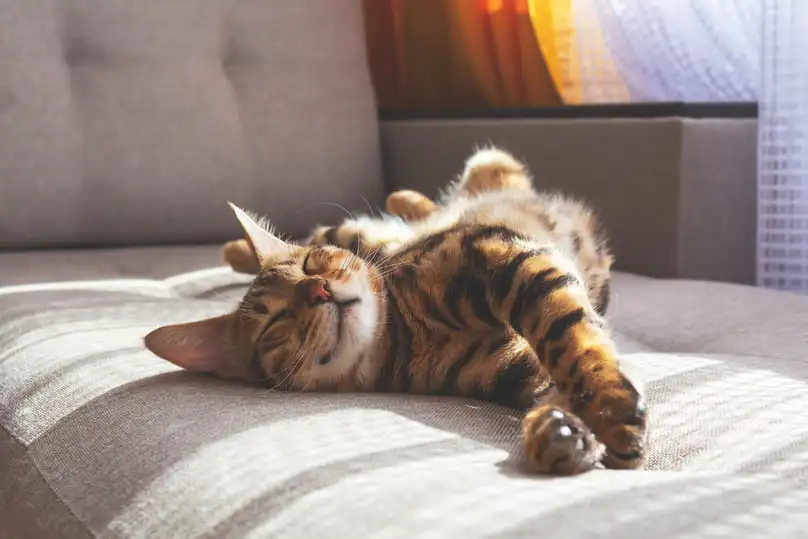
Having a cat at home brings endless joy and companionship, but it also introduces unique cleaning challenges—especially when dealing with cat urine. Knowing how to get rid of cat pee smell is essential to maintaining a clean, healthy, and inviting space.
Cat urine has a strong, long-lasting odor that can quickly fill your home. Don’t worry—this guide from Yorleny’s Cleaning Services will show you how to remove cat urine smell effectively. Start by absorbing fresh urine, then choose a treatment suited to the surface. Older contamination or urine below the surface may need further assessment.
How to Get Rid of Cat Pee Smell Fast?
Start with these five steps, then use the surface-specific advice below to choose the right treatment:
- Blot fresh urine with paper towels or a clean cloth without rubbing.
- Choose an enzymatic cleaner labeled for cat urine and the affected surface; test a hidden area first.
- Follow the product’s application and treatment directions without mixing cleaners.
- Let the area dry as directed and keep pets away until the label allows them to return.
- If odor persists, check for missed spots or contamination below the surface before repeating treatment.
Important note: A cleaner labeled for cat urine may still be unsuitable for your flooring or upholstery. Check both the product label and the material’s care instructions before applying it.
Immediate Steps to Take After a Fresh Accident
The steps below explain how to apply the quick answer to a fresh accident. Older stains may also need the checks in the persistent-odor section.
1. Blot, don’t rub
To start the process of how to get rid of cat pee smell, gently blot fresh urine with paper towels or a clean cloth. Avoid rubbing—it spreads the stain and pushes the odor deeper. Do not rinse or soak fabric unless its care instructions allow it.
2. Choose a Cleaner for the Surface
Choose an enzymatic cleaner labeled for cat urine and the affected material. Choosing cleaning products for pet accidents also means checking dilution, surface exclusions, and precautions for pets. Test a hidden area first.
For example, Nature’s Miracle’s Urine Destroyer Plus for Cats directions exclude untreated hardwood, leather, suede, silk, and wool specialty fabrics. An enzyme-based formula is not automatically suitable for every surface.
3. Apply the Product as Directed
Follow the exact product’s application amount, treatment time, and blotting or rinsing instructions. Do not substitute a generic waiting time, assume vinegar and enzymes are equivalent, or combine cleaners.
4. Let the Area Dry and Keep Pets Away
Keep your cat out of the treated area until the product’s return conditions are met. Follow drying instructions without adding heat or more liquid that the material does not allow.
5. Reassess Persistent Odor
If odor remains after treatment and drying, check the label before repeating. The persistent-odor section below explains what to investigate and when to seek help.
How to Remove Cat Pee Smell by Surface Type
Carpet and rugs
When figuring out how to get rid of cat pee smell from carpets or rugs, start by blotting the affected spot thoroughly. Then, apply a cleaner labeled for cat urine and that carpet or rug material, following its directions.
For older stains, identify the full affected area and follow the product’s instructions for repeat treatment. Do not combine vinegar, baking soda, and peroxide. When removing pet stains from carpet, contamination in padding or backing may need assessment beyond surface treatment.
Hardwood and laminate flooring
To learn how to get rid of cat pee smell from hardwood or laminate flooring, act quickly. Wipe the area immediately to limit absorption, then use a product approved for the floor’s material and finish.
Laminate floors are more sensitive to moisture, so use minimal liquid. For persistent odors in hardwood, consult the flooring manufacturer or a restoration specialist before sanding or sealing. A hardwood floor-cleaning routine should follow the finish’s care instructions; routine cleaning does not establish whether restoration is needed.
Tile, grout, and baseboards
Tiles and grout can trap odor particles, so knowing how to get rid of cat pee smell in these areas is crucial. Start by wiping up fresh urine and identifying the tile, grout, and baseboard materials before choosing a cleaner.
Next, apply a product labeled for cat urine and the affected material, following its directions. For grout and baseboards, always test cleaning solutions on a hidden area first. Daltile’s natural-stone care guidance warns that even diluted vinegar can etch many natural stones, so tile should not receive one universal acid-based treatment.
Upholstery and mattresses
If your furniture or mattress was affected, check the upholstery or mattress manufacturer’s cleaning instructions before adding liquid. First, absorb as much urine as possible with paper towels or a clean cloth. Then, use a cat-urine treatment only if its label and the furniture or mattress instructions permit it.
For upholstery marked S (solvent cleaning only) or X (vacuuming or light brushing only), do not apply a water-based spray. La-Z-Boy’s fabric care instructions illustrate these limits; follow your own manufacturer’s directions. If urine has reached cushion filling or mattress layers, further assessment may be needed.
Before Trying Home Remedies for Cat Urine Odor
Do not assume a homemade mixture is compatible with every carpet, floor, or piece of furniture. Cornell University’s College of Veterinary Medicine recommends avoiding ammonia- or vinegar-containing products when cleaning cat-soiled items.
Baking soda, peroxide mixtures, and coffee grounds are not substitutes for a surface-compatible product labeled for the accident. Avoid layering household ingredients or masking the smell; check the material and cleaner instructions instead.
Why You Might Still Smell Cat Pee (Even After Cleaning)
Deep padding saturation
If you can still smell cat urine after cleaning, it may be due to urine that has reached padding or other layers beyond the cleaned surface. Other possibilities include an untreated spot, a new accident, or treatment that did not follow the product’s instructions. Check these before adding more cleaner.
How Cat Pee Affects Floors and Fabrics
Cat urine can stain materials or damage some finishes, especially when moisture remains in contact with the surface. The extent depends on the material and exposure. That’s why it’s important to act fast and learn how to get rid of cat urine odour using the proper products.
Odor Near Air Vents
If the smell seems to come from an air vent, do not assume it is cat urine or pour cleaner into the ductwork. Ask a qualified heating, ventilation, and air conditioning (HVAC) technician to identify the source. The Environmental Protection Agency (EPA) cautions about chemical treatments inside air ducts.
Signs you need a professional odor removal service
Consider seeking expert assistance if:
- The odor lingers despite correct use of a compatible cleaner.
- Urine appears to have reached padding, subflooring, or another inaccessible material.
- You cannot identify the surface or a suitable treatment.
- The odor seems to come from a vent or another building system.
Describe the affected material and previous treatments when contacting a cleaner, flooring specialist, or HVAC technician. Confirm the provider’s scope; repeated odor alone does not prove mold or a mechanical fault.
Preventing Repeat Accidents and Odor
A cleaning routine for a home with pets can help keep litter areas, bedding, and fresh messes under control. Cleaning the spot does not explain why your cat is avoiding the litter box.
If accidents are new or recurring, contact your veterinarian. Cornell’s house-soiling guidance explains that medical conditions, litter-box preferences, and other factors can contribute; avoid diagnosing the cause from the smell alone.
Ready for a Professional Deep Clean?
Learning how to get rid of cat pee smell is essential to maintaining a fresh, welcoming home — but even with appropriate surface cleaning, pet odors can sometimes linger deep within carpets and furniture. Confirm whether the affected material needs household cleaning or specialist treatment.
Yorleny’s Cleaning Service helps Florida homeowners with household cleaning. Before booking, describe the affected surfaces and ask which tasks the service includes. Contact Yorleny’s Cleaning Service to discuss your home’s cleaning needs and the appropriate next step.
FAQ: Cat Urine Odor Removal
How long does cat urine smell last?
There is no fixed duration. Odor can persist when urine remains in porous layers, a spot was missed, or new accidents occur. The material and treatment matter more than waiting a set number of days. Persistent odor needs reassessment rather than fragrance masking.
Will blacklight help me find all the spots?
Using a blacklight can be a helpful step when figuring out how to get rid of cat pee smell, as it reveals many hidden urine spots that are invisible to the naked eye. However, it won’t always detect every affected area. The visibility depends on factors like the surface material, the age of the stain, and whether cleaning products have been used before.
Why does cat urine smell come back after cleaning?
The visible spot may not be the whole affected area. Urine below the surface, a missed spot, unsuitable treatment, or a new accident can leave odor behind. Follow the product’s directions and seek material-specific help if it persists.
Can I use baking soda or vinegar instead of an enzyme cleaner?
Do not treat them as equivalent. Cornell advises avoiding vinegar-containing products on cat-soiled items, and a homemade mixture may not suit the material. Choose a product labeled for cat urine and the surface instead of combining household ingredients.

Tony Loeffler is the Co-Founder of Yorleny's Cleaning Service and a leader in residential cleaning services. As a content reviewer and writer, he is an expert around the cleaning services in Florida, specifically West Palm Beach County.
Recent Articles
How to Organize Kitchen Drawers for a More Functional Kitchen
Keeping your kitchen organized helps you save time, avoid food waste, and cook with greater ease. Knowing how to organize kitchen drawers…

Post Halloween Cleanup Checklist for a Cleaner Home
Halloween is a holiday that allows us to unleash our creativity and enjoy unforgettable moments. However, once the fun is over, we…

Halloween Cleaning Ideas: Get Your Home Ready for the Big Night
The arrival of October brings with it a wave of excitement and anticipation. It’s time to dust off your decorations, plan creative…
See below to check if our top-quality house cleaning services are available in your city and book your first appointment with just a few clicks.