

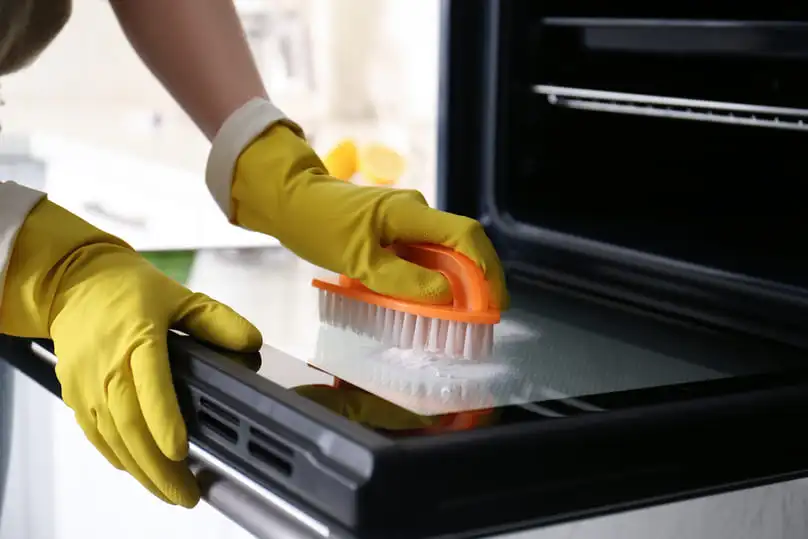
Grease and baked-on splatters can leave oven glass cloudy, making it harder to see food as it cooks and making the whole kitchen feel less clean. Scrubbing with the wrong product or tool can also scratch the glass or damage nearby seals and finishes.
To clean oven glass safely, first check the appliance manual, then use a gentle method suited to the exterior, interior, or space between the panels. This guide explains what you can clean yourself, when manufacturer instructions are essential, and when to call a technician. For help with routine home cleaning, visit Yorleny’s Cleaning Services.
How to Clean Oven Glass: Quick Steps
Do you struggle to remove grease from your oven door? Use these steps as an overview before following the surface-specific instructions:
- Turn the oven off, let the glass cool completely, and check the owner’s manual.
- Wipe the exterior with mild soapy water or a glass cleaner approved for the glass and surrounding finish, applied to a cloth.
- Clean accessible interior glass with mild soap; use baking soda paste on baked-on residue only if the manual permits it.
- Clean between panels only through a manufacturer-approved opening or door-removal procedure.
- Remove all cleaner residue and dry the glass with a clean microfiber cloth.
Important Note: Do not use steel wool, abrasive pads, metal scrapers, or a razor blade unless the manufacturer explicitly approves the tool for that exact glass. Keep cleaner and excess water away from vents, hinges, electrical components, and the oven-door gasket.
Common Oven Glass Stains and Problems
Grease Buildup
Grease buildup on oven glass is typical because cooking fats, sugars, and sauces splash, spill, or overflow and bake onto the glass at high temperatures. Over time, this deposit can form a persistent stain that is more difficult to remove. These stains are especially common with foods high in grease and fat, such as roasts, lasagnas, and sausages.
Baked-On Food
Baked-on food is a frequent oven glass stain because grease, sugar, and food particles can splatter onto the glass and harden with repeated heating. This residue is usually more difficult to remove than a fresh film.
Unlike a fresh grease film, baked-on residue has been exposed to heat repeatedly and may require more contact time with an approved cleaner. Over time, the accumulation bonds tightly to the surface, creating a stubborn baked-on layer similar to what you find when cleaning a burnt pot. However, oven glass still requires nonabrasive tools and the appliance manufacturer’s approved products.
Heat Marks or Trapped Streaks
What looks like a heat mark may be food or grease that has repeatedly baked onto the surface. If the discoloration remains after the approved cleaning method, stop scrubbing and consult the manufacturer because the mark may be inside the panel or may not be removable surface residue.
Step-by-Step Guide: How to Clean Oven Glass
Step 1: Prepare Your Oven and Tools
Cleaning your oven door glass with common household products can be effective when those products are approved for the appliance and fully rinsed away. Before you begin, turn the oven off, let it cool completely, and check the manual for approved products and door-access instructions. This guide focuses on the door glass; for the oven cavity and other surfaces, see our broader guide to cleaning an oven.
Tools needed:
- Baking soda
- Water
- White vinegar, if the manufacturer permits it on the glass
- A soft cloth or non-abrasive sponge
- A container
- Mild dish soap
- Clean microfiber cloths for rinsing and drying
- Gloves and any protection required by a commercial cleaner’s label
Step 2: Clean External Oven Glass
Cleaning external oven glass is easiest since it is less exposed to dirt than the inner part. After removing any loose dirt, apply a degreasing all-purpose cleaner or a paste of baking soda and water to difficult areas, but only if the product is approved for the exterior glass and surrounding finish. Apply it to the cloth instead of spraying toward the door vents.
After rinsing the glass with a moist cloth, buff it dry with a fresh, dry microfiber cloth to achieve a shine free of streaks.
Step 3: Prepare the Interior Glass and Cleaning Paste
For the inside of the oven, you have to put in a little more effort since that’s where the most grease and dirt accumulates.
Mix a little baking soda with a small amount of water in a bowl until you have a thick paste. Baking soda is a mild, natural cleaning agent that helps remove grease and sticky residue from glass without scratching it when it is applied with a nonabrasive cloth or sponge and permitted by the manufacturer.
Step 4: Treat Baked-On Residue
Spread the baking soda paste onto the glass of the oven door. Make sure to cover all stained or dirty areas. Let the paste sit for at least 15 to 20 minutes so it can loosen the dirt and stains. Keep it away from the gasket, vents, trim, heating elements, and openings between the panels.
Use a soft cloth or a non-abrasive sponge to scrub the glass. Use gentle circular motions to remove the stains and grease.
For heavy baked-on grease, Easy-Off Professional or Zep Heavy-Duty may be considered only when the product label and oven manual approve the cleaner for the glass. Do not apply heavy-duty cleaner between the panels unless the manufacturer specifically instructs you to do so.
Step 5: Rinse and Dry the Interior Glass
Next, mix equal parts white vinegar and water in a bowl. If vinegar is approved for the glass, soak a clean cloth in this solution and use it to rinse the glass. The vinegar will remove any remaining baking soda residue and leave the surface ready for a final clean-water wipe. Finally, dry the glass with a clean, dry cloth to avoid watermarks and maintain excellent results when learning how to clean oven glass effectively.
Step 6: Check the Approved Access Method Between Panels
Before inserting any tool into the door, check whether the manual identifies an approved opening and cleaning procedure. Access varies by model, and some oven doors must be removed before the space between the panels can be reached safely.
Remove or separate the door only when the manual provides instructions for the exact model. GE Appliances’ between-panel guidance, for example, directs readers to model-specific door-removal instructions. If the procedure is unclear, contact the manufacturer or an appliance technician.
Step 7: Clean Between the Panels if Permitted
Only use a tool through a lower opening if the manual for your exact model describes that method. Follow its instructions for the tool and cleaner, keep any cloth securely attached, and use minimal moisture. If the manual does not describe access through an opening, do not insert a tool; contact the manufacturer or an appliance technician.
Oven Glass Maintenance Tips
Wipe accessible exterior and interior glass when spills occur or grease becomes visible. Clean between door panels only as directed by the manufacturer; there is no need to open the door routinely if the hidden area is clean.
Quick Cleaning After Each Use
- Prevent buildup: To prevent spills and lessen the need for frequent deep cleaning, use covered, oven-safe cookware when appropriate.
- Clean up spills once the oven cools: Wipe fresh splatters from the exterior and accessible interior glass before they are reheated.
- Use an approved degreaser: Use a moist microfiber cloth and an all-purpose degreasing cleaner only if it is approved for the glass. For a streak-free finish, rinse and buff with a dry microfiber cloth.
Preventing Stubborn Stains
- Clean up spills right away: As soon as the oven is cold enough to handle, wipe up any spills or splatters to stop them from baking on.
- Catch drips only as directed: Use a baking sheet on a lower rack only if the oven manual permits it. Never line the oven floor or block heating elements or vents with aluminum foil.
- Make use of appropriate cookware: Make sure your baking pots and plates don’t overflow and are safe to use in the oven.
- Examine the door seals: Verify that the oven door gasket is undamaged and in good shape. Do not scrub, pull, or apply cleaner to it; contact the manufacturer if it is loose or damaged.
Do-It-Yourself (DIY) vs. Professional Oven Cleaning
Learning how to clean oven glass on your own can be simple and effective when dealing with light buildup. DIY methods are budget-friendly, use common household products, and help you maintain your oven between deep cleanings. However, stubborn grease, baked-on residue, or long-neglected oven doors can be challenging to remove without the right tools or experience.
If the glass stays cloudy after both accessible surfaces are clean, or if the door must be disassembled, consult the manufacturer. Cracked glass, a damaged hinge or gasket, trapped cleaner, or an inaccessible stain may require an appliance technician. A home-cleaning service may help with accessible kitchen surfaces when included in the selected package; contact Yorleny’s Cleaning Service to confirm the scope.
Frequently Asked Questions
Can I clean oven glass with vinegar?
You can clean oven glass using vinegar, if the appliance manufacturer permits it on that surface. For lighter cleaning, a solution of equal parts white vinegar and water may help with greasy film. Apply the solution to a cloth instead of spraying it toward vents, seals, or openings.
For a natural way to clean oven glass, vinegar may help remove light film or baking soda residue. Use it only if the manufacturer approves it. First apply the baking soda paste and wipe it away with a damp cloth. Then use diluted vinegar separately to remove any remaining residue. Do not combine them into one paste.
How often should I clean the oven door?
Fresh spills should be cleaned as soon as the oven cools to avoid baking on. Clean the full accessible glass when visible grease or reduced visibility appears. The appropriate frequency depends on use and the manufacturer’s guidance rather than a fixed schedule.
What is the safest way to clean between oven glass panes?
Consult the manual for the exact model first. Use an approved opening and a securely attached, minimally damp cloth only when the manufacturer describes that method. Remove the door only with model-specific instructions; otherwise contact the manufacturer or an appliance technician. Avoid loose cloths, sharp tools, abrasives, and excess liquid.

Reviewed by:
Tony Loeffler is the Co-Founder of Yorleny's Cleaning Service and a leader in residential cleaning services. As a content reviewer and writer, he is an expert around the cleaning services in Florida, specifically West Palm Beach County.
Recent Articles

How to Clean Before Fall Guests Arrive: Quick Tips for Busy Hosts
Welcoming friends and family into your home for the autumn holidays can be a rewarding experience. However, figuring out exactly how to…

The Benefits of Property Management Cleaning Services for Florida Hosts
As a landlord, you run a business where tenants are customers and rental units are assets, meaning you must maintain your property…

How to Clean Concrete Floors Without Damaging the Surface
Polished concrete is known for being durable, low-maintenance, and attractive. However, “low-maintenance” does not mean “no maintenance.” Knowing how to clean concrete…
See below to check if our top-quality house cleaning services are available in your city and book your first appointment with just a few clicks.