

Have you ever wondered how to check humidity in home? The truth is, nobody likes living in a damp house, especially in Florida. Excess moisture drains your energy and puts your health at real risk.
Most studies explain what should the humidity be in my home, recommending levels between 40% and 60%. Above this range, excess humidity can damage building materials, furniture, and indoor air quality.
However, many homeowners do not know how to tell humidity level accurately. They also struggle with how to measure humidity in a room using reliable methods. That is why this guide explains how to check humidity in house, how hygrometers work, and when to act. YCS will help you identify risks before humidity becomes a serious problem.
How to Check Humidity in Home?
The finest tool for measuring humidity in a home is a hygrometer, a low-cost digital gadget that offers precise, real-time readings. Other techniques include checking smart thermostats, doing an ice cube test, and keeping an eye out for indicators like condensation on windows.
What Is the Ideal Humidity Level in a Home in Florida?
In Florida, a home’s indoor humidity should be between 45% and 55%. Although 40–60% is usually okay. Knowing how to check humidity in home is necessary since it is recommended to maintain it below 55%. This avoids the formation of dust mites, mold, and mildew, which are common problems in Florida’s humid climate.
Signs Your Home Has High or Low Humidity
Condensation on windows, musty smells, mold development, and damp, sticky air are all consequences of high humidity (>50–60%). Static shocks, dry skin and throats, and cracked wood flooring or furniture are all consequences of low humidity (<30%). You must understand how to check humidity in home for comfort and health. An ideal indoor humidity level is typically suggested to be between 30% and 50%.
Why Indoor Humidity Matters in Florida
How Humidity Affects Health and Comfort
Because of Florida’s subtropical climate, managing indoor humidity is essential for comfort and health. Outdoor humidity often exceeds 70% to 90% throughout the year.
For Florida homes, ideal indoor levels range between 45% and 55%. This range supports comfort and helps explain what should the humidity be in my home.
When humidity rises above 60%, indoor spaces feel sticky and uncomfortable. High moisture promotes mold growth, dust mites, and respiratory irritation.
How Moisture Causes Mold, Odors, and Damage
Indoor humidity control is not only about comfort. It is critical for protecting structural materials and indoor air quality.
Florida’s persistent moisture allows humidity to infiltrate walls, ceilings, and flooring. This leads to fast mold growth, lingering odors, and costly damage. To reduce these risks, experts recommend keeping indoor relative humidity between 30% and 50%. Understanding how to check humidity in home helps prevent long-term issues.
What Should the Humidity Be Inside a Home
Ideal Humidity Levels for Healthy Living
Health organizations recommend indoor humidity between 30% and 50%. The ideal comfort range usually sits between 40% and 50%. This balance reduces mold growth and dust mites. It also protects skin, respiratory health, and wooden surfaces. Knowing what should the humidity be in my home allows better control year-round.
Signs Your Home’s Humidity Is Too High or Too Low
Healthy indoor humidity ranges from 30% to 50% relative humidity. Levels above 60% increase mold, condensation, and musty odors. Low humidity below 30% causes dry skin, static electricity, and cracked wood. Learning how to tell humidity level helps you correct problems early.
Measuring Your Home’s Humidity
How to Check Humidity in a Room
If you want to know how to check humidity in room, start with a digital hygrometer. This device provides accurate, real-time readings between recommended 40% and 60%.
Visual indicators also help when learning how to measure humidity in a room. Common signs include condensation, peeling paint, mold stains, and musty odors. Using a hygrometer is the most reliable way to check humidity in house conditions. Affordable models are widely available and easy to use.
Using Your Thermostat or HVAC System to Read Humidity
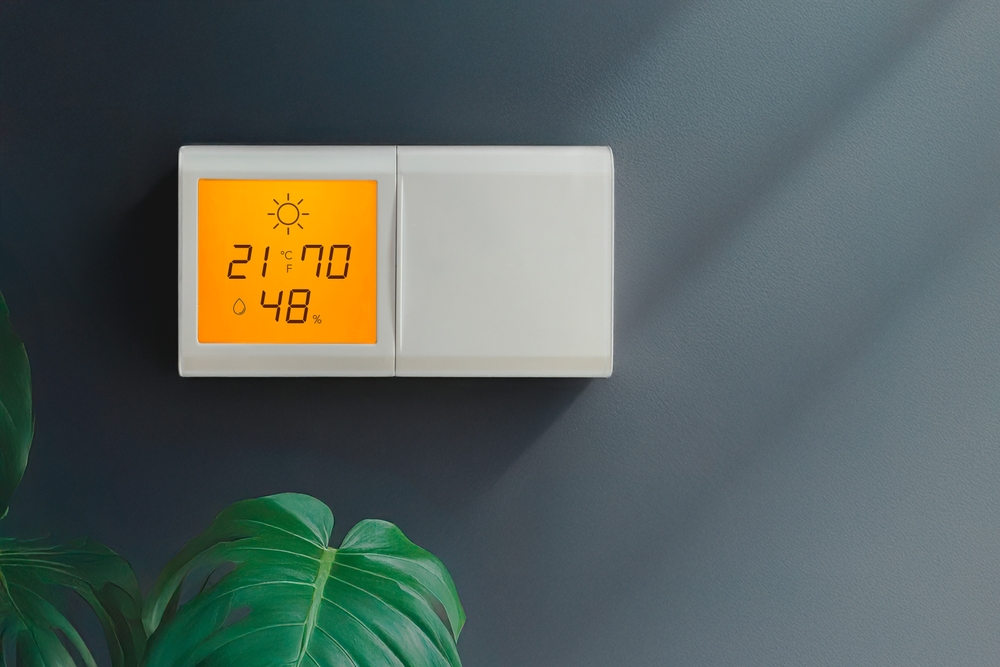
Using your thermostat or HVAC system to monitor and control humidity is an excellent way to understand how to check humidity in home conditions while increasing comfort and preventing mold growth. Modern smart thermostats and many digital units include built-in sensors that display relative humidity (RH) on the screen or through smartphone apps.
To read the humidity with your thermostat, a practical method for how to check humidity in home, look for the relative humidity (RH) percentage on the main screen or within the “Status” or “Information” menus of smart devices such as ecobee or Nest. These systems usually show ambient humidity between 30% and 50%, helping you adjust indoor comfort levels.
How to Measure Humidity in a Room (Step by Step)
Where to Place a Hygrometer
To measure room humidity as part of how to check humidity in home, place a digital hygrometer 1 to 2 meters (3–5 feet) above the floor. Keep it away from direct sunlight, vents, windows, and doors. Allow 24 hours for the sensor to adjust before taking reliable readings. Ideal values range from 30% to 50%.
How to Read and Interpret the Results
Measuring room humidity is best done with a digital hygrometer that provides accurate relative humidity (RH) percentages. Place the device in the center of the room, away from ventilation and moisture sources, and allow the reading to stabilize. Understanding these values is essential when learning how to check humidity in home effectively.
How Often You Should Check Humidity Levels
Humidity levels should be checked regularly to maintain comfort and prevent mold growth, especially as weather conditions change. For most households, weekly monitoring is enough, but daily checks are recommended when learning how to check humidity in home during rainy seasons or extreme heat.
How to Tell Your Home’s Humidity Level Without a Hygrometer
If you do not have a hygrometer, you can still learn how to check humidity in home using simple household methods. These alternatives help identify which rooms hold excess moisture without specialized equipment.
Dew point for measuring humidity
Knowing the dew point, which is the temperature at which water vapor condenses, is useful for how to check humidity in home without digital tools. To find it, you can fill a shiny metal bucket with water so that it reflects light and heat.
Fill the bucket two-thirds full with water and then gradually add ice cubes. Stir the contents until condensation forms on the surface of the bucket while continuing to add ice cubes. With this process, there will come a point when the water will condense on the walls of the bucket, forming dew.
This is the moment to place a thermometer in the water and determine the dew point. This information will help us know if we have any excess humidity in our homes. This method is also very effective for determining humidity without a hygrometer.
The Ice and Glass Method
Now that you know how to find the dew point, this trick is quite similar. It’s much quicker and easier to determine, and although it’s not as precise, it can help you determine if your room is too humid. To perform this method, you need a glass of water and three ice cubes. Mix them and leave the room empty.
You should return in about five minutes to check the glass. If there is thick condensation around the outside of the glass, it means the room is too humid.
How to Lower Humidity Inside Your Home
Ventilation and Airflow Tips
To reduce home humidity and understand how to check humidity in home effectively, improve ventilation by running exhaust fans, opening windows during dry, cool periods, and maintaining regular airflow to minimize moisture buildup. Key tips include using kitchen and bathroom vents, air conditioning, cleaning filters, and dehumidifiers for reoccurring difficulties to properly remove moisture from the air.
Using Dehumidifiers and A/C Settings
Reduce house humidity by turning AC fans to “Auto,” using “Dry Mode,” and keeping filters clean to enhance moisture removal. Combine with portable or whole-house dehumidifiers for moist regions such as basements. Use exhaust fans while cooking/showering and make sure the air conditioner is not excessive.
How to Eliminate Humidity in Problem Areas
Lowering house humidity entails lowering moisture sources, boosting ventilation, and employing equipment such as dehumidifiers or air conditioners. To maintain appropriate levels, use exhaust fans while cooking or showering, clean HVAC filters, use portable dehumidifiers in basements, open windows for cross-ventilation, and seal air leaks around doors and windows.
How Humidity Affects Cleaning and Air Quality
Why Humidity Makes Dust, Odors, and Mold Worse
High humidity reduces the efficiency of cleaning and affects indoor air quality, making it important to know how to check humidity in home environments to prevent long-term issues related to pollutants and moisture buildup.
How Regular Cleaning Helps Control Moisture
Indoor humidity levels between 30% and 50% are crucial for proper cleaning and healthy air quality because they prevent mold, mildew, and dust mites from growing uncontrollably. High humidity (>60%) causes pollutant growth and chemical off-gassing, whereas low humidity (<30%) promotes static electricity and virus multiplication.
Regular cleaning helps to control moisture by eliminating organic matter that feeds mold, addressing damp surfaces, and maintaining ventilation systems.
When Indoor Humidity Leads to Mold or Odor Problems
Early Signs of Mold Growth
Knowing how to check humidity in home conditions is essential when indoor moisture reaches levels that cause mold growth, persistent odors, and material damage.
Mold can come in many colors and shapes, from black, green, or white patches to fuzzy or hairy specks. Mold typically thrives in damp, dark places like bathrooms, kitchens, basements, or attics. Some signs of mold in your home include:
- A musty or earthy smell.
- Stains or discoloration on walls, ceilings, or floors.
- Allergies, asthma, or irritation of the eyes, nose, or throat.
- Deterioration or rotting of wood, paper, or fabric.
How Humidity Damages Fabrics, Curtains, and Furniture
High humidity is commonly defined as a serious threat to household products because it promotes moisture absorption, mold growth, and structural damage. Natural materials such as wood, cotton, silk, and wool are more vulnerable to degradation, becoming musty, discolored, or deformed.
What to Do If Humidity Is Too High
To lower high indoor humidity, use a dehumidifier, enhance ventilation with exhaust fans, and make sure your air conditioner’s fan is set to “auto”. Address moisture sources immediately by covering pots while cooking, taking shorter showers, and avoiding drying garments indoors. The humidity level should preferably be between 30 and 50%.
Should I Contact a Cleaning Services if Humidity Is Too High in My Home
If you have a problem on how to check humidity in home and high humidity (more than 60%) has resulted in mold, mildew, or a musty odor, you should contact a cleaning service. For structural issues such as chronic dampness, condensation on walls, or suspected leaks, you should contact an HVAC professional or handyman to address the underlying cause of the moisture.
When to Consider Professional Cleaning Assistance
When Moisture Has Already Caused Mold or Musty Smells
Even if you already know how to check humidity in home, excess moisture can sometimes go unnoticed until mold spots or persistent musty odors appear.
In Florida homes, high humidity levels can quickly affect walls, carpets, and upholstery, making DIY solutions less effective once damage has started. When these signs appear, professional cleaning support becomes a safer and more reliable option.
How Deep Cleaning Helps Restore a Healthy Home
Understanding how to check humidity in home is an important first step, but deep cleaning plays a key role in restoring indoor comfort. Professional services help remove hidden moisture-related buildup, reduce allergens, and improve overall air quality. This approach supports a healthier living environment, especially in humid climates like South Florida.
Need help controlling humidity and preventing mold? Book a deep cleaning service in Palm Beach County Contact us today to get expert help maintaining a cleaner, healthier home and receive guidance from Yorleny’s trusted local cleaning team. If humidity is causing mold or musty odors, our Deep Cleaning Service in South Florida can help restore freshness and improve air quality.
FAQs About How to Check Humidity in Home
How do I check humidity in my house?
The easiest way to how to check humidity in home is by using a digital hygrometer, an affordable device that shows indoor moisture levels in real time and helps you monitor changes throughout the day.
What should the humidity be inside my home?
When learning how to check humidity in home, it’s helpful to know that ideal indoor humidity usually falls between 30% and 50% for comfort, health, and mold prevention.
How can I lower humidity indoors?
If how to check humidity in home reveals high moisture levels, improving ventilation, using exhaust fans, running a dehumidifier, and fixing leaks can significantly reduce excess humidity.
How can I tell if my humidity level is too high?
Understanding how to check humidity in home also involves spotting signs like condensation on windows, musty odors, damp walls, or frequent mold growth in bathrooms and closets.
How can I check humidity without a device?
If you want to learn how to check humidity in home without a device, you can look for signs like condensation on windows, musty odors, or warped wood. You can also use simple methods like placing ice in a glass to observe moisture levels in the air.
Is high humidity dangerous?
Yes, high humidity can be harmful. Understanding how to check humidity in home conditions helps prevent mold growth, respiratory issues, and damage to furniture or walls.
Recent Articles

How to Get Easter Egg Dye Off Skin Safely
Easter is an exciting season that offers the perfect opportunity to create colorful treats and meals. However, many people wonder how to…

Easter Decorations Ideas for Every Home in 2026
Easter decorations ideas are perfect for transforming your home into a warm and festive space during spring. This season is ideal for…

Vacation Rental Cleaning: Checklists and Standards for Consistent Guest Turnovers
Vacation rental cleaning is a real challenge, for both tourists and hosts. A dirty vacation rental can ruin a traveler’s stay, and…
An overview of the areas we serve
See below to check if our top-quality house cleaning services are available in your city and book your first appointment with just a few clicks.