

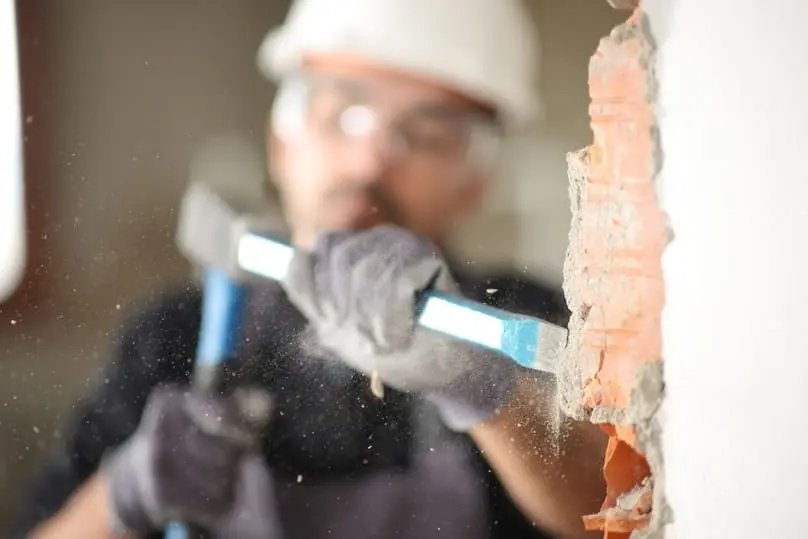
Construction work can release dust that affects air quality, occupied areas, and nearby surfaces, making construction dust control essential during building, demolition, and renovation projects. The type and level of risk depend on the materials being disturbed, the task, and the amount of exposure.
This guide explains how to reduce dust during construction by isolating the work area, controlling particles at the source, protecting the HVAC system, cleaning as work progresses, and completing a separate final cleanup after the work ends.
Construction Dust Control: Quick Steps
Effective construction dust control begins before tools start producing dust and continues until final cleanup is complete. Use these quick steps to reduce particles at the source, contain them within the work zone, and limit their spread into occupied areas.
- Identify the materials and dust-producing tasks before work begins.
- Remove belongings when possible, and cover furniture, floors, and other surfaces that must remain.
- Separate the work zone from occupied areas with sealed barriers and a controlled entry point.
- Protect HVAC supply and return openings in the work area and provide appropriate ventilation.
- Use tool-integrated dust collection or wet methods when they are suitable for the task and material.
- Use HEPA-filtered equipment, clean as work progresses, and keep barriers in place through final cleanup.
Important Note: If the project may disturb lead-based paint, asbestos-containing materials, or extensive mold, stop and seek the appropriate qualified professional. Routine dust containment and post-construction cleaning are not substitutes for hazardous-material assessment or remediation.
What Is Construction Dust and Why Control Matters
What Construction Dust Is and Where It Comes From
Construction dust is a mixture of fine particles produced during building, demolition, and remodeling. Depending on the material being disturbed, it can include silica-containing mineral dust, wood dust, gypsum dust, lead dust, or other particles. It results from tasks such as cutting, grinding, drilling, sanding, demolition, and sweeping materials such as concrete, stone, wood, drywall, and mortar.
Health and Cleaning Risks Caused by Construction Dust
Construction dust does not present the same risk in every situation. However, repeated or high-level exposure to certain dusts can contribute to serious health problems, while even lower levels may irritate the eyes, skin, nose, or throat.
- Silicosis: Inhaling respirable crystalline silica can cause irreversible lung scarring and silicosis.
- Respiratory illnesses: Long-term exposure to some construction dusts can contribute to chronic respiratory problems or aggravate existing asthma.
- Cancer: Occupational exposure to respirable crystalline silica or asbestos can increase the risk of certain cancers, but these materials are not present in every construction project.
- Skin and eye irritation: Dry concrete, cement, wood, and gypsum dust can irritate the skin and eyes. Wet cement presents an additional caustic-burn risk.
Protection should match the material and exposure rather than treating all construction dust as identical. You can review NIOSH’s construction dust guidance for more information.
Common Dust-Producing Activities
Activities that include breaking, cutting, or smoothing materials such as concrete, stone, wood, and drywall are common sources of dust on construction and renovation sites. Depending on the material, these tasks may release respirable crystalline silica or other fine particles. High-energy power tools and demolition activities are leading sources, especially in confined or poorly ventilated areas.
Indoor vs. Outdoor Construction Dust
Indoor and outdoor projects can require different controls. The indoor dust often includes gypsum, paint, wood, and other small particles that accumulate in enclosed environments. Without proper containment, dust can travel through doorways, air currents, clothing, tools, and HVAC openings.
On the other hand, outdoor dust is composed of soil, sand, and large-scale, wind-driven particulates, which are frequently mixed with diesel emissions from heavy machinery. Outdoor projects may therefore require controls for loose soil, vehicle traffic, waste piles, and wind in addition to controls at cutting or demolition tasks.
How Construction Dust Spreads Inside Homes
Construction dust control is critical during indoor construction because remodeling tasks can produce fine particles from concrete, drywall, wood, paint, and other materials that are more difficult to contain and remove than ordinary household dust.
Without proper containment, this dust spreads quickly via HVAC systems and air currents, settling into corners, fabrics, unfinished surfaces, and other hard-to-reach areas.
Impact of Dust on HVAC Systems and Indoor Air Quality
Construction dust can clog HVAC filters and coat accessible system components when supply or return openings are left exposed during dusty work. It can also lower indoor air quality by allowing fine particles to circulate beyond the work zone.
Sealing the work area, protecting registers in the work zone, and controlling dust at the source can limit this spread. Any filter change or HVAC adjustment should follow the system manufacturer’s guidance or the recommendation of a qualified HVAC professional.
How to Control Construction Dust During Renovation: Step by Step
1. Prepare and Isolate the Work Area
Construction dust control using plastic barriers and area containment helps separate work zones from occupied areas, protecting indoor air quality and reducing cleanup time.
Effective containment frequently entails the use of 6-mil polyethylene sheeting, dust barrier poles, and adhesive zippers to establish a sealed boundary, especially during demolition or reconstruction. Remove furniture and belongings when possible. Cover items that must remain, protect floors and the route used to remove debris, and keep occupants away from the work zone.
2. Protect HVAC Openings and Establish Safe Airflow
Protect supply and return registers inside the work zone so they do not distribute dust through the home. Because covering registers changes airflow, provide an appropriate ventilation plan.
According to the EPA (U.S. Environmental Protection Agency) “Exhaust ventilation (e.g., a fan blowing out) from the work area will help remove dust and other pollutants”. Exhaust ventilation and negative pressure can help direct air toward the work zone, but they must suit the property and project. Excessive exhaust can depressurize a home and pull combustion gases back through a chimney or flue.
Important Note: Do not present negative-air systems as a universal DIY solution. Projects involving lead, asbestos, mold, heavy demolition, or complex ventilation conditions require controls selected by the appropriate qualified professional.
3. Control Dust at the Source
Source control reduces later cleanup. Compatible shrouds and dust-extraction systems can collect particles during cutting, grinding, drilling, or sanding. Wet cutting and misting can also reduce airborne dust when the tool, material, and manufacturer’s instructions allow it.
Wet methods reduce dust rather than preventing it completely. They should not be used when they could damage the material or create an electrical, slip, or disposal hazard.
4. Clean as Work Progresses
Clean throughout the project instead of waiting until the final day. Seal waste before carrying it through occupied areas, and clean tools before they leave containment.
Fine construction dust is too small for regular brooms and some household vacuums to handle effectively, necessitating wet-cleaning or HEPA-filtered methods appropriate for the material. Avoid dry sweeping and compressed air when they could send silica-containing or other fine dust back into the air. Occupational Safety and Health Administration (OSHA) specifically restricts dry sweeping, dry brushing, and certain compressed-air cleaning when they can contribute to worker exposure to respirable crystalline silica.
5. Maintain Containment Until Final Cleanup
Inspect barriers, taped edges, floor protection, and the debris route throughout the project. Repair openings promptly and keep containment in place until the work zone, tools, debris, and accessible surfaces are clean.
Dust Control for Outdoor Construction Sites
These techniques are employed during active construction, demolition, and dry, windy conditions. They apply mainly to outdoor or large commercial sites and should be selected according to the project, local requirements, and site conditions.
- Water suppression: Water trucks, sprays, or misting systems can dampen loose soil when appropriate.
- Physical containment and barriers: Windbreaks, screens, or fences can limit wind-driven dust.
- Vehicle management: Installing wheel wash stations at exits and lowering site speed limits can reduce tracked soil and vehicle-generated dust.
- Covering stockpiles: Placing tarps or plastic sheets over piles of soil or rubbish can reduce windblown material.
- Site stabilization: Site stabilization includes seeding and mulching cleared areas early on, as well as putting gravel in high-traffic areas.
- Progressive paving: Paving roads and parking lots as soon as feasible can reduce exposed soil.
- Vegetative buffers: Planting plants or bushes can create natural windbreaks, slowing wind speeds at ground level.
- Commercial dust suppressants: Some outdoor projects use specialized soil binders. Selection, application, runoff, and disposal should follow manufacturer instructions and environmental requirements.
Dust Control During Construction vs. Post-Construction Cleaning
During Construction: Prevent and Contain Dust
Dust control during construction reduces particles at their source and limits their movement with wet methods, vacuums, barriers, and suitable ventilation. Its purpose is prevention and containment while dust-producing work is active; it cannot guarantee a dust-free project.
After Construction: Remove Settled Dust and Residue
When work ends, the goal changes from containment to removing debris and settled residue. A post-construction cleaning checklist helps keep the final cleanup organized before the space returns to normal use.
Final cleaning should generally move from upper surfaces toward the floor. Drywall and plaster dust may cling to painted or textured walls, so clean those surfaces before cleaning the floors.
Post-construction cleaning removes settled dust, debris, and residue from accessible household surfaces. It does not replace hazardous-material remediation or internal HVAC cleaning.
Common Mistakes That Increase Construction Dust
Failing to Seal Work Areas Properly
Failing to adequately seal work areas is a major source of excess construction dust, causing microscopic particles from drywall, concrete, wood, or other disturbed materials to enter the entire property rather than remaining contained inside the construction zone.
Failure to construct a secure, sealed barrier surrounding the work area allows dust to migrate, settle on finished surfaces, and enter ventilation systems, frequently resulting in recontamination even after cleaning.
Dry Sweeping and Improper Cleanup Methods
Common mistakes in construction dust control include dry sweeping, using compressed air without effective capture, and relying on equipment that exhausts fine dust back into the room. These practices can worsen airborne dust and allow residue to settle again.
Use a HEPA-filtered vacuum or an appropriate wet-cleaning method when the material and task permit it. Follow the equipment manufacturer’s instructions, and do not assume that an ordinary household or shop vacuum provides suitable fine-dust filtration.
Removing Containment Too Early
Taking down barriers before the work zone and debris route are clean can release accumulated dust into occupied parts of the property. Clean the contained area, remove or seal waste, and inspect the entry path before carefully taking down the barrier.
When Professional Evaluation or Cleaning Is Needed
Signs the Cleanup May Be Beyond Routine Household Cleaning
When dust accumulates on surfaces, vents, and floors, it can affect cleanliness, comfort, and the ability to use the space normally. Widespread residue across several rooms, repeated resettling after cleaning, heavy debris, or contamination in difficult-to-access areas can indicate that a more extensive cleaning plan is needed.
Suspected lead, asbestos, extensive mold, or contamination inside the HVAC system requires evaluation by the appropriately qualified professional. These conditions should not be treated as routine post-construction cleaning.
How Professional Post-Construction Cleaning Can Help
Effective construction dust control involves more than quick sweeping. Once construction has ended and hazardous-material concerns have been ruled out, post-construction cleaning can remove settled dust and residue from accessible household surfaces and prepare the property for normal use.
Confirm the scope before booking. Contact Yorleny’s Cleaning Service to discuss the property and the cleaning work required.
Frequently Asked Questions About Construction Dust Control
How Do You Reduce Dust on a Construction Site?
To manage construction dust, use barriers and controlled access, protect HVAC openings in indoor work areas, and employ source-capture tools, compatible wet methods, or HEPA-filtered equipment. Clean throughout the project without redistributing fine dust, and keep the containment in place until final cleanup is complete.
How Does Construction Dust Control Work?
Construction dust control combines source reduction, containment, airflow management, housekeeping, and worker protection. The plan should identify where dust will be generated, how it will be captured, and how residue will be removed.
Can Construction Dust Be Completely Prevented?
While construction dust control can greatly reduce dust levels, it is difficult to prevent it entirely. Some particles will inevitably become airborne during cutting, sanding, or demolition. Combining preventive measures and post-construction cleaning helps limit the spread and remove remaining residue, but it does not guarantee a dust-free or hazard-free environment.
Is Construction Dust Dangerous Indoors?
Yes, construction dust can be harmful indoors, especially when it contains respirable crystalline silica, lead, asbestos, wood dust, or other fine particles. The risk depends on the material, task, amount of dust, and exposure. Proper ventilation, protective gear, and dust mitigation strategies help protect workers and occupants, but suspected hazardous materials require specialized procedures.
What’s the Difference Between Dust Control and Post-Construction Cleaning?
Construction dust control focuses on preventing dust from spreading during the building process using barriers, vacuums, and source-control methods. Post-construction cleaning is the thorough cleaning that occurs after work is completed to remove remaining dust, debris, and residue. Dust control reduces the amount that spreads; final cleaning addresses what remains on accessible surfaces.

Reviewed by:
Tony Loeffler is the Co-Founder of Yorleny's Cleaning Service and a leader in residential cleaning services. As a content reviewer and writer, he is an expert around the cleaning services in Florida, specifically West Palm Beach County.
Recent Articles

How to Clean Seasonal Decorations and Holiday Decor Safely
The holiday season is the perfect time to decorate our homes with lights, ornaments, and magical touches. However, before reusing decorations that…

How to Clean Up Glitter From Floors, Carpet, and Furniture
Glitter is a frustrating holiday mess, clinging to fabrics and sticking via static electricity. Knowing how to clean up glitter quickly prevents…

How to Get Food Coloring Off Skin, Clothes, Carpet, and Counters
If you or your children are dyeing Easter eggs or getting creative with crafts, it is very likely that some of the…
See below to check if our top-quality house cleaning services are available in your city and book your first appointment with just a few clicks.