

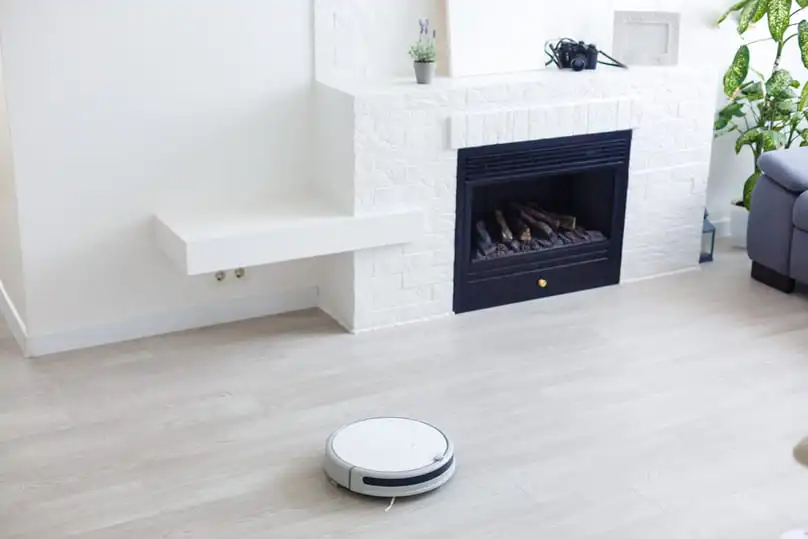
House cleaning has long been a time-consuming chore, requiring significant effort and dedication. However, the rise of AI-powered cleaning and automation is transforming home maintenance. The future of home cleaning is already taking shape through connected appliances, task-specific robots, smarter scheduling, and systems that use sensor data to adjust certain cleaning actions.
The biggest change is not a single robot that cleans an entire home. It is the growing combination of automation and human care. This guide explains what the technology can do today, where it still falls short, and how it may support house cleaning in South Florida without replacing hands-on care.
Future of Home Cleaning: Quick Overview
- Artificial Intelligence (AI) can help compatible devices interpret sensor data, recognize patterns, and adjust certain cleaning actions.
- Automation can schedule or repeat a task without necessarily using AI.
- Current cleaning robots usually handle a defined task rather than the entire home.
- Connected devices may collect maps, images, schedules, or usage data, so privacy settings and software support matter.
- The future of home cleaning will likely combine more capable automated systems with human judgment and detailed cleaning.
Important Note: Not every smart cleaning device uses Artificial Intelligence (AI), and features vary by model. Always check the manufacturer’s instructions, privacy settings, and supported functions before relying on automated cleaning.
What Is AI-Powered Cleaning?
AI cleaning uses software, sensors, and data to help compatible equipment interpret its surroundings or adjust how it performs a task. An AI house-cleaning robot may use these technologies for navigation, obstacle recognition, scheduling, or changes in suction and cleaning patterns.
Automated cleaning is a broader category. It includes robots and machines that perform scheduled or repeatable tasks such as vacuuming, mopping, or washing, but not every automated device uses AI. This distinction matters because a product can automate a cleaning task without making complex decisions or adapting to new conditions.
AI-Powered vs. Automated and Manual Cleaning
AI-powered cleaning can add data-based adjustments to a supported task. Basic automation can repeat a task on a schedule, while manual cleaning gives people direct control over the method, surface, and result.
AI cleaners thrive at repeated, large-area tasks, employing sensors and programmed patterns, but they require preparation and cannot manage stairs or sensitive areas. Their performance also depends on the floor plan, debris, lighting, connectivity, and maintenance.
Manual cleaning is more versatile for specific, hard-to-reach locations and involves human problem-solving skills. It remains important for intricate tasks, delicate surfaces, buildup, cluttered spaces, and areas that require judgment or a “human touch.”
How AI and Automation Are Changing Home Cleaning
The current shift toward AI-powered cleaning is happening in several parts of the cleaning routine at once. Some changes are visible in household devices, while others happen behind the scenes through scheduling, connected apps, and service software.
Smarter Scheduling and Coordination
Within the cleaning industry, AI-assisted software may help companies organize appointments, evaluate routes, or review past task data. These systems can support scheduling and worker deployment, but their results depend on the quality of the data, the software, and human oversight.
At home, connected apps can also coordinate schedules, room preferences, alerts, and supported cleaning routines. These features make automation easier to manage, but they do not remove the need to prepare spaces or review the results.
More Specialized Automated Equipment
AI-powered cleaning equipment in commercial cleaning includes autonomous floor scrubbers, vacuums, and Internet of Things (IoT) sensors. Depending on the system, the equipment may navigate an approved area, report usage data, or help staff identify locations that require attention.
The same broader pattern is visible in homes: automated equipment is becoming more specialized rather than universally capable. Floor care, glass cleaning, pool maintenance, and other repeatable tasks may each use different devices designed for a narrow operating area.
These tools can support repetitive work, leaving trained cleaners to focus on detailed or specialized tasks. They do not guarantee a particular percentage of labor savings, sanitation, or cleaning quality across every building.
Smart Home Coordination
Many AI-powered cleaning devices integrate with voice assistants like Alexa and Google Assistant, allowing users to control them with voice commands. Compatible apps may also let users create schedules, select rooms, review alerts, or start a device remotely.
Convenience depends on reliable connectivity, continued software support, and compatibility between the appliance and the chosen smart-home platform. Voice control and remote access do not improve the physical cleaning ability of the device by themselves.
This is one reason the future of home cleaning is likely to involve connected systems working together rather than one machine replacing every cleaning tool.
Where Cleaning Robots Fit Into the Future of Home Care
Cleaning robots are one part of this shift, but they should not be treated as the entire future of home cleaning. Most current devices specialize in a defined task and still rely on people for setup, maintenance, safety checks, and work outside their supported area.
| Technology category | Current role | Human role that remains |
| Floor-cleaning robots | Repeat accessible vacuuming or mopping | Stairs, corners, buildup, spills, and maintenance |
| Window-cleaning robots | Work on compatible glass within a defined area | Setup, retrieval, frames, tracks, edges, and heavy residue |
| Connected appliances | Adjust or schedule supported cycles | Loading, stain treatment, maintenance, and care decisions |
| Outdoor cleaning robots | Repeat work within a defined area | Safety checks, maintenance, and tasks outside device limits |
Robotic Vacuums and Mopping Systems
Robotic vacuum cleaners use algorithms and sensors to navigate around furniture, avoid some obstacles, and clean various surfaces. Newer models may include automatic dirt detection, app integration, voice commands, and self-emptying docks.
Smart mopping systems may adjust water flow, avoid mapped carpeted areas, or combine vacuuming and mopping. Their ability to handle stains, transitions, rugs, and different floor finishes varies, so users should follow the manufacturer’s surface and cleaning-solution instructions.
Homeowners comparing device types can use the broader guide to robots that clean your house to separate floor robots, window robots, pool cleaners, and other specialized equipment.
Window and Outdoor Cleaning Robots
Cleaning windows, especially when access is difficult, can be risky. Automated window cleaners use navigation, motors, cleaning pads, and attachment systems to move across compatible glass.
These devices still require safe setup, supervision, and retrieval. They may miss edges or struggle with heavy buildup, and they should never be described as a universally safe solution for high-rise or exterior windows.
Beyond indoor maintenance, robotic lawnmowers and pool cleaners can take over some repetitive outdoor tasks. They work within defined operating conditions and still need routine inspection and maintenance.
Connected Household Appliances
AI-powered dishwashers and laundry machines may use sensors to evaluate a load and select compatible cycle settings. These devices can also allow users to schedule cycles through smartphone apps.
The amount of water, detergent, energy, or time saved varies by model, cycle, load, and user behavior. Smart features should not replace garment care labels, appliance manuals, or routine cleaning of filters and internal components.
What AI Can Improve—and What It Still Cannot Replace
Routine Tasks Can Become Easier to Repeat
One of the biggest advantages of AI-powered cleaning devices is that they can reduce the time spent on suitable, repetitive chores. Instead of manually vacuuming the same accessible floor every day, users can schedule a compatible device while they focus on other tasks.
The benefit is strongest when the task is predictable and the device can complete it with little intervention. Automation becomes less useful when the home requires constant rescue, preparation, or correction.
Data Can Support More Consistent Coverage
With sensors and mapping technology, some devices can follow repeatable routes and revisit accessible rooms on a schedule. Certain models can also adjust suction or focus on an area after detecting additional debris.
This consistency is useful for maintenance, but it does not guarantee deep cleaning or complete coverage. Stairs, tight corners, upholstery, clutter, and residue attached to a surface remain common limitations.
Connected Features Add Convenience and New Responsibilities
Many AI-powered cleaning devices integrate with voice assistants and apps, allowing users to control them with simple commands. Users may be able to create room-specific schedules, no-go zones, or notifications, depending on the product.
Remote features add convenience, but they also make account security, privacy settings, and manufacturer updates part of the purchase decision.
Results Still Depend on the Home
Homes with pets often struggle with fur, dander, and tracked-in debris. Some robot vacuums include stronger suction, brush designs intended to reduce tangles, or filters suited to the model. Results still depend on the carpet, hair type, maintenance, and product specifications.
Likewise, claims about lower utility bills, cleaner indoor air, or better sanitation should not be applied to every smart appliance. Those outcomes require product-specific evidence and appropriate use.
What Makes an AI Cleaner “Smart”?
AI-powered cleaners combine sensor input with software that helps the device respond to supported conditions. Depending on the model, that may include recognizing certain obstacles, updating a map, selecting a route, or adjusting a cleaning setting.
AI-powered cleaning devices may use infrared sensors, camera-based vision, or Light Detection and Ranging (LiDAR). These tools help a device interpret part of its surroundings, but they do not give it human-level understanding of a home.
Mapping does not guarantee perfect obstacle avoidance or complete cleaning. The article about robot vacuum mapping and navigation explains these systems in more detail without turning this page into a second technical guide.
Some compatible robots also use machine learning for functions such as object recognition or pattern adjustment. Capabilities differ by product, and some features marketed as intelligent may still rely mainly on predefined rules or basic automation.
Is AI-Powered Cleaning Safe to Use?
AI-powered cleaning devices, such as robot vacuums, are typically designed for household use, but safe operation depends on the model, the environment, security settings, and user precautions. Obstacle detection may reduce some physical risks, but connected devices can also collect maps, images, schedules, or usage data.
Keep fingers, loose clothing, cords, small objects, and pet items away from moving brushes. Supervise initial runs around children and pets, inspect the floor for hazards, and follow the manufacturer’s instructions for batteries, cleaning solutions, wet components, and restricted areas.
Privacy, Accounts, and Software Support
- The National Institute of Standards and Technology (NIST) AI Risk Management Framework identifies privacy, security, reliability, transparency, and accountability as important considerations when AI systems are designed and used. For a homeowner, that means looking beyond cleaning features and reviewing what information a connected device collects and how it is managed.
- The Federal Trade Commission guidance for internet-connected home devices recommends changing default credentials, enabling two-factor authentication when available, installing firmware and app updates, and disabling remote functions that are not needed.
- Before buying, also check how long the manufacturer expects to provide software support. The FTC guidance on how long smart devices receive software updates advises consumers to consider how a product will function if those updates end, because remote features may become unavailable or less secure.
The Future of Home Cleaning and the Human Role
The way we clean our homes has evolved significantly over the years. From scrubbing floors by hand to using vacuum cleaners, technological advancements have continuously improved home maintenance.
The next stage is likely to focus less on complete automation and more on coordination. Devices may become better at recognizing obstacles, sharing supported information, adjusting schedules, and alerting users when they need care or attention.
The future of home cleaning is likely to involve more coordinated devices, better obstacle recognition, more useful maintenance alerts, and schedules that respond to household routines. However, adoption will depend on cost, reliability, repairability, privacy, software support, and whether the equipment performs well in real homes.
The future of home cleaning may also include systems that share information across compatible appliances. Those possibilities should be described as developing trends, not guarantees that every home will become fully autonomous.
Why Human Cleaning Still Matters
Robots work within narrow physical and software limits. They cannot reliably evaluate every delicate finish, move safely through stairs, organize clutter, clean most vertical surfaces, or decide how to treat unfamiliar residue. Human cleaners can inspect the conditions, select an appropriate method, and adjust when the original plan is not working.
For that reason, the future of home cleaning is more realistically a combination of automated maintenance and human care. A robot may keep an accessible floor under control between visits, while household members or professional cleaners handle kitchens, bathrooms, furniture, baseboards, buildup, and detailed work.
What a Practical Future Cleaning Routine May Look Like
A realistic future cleaning routine will probably assign different jobs to different tools rather than depend on one fully autonomous system. A floor robot might handle routine passes, connected appliances may manage supported cycles, and people can focus on the tasks that require judgment or hands-on work.
Start by assigning each device one clear job. Confirm that it is compatible with the surface, prepare the area, use a realistic schedule, and maintain the bin, brushes, pads, filters, sensors, and dock according to the manual. Review the results rather than assuming every scheduled run was complete.
If the device repeatedly misses the same areas, leave those tasks for manual cleaning instead of increasing runs without addressing the limitation. The future of home cleaning should make routines more manageable—not add unnecessary equipment, subscriptions, or maintenance.
The most useful technology will be the technology that fits the household, performs its assigned task reliably, and leaves people with less repetitive work rather than more troubleshooting.
Need help with the rooms and surfaces automated devices cannot cover? Contact Yorleny’s Cleaning Service to confirm the appropriate house-cleaning option for your South Florida home.
Frequently Asked Questions About the Future of Home Cleaning
What Is the Future of Home Cleaning?
The future of home cleaning is the gradual combination of connected appliances, task-specific robots, data-assisted schedules, and human cleaning. Automation will likely handle more repetitive maintenance, while people remain responsible for detailed work, safety decisions, maintenance, and situations outside a device’s supported conditions.
What Is AI-Powered Cleaning?
AI-powered cleaning uses sensors, software, and data processing to help compatible equipment interpret conditions or adjust parts of a cleaning task. It differs from basic automation, which may simply repeat a programmed cycle without interpreting new information.
Can an AI House-Cleaning Robot Replace Professional Cleaning Services?
Not entirely. While AI-powered cleaning robots handle some daily maintenance tasks, professional cleaning services still provide deep cleaning and specialized care that machines can’t match. Robots don’t replace people. Instead, they can take on suitable routine work while people focus on detailed or higher-value tasks.
Are AI Cleaning Devices Safe and Private?
They can be used safely when the device is appropriate for the home and the user follows its instructions. Privacy depends on the product, its sensors, account settings, data practices, and software support. Review permissions, use strong unique passwords, enable available security features, and keep the firmware and app updated.
What Household Appliances Currently Use AI?
Depending on the model, robot vacuums, vacuum-mop combinations, dishwashers, washing machines, air-quality devices, lawn mowers, and pool cleaners may use sensors or AI-assisted features. A “smart” label does not confirm that every function uses artificial intelligence, so compare the specific capabilities and documentation.
Will AI Make Traditional Cleaning Methods Obsolete?
No. The future of home cleaning may reduce the time spent on certain repetitive tasks, but manual tools and human judgment remain necessary for detailed cleaning, unusual stains, stairs, fragile surfaces, clutter, maintenance, and conditions a machine cannot interpret safely.

Reviewed by:
Tony Loeffler is the Co-Founder of Yorleny's Cleaning Service and a leader in residential cleaning services. As a content reviewer and writer, he is an expert around the cleaning services in Florida, specifically West Palm Beach County.
Recent Articles
Do Robot Vacuum Cleaners Really Work? A Practical Guide for Florida Homes
Do robot vacuums work well enough to make floor cleaning easier? They can reduce loose dust, crumbs, pet hair, and tracked-in sand,…
Top Reasons to Hire a House Cleaner: Is It Worth the Investment?
For some people, finding reasons to hire a house cleaner is hard, since hiring a cleaning service can feel like a luxury.…
How to Clean a Shower Drain: Hair, Buildup & Slow Drains
Is your shower taking longer than usual to drain? Hair, soap scum, and everyday buildup can slowly collect around the drain and…
See below to check if our top-quality house cleaning services are available in your city and book your first appointment with just a few clicks.