

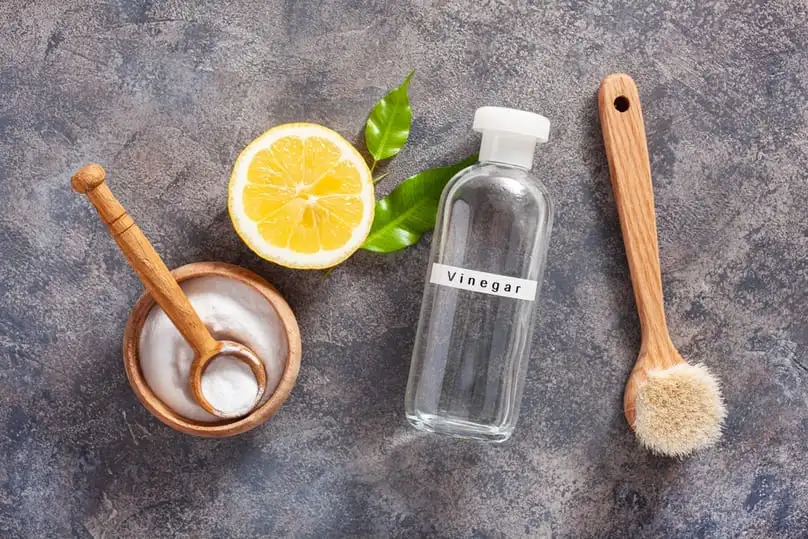
Vinegar, that sour and versatile liquid we usually keep in our pantries, is much more than just a salad dressing. Since time immemorial, it has been used as a powerful agent, which perfectly explains why vinegar is good for cleaning safely. Today, its popularity continues to grow thanks to its versatility.
These unique traits highlight the benefits of vinegar in cleaning for any household. It can be used to clean different areas of the house, in addition to its low cost and eco-friendly nature, making it a sustainable cleaning option.
At Yorleny’s Cleaning Services, we’ve previously discussed cleaning with vinegar, but if you wonder why use vinegar to clean, its incredible versatility holds the answer. In this article, we’ll explain it and tell you which type of vinegar you should use and its applications.
Why Is Vinegar Good for Cleaning?
Vinegar is an excellent cleaner because it contains acetic acid, which breaks down grease, dirt, and mineral deposits. It is a natural, non-toxic, and inexpensive solution that effectively neutralizes odors.
While it is great for daily household maintenance, it is important to note that it is not a hospital-grade disinfectant. However, you can still disinfect with white vinegar effectively for standard, everyday household messes.
The advantage of cleaning with vinegar are:
- Non-toxic: Does not produce harsh chemical fumes that hurt the lungs or skin, making it suitable for use around children and pets.
- Biodegradable: Degrades naturally without polluting water or leaving dangerous synthetic leftovers behind.
- Affordable: Much cheaper per bottle than specialized commercial cleaning sprays.
The Science: What Does Vinegar Do for Cleaning?
Vinegar is a natural product, composed primarily of acetic acid and water. Acetic acid is responsible for its sour smell and taste and is the main reason why vinegar is good for cleaning.
The Power of Acidity: Breaking Down Grime and Hard Water
There are differences between cleaning vinegar and white vinegar, which is commonly used as a food dressing. Exploring the uses for white vinegar for cleaning reveals that the main difference is their acidity level.
In food-grade vinegar, the acidity is usually between 3% and 5%, while in cleaning vinegar it is typically around 8%. Vinegar can have a pH as low as 2.2, nearly 10 times lower than that of an average soft drink.
Higher acidity means greater disinfecting power, so although white vinegar can be used for cleaning, cleaning vinegar will be more effective at tackling stains and stubborn dirt.
What Vinegar is Good for Cleaning? White vs. Apple Cider
When asking what vinegar is good for cleaning, white distilled vinegar is the apparent choice for household tasks. It is colorless, less expensive, and somewhat more acidic than apple cider vinegar.
Apple cider vinegar, on the other hand, is a dark brown liquid that can stain white garments or light surfaces if not thoroughly diluted or washed down.
It is also more expensive, so using it for heavy duty tasks is a waste of fine culinary vinegar. However, you can use apple cider vinegar for the following:
- Light Deodorizing: It has a fruitier, gentler aroma that some people like for short cleanups or to neutralize small odors.
- Bug Caching: Apple cider vinegar is used to make a trap for garden insects, particularly gnats.
Everyday Applications: What Does Vinegar Clean Best?
Vinegar is very effective at cleaning hard water mineral deposits, mold and mildew, and glass surfaces. Because of the humid climate and hard water prevalent in South Florida, it is especially excellent for descaling bathroom fixtures and combating obstinate mildew. Learning exactly why vinegar is good for cleaning helps you maximize its natural power across your entire home.
Tackling South Florida Humidity
Vinegar’s high acidity breaks down heavy limescale buildup on bathroom fixtures and flushes out gunk inside household appliances. Among its most popular applications, discovering the best uses for white vinegar for cleaning can truly transform your routine:
- Hard Water Deposits: Removes calcium and lime scale buildup from showerheads and faucets.
- Mold And Mildew: Vinegar penetrates porous surfaces, naturally killing and removing spores in humid environments.
- Glass And Windows: When mixed with water, this product cuts away filth and leaves a streak-free shine on glass and windows.
- Coffee Makers and Microwaves: Using steam, descale interior water lines and loosen baked-on food splatters.
The Myth-Busting: Is Vinegar an Antibacterial Cleaner?
Vinegar is a mild antimicrobial agent thanks to its acetic acid content, which combats some common bacteria. This property is especially useful when cleaning the kitchen, including surfaces and utensils. Highlighting the benefits of vinegar in cleaning shows its great effectiveness against daily household bacteria.
However, depending on your cleaning needs, you may need to use a stronger disinfectant, such as bleach, which is much more effective than vinegar. Therefore, bleach may be a preferable cleaning product, especially for disinfecting the bathroom.
Disinfect With White Vinegar: What It Can and Cannot Kill
White vinegar is not an official disinfectant because it cannot destroy 99.9% of germs. However, it can kill common surface bacteria such as E. coli and Salmonella while failing to kill hazardous pathogens. When you attempt to disinfect with white vinegar, remember it is an effective general cleaner but should not be used for true sanitization against severe threats.
Vinegar Cannot Kill Dangerous Bacteria. Strains include Staphylococcus aureus or MRSA, viruses including the cold, flu, stomach bugs (norovirus), and COVID-19, and difficult-to-treat bacterial spores like C. diff.
Spotless and Safe Homes in West Palm Beach
Balancing DIY Natural Cleaners with Professional Deep Cleans
Learning why vinegar is good for cleaning is perfect for handling quick, daily wipe-downs around the house. However, natural acids are not strong enough to sanitize heavy bacteria or lift set-in stains. Combining your DIY maintenance with professional cleaning ensures your home stays truly spotless.
Let Yorleny’s Cleaning Service Handle the Tough Messes
Understanding why vinegar is good for cleaning won’t help when you are exhausted from endless scrubbing. When DIY solutions reach their limits, our expert team provides the deep sanitization your house needs. We tackle the stubborn grime so you can enjoy a beautifully refreshed space.
Stop wasting your valuable weekends fighting tough messes with ineffective home remedies. For a consistently pristine home and complete peace of mind, let our expert team take over. Contact Yorleny’s Cleaning Services today to schedule your professional cleaning service!
Frequently Asked Questions About Cleaning with Vinegar
What are the main benefits of vinegar in cleaning?
The main reason why vinegar is good for cleaning is its high level of acidity. This natural acetic acid effortlessly dissolves stubborn mineral deposits, cuts through greasy grime, and neutralizes lingering odors without leaving any toxic chemical residues behind in your home.
Why is vinegar good for cleaning glass without streaks?
When wondering why vinegar is good for cleaning windows, it comes down to how it evaporates. Unlike commercial soaps that leave a sudsy film, vinegar’s acidic nature breaks down oily fingerprints and dries completely clear, leaving your glass surfaces perfectly spotless and streak-free.
Can i mix vinegar with bleach or hydrogen peroxide?
No, you should never mix these chemicals. While understanding why vinegar is good for cleaning highlights its safety, mixing it with bleach creates toxic chlorine gas. Combining it with hydrogen peroxide creates corrosive peracetic acid, which can severely irritate your skin and lungs.
What surfaces should you never clean with vinegar?
Despite knowing why vinegar is good for cleaning most areas, you must never use it on natural stone like granite or marble. The harsh acid will permanently etch the surface. Additionally, avoid using it on unsealed wood or porous grout lines to prevent damage.
How long does vinegar take to disinfect a surface?
To maximize why vinegar is good for cleaning and sanitizing, you must let it sit for at least 30 minutes. While it is not a hospital-grade disinfectant, leaving the undiluted vinegar on the surface gives the acetic acid enough time to effectively kill bacteria.

Reviewed by:
Tony Loeffler is the Co-Founder of Yorleny's Cleaning Service and a leader in residential cleaning services. As a content reviewer and writer, he is an expert around the cleaning services in Florida, specifically West Palm Beach County.
Recent Articles

How to Clean Seasonal Decorations and Holiday Decor Safely
The holiday season is the perfect time to decorate our homes with lights, ornaments, and magical touches. However, before reusing decorations that…
How to Clean Up Glitter From Floors, Carpet, and Furniture
Glitter is a frustrating holiday mess, clinging to fabrics and sticking via static electricity. Knowing how to clean up glitter quickly prevents…

How to Get Food Coloring Off Skin, Clothes, Carpet, and Counters
If you or your children are dyeing Easter eggs or getting creative with crafts, it is very likely that some of the…
See below to check if our top-quality house cleaning services are available in your city and book your first appointment with just a few clicks.