

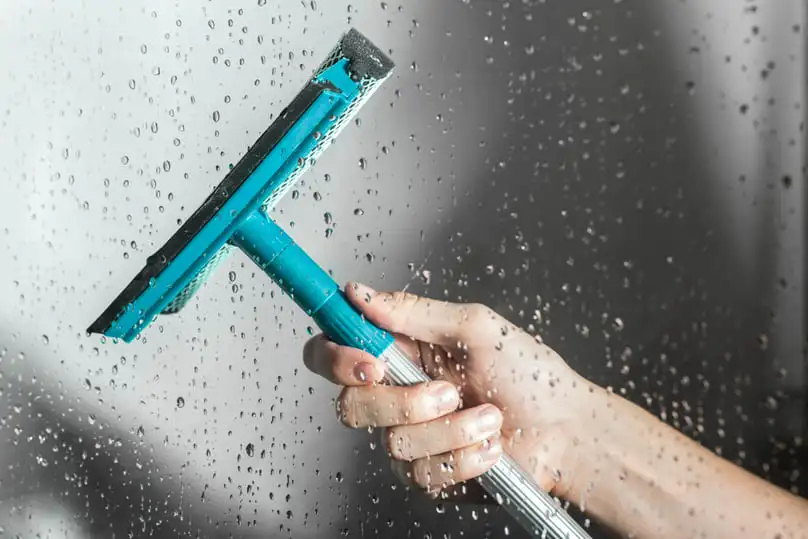
Water droplets can leave your shower glass spotted again just hours after cleaning. If they dry on the surface day after day, mineral residue becomes another job to tackle. These shower squeegee tips help you remove the water before it dries and make everyday upkeep easier.
At Yorleny’s Cleaning Services, we know that a practical routine is easier to maintain. Below, you’ll learn how to use the tool, avoid streaks, and recognize when the glass needs cleaning before another pass.
How Do You Squeegee a Shower Without Leaving Streaks?
Start with wet glass that is free of heavy buildup. Pull a clean blade from top to bottom in slightly overlapping strokes, wipe the blade between passes, and dry the edges with a microfiber cloth.
Use these five steps after showering:
- Rinse away loose soap residue while the glass is wet.
- Position the blade at the top of the panel.
- Pull downward in smooth, overlapping passes.
- Wipe the blade between strokes.
- Dry the bottom track, edges, and corners.
Important Note: A squeegee removes water; it does not scrub away established soap scum or disinfect the shower. Follow the glass manufacturer’s care instructions, especially for coated glass.
How Often Should You Squeegee Your Shower?
After each use is a practical routine for reducing droplets left on the glass, especially where hard water leaves visible spots. It complements regular cleaning rather than replacing it. DreamLine’s shower-door maintenance guidance recommends rinsing and wiping glass after use with a soft cloth or squeegee.
You can add this habit to your house cleaning checklist so it becomes part of routine bathroom care. How long it takes depends on the size and layout of the enclosure.
Choosing the Right Shower Squeegee
Selecting the best shower squeegee for glass means choosing a tool that fits your panels and is comfortable to use regularly.
When choosing, consider these features for maximum efficiency:
- Blade: Choose a flexible rubber or silicone blade with a smooth, undamaged edge. Neither material guarantees a streak-free result on its own.
- Handle: Ergonomic, non-slip handles help provide comfort and better grip during regular use.
- Size: Choose a size that matches your door dimensions for thorough cleaning with less effort. A narrower blade may fit small panels more easily.
Look for a storage hook or holder that lets the blade dry without bending. Avoid a tool whose exposed metal frame could contact the glass.
How to Prepare the Glass Before Using a Squeegee
For daily drying, rinse away loose soap residue before using the blade. If the glass feels rough or stays cloudy when dry, remove the buildup first with a cleaner approved for the glass and its coating.
Removing Hard Buildup Before Squeegeeing
Use a soft, non-abrasive cleaning tool and rinse off the product as directed. Existing mineral deposits and soap scum need a glass-cleaning method suited to the residue; pushing harder with the squeegee will not replace that step.
Step-by-Step: How to Use a Shower Squeegee Properly
Keep a clean microfiber cloth within reach. The routine below expands the five steps above and works panel by panel.
Step 1: Rinse While the Glass Is Wet
Start after showering, before droplets dry. Rinse away loose soap residue; if you have just cleaned the glass, remove the cleaner according to its label first.
Step 2: Position the Blade at the Top
Next, hold the squeegee at a slight angle against the glass. Keep the blade edge in even contact with the surface and adjust the angle if it skips.
Step 3: Pull Downward in Overlapping Passes
Then, begin at the top of the door, working your way down. Always overlap strokes slightly to ensure full coverage without leaving narrow wet strips.
For streak-free glass, use light, even pressure on the squeegee and let the flexible blade edge do the work. Pressing too hard might cause the rubber blade to bend unevenly, leaving streaks and an uneven finish.
Step 4: Wipe the Blade Between Strokes
Additionally, wipe the blade with a cloth after each stroke. Doing so maintains effectiveness and prevents residues from spreading across surfaces.
Step 5: Dry the Track and Edges
Use a microfiber cloth to absorb any remaining drops from the bottom track, frame, or corners to prevent water buildup. Finish each panel, then rinse the tool and store it where it can dry.
An Optional S-Pattern for Large Panels
On wide, unobstructed glass, an S-shaped motion is an alternative to straight passes. Keep the blade in contact with the wet surface as you turn, overlap the path slightly, and finish the edges with a cloth. Straight downward strokes are sufficient if you find them easier to control.
Preventing Hard Water Stains and Soap Scum
One helpful strategy is drying the shower doors immediately after use. Removing droplets limits the water left to evaporate on the glass, but regular cleaning is still necessary.
Follow these practical shower squeegee tips between cleanings:
- Use your squeegee after each shower to remove excess water.
- Ventilate the bathroom regularly to reduce trapped humidity and help surfaces dry.
- Rinse soap residues promptly to prevent buildup and preserve glass clarity.
Include the glass in a complete shower cleaning routine that also covers walls, fixtures, and the floor.
How to Maintain Your Shower Squeegee
Regular maintenance of your squeegee is important for consistent water removal.
To start, rinse the squeegee after each use to remove soap and debris. Allow the blade and handle to dry before storing them in an enclosed space. Proper storage also helps maintain its condition.
Here are some tips to keep your squeegee in top shape:
- Inspect for nicks or damage on the blade
- Replace the blade if it shows signs of wear
- Store it in a dry area to prevent mildew
If rinsing does not remove residue, wash the blade with mild soapy water where the tool’s care instructions permit it, then rinse. Replace a nicked, hardened, or distorted blade when cleaning it no longer restores even contact. A fixed six-to-twelve-month replacement schedule is unnecessary.
Hydrophobic Coatings & Glass Protection Tips
A water-repellent coating may make upkeep easier, but it does not make the glass maintenance-free. Use only cleaners and tools permitted for that coating. EnduroShield’s care instructions, for example, still call for regular cleaning and drying of treated shower glass.
Do not apply an automotive water repellent or a new coating without confirming compatibility with your shower glass and any existing treatment.
Moisture & Mold Prevention in Florida Bathrooms
In Florida bathrooms, drying the glass is only one part of moisture control. Use bathroom ventilation, address leaks, and spread wet towels and curtains so they can dry. A squeegee does not control room humidity or remove an existing mold problem.
The Centers for Disease Control and Prevention (CDC) recommends keeping indoor humidity no higher than 50%. A humidity meter can help you decide whether ventilation or a dehumidifier needs attention.
Can You Use a Cloth Instead of a Squeegee?
Yes. A clean, soft microfiber cloth can remove droplets from glass if that suits the manufacturer’s care instructions. The useful habit is removing excess water, rather than using one tool at all costs.
Textured glass may hide spots, but that does not stop residue from accumulating. Likewise, good ventilation and weekly cleaning do not remove droplets in the same way as wiping the glass. Choose a manageable routine and adjust it if spots or buildup return.
Common Mistakes People Make When Using a Shower Squeegee
Even with the right tool in hand, achieving a streak-free shine requires proper technique. If marks remain, check these common causes before adding more pressure or cleaner.
| Problem | Adjustment |
| Blade skips or bends excessively | Ease the pressure and adjust the angle. |
| Thin wet lines remain after each pass | Clean and inspect the blade; replace it if its edge is damaged. |
| Drops return from the edges | Dry corners, seals, and the bottom track with a cloth. |
| Glass stays cloudy after drying | Check for remaining buildup or surface damage before repeating the squeegee routine. |
| Cleaner smears across the panel | Rinse as directed before drying; check compatibility with the glass coating. |
Important note: Avoid abrasive cleaners, scouring pads, and contact between a metal tool frame and the glass.
Professional Shower Cleaning Services in Florida
While shower squeegee tips can help reduce water left on glass, some situations—like stubborn mineral deposits or hard-to-reach corners—may benefit from professional cleaning.
Yorleny’s Cleaning Services can help with accumulated bathroom grime and appropriate cleaning for your surfaces. Cleaning cannot reverse every etched mark or damaged coating.
Contact us to discuss your bathroom cleaning needs in Florida. Daily drying and periodic cleaning work together to keep the shower easier to maintain.
Shower Squeegee Tips FAQ
How to squeegee a shower?
For optimal results, follow these shower squeegee tips: start at the top of your glass or tiles, pull the squeegee downward in straight strokes, and wipe the blade with a towel after each pass. This helps prevent water spots and soap scum buildup.
Do I need to squeegee glass shower doors?
It is a useful way to remove droplets, but a soft cloth can serve the same purpose. Follow the glass manufacturer’s guidance and continue regular cleaning to remove soap residue.
How often should you squeegee your shower?
After each use is a practical starting point, particularly when hard water leaves spots. Adjust your routine to the enclosure and your care instructions; drying does not replace cleaning.
Should you squeegee after every shower?
Yes, if you want to remove droplets before they dry on the glass. It is a maintenance habit, not a guarantee against mold or mineral buildup.
What is the best squeegee for cleaning shower doors?
Choose a squeegee with a flexible rubber or silicone blade and ergonomic handle. Match the blade width to your panels and keep its edge clean and undamaged. There is no single best model for every enclosure.

Reviewed by:
Tony Loeffler is the Co-Founder of Yorleny's Cleaning Service and a leader in residential cleaning services. As a content reviewer and writer, he is an expert around the cleaning services in Florida, specifically West Palm Beach County.
Recent Articles

How to Remove Mud Stains from Clothes, Shoes, Floors, and Walls
Mud and dirt stains are among the most frustrating marks to deal with, whether they appear on your favorite jeans after a…

How to Clean Before Fall Guests Arrive: Quick Tips for Busy Hosts
Welcoming friends and family into your home for the autumn holidays can be a rewarding experience. However, figuring out exactly how to…

The Benefits of Property Management Cleaning Services for Florida Hosts
As a landlord, you run a business where tenants are customers and rental units are assets, meaning you must maintain your property…
See below to check if our top-quality house cleaning services are available in your city and book your first appointment with just a few clicks.