

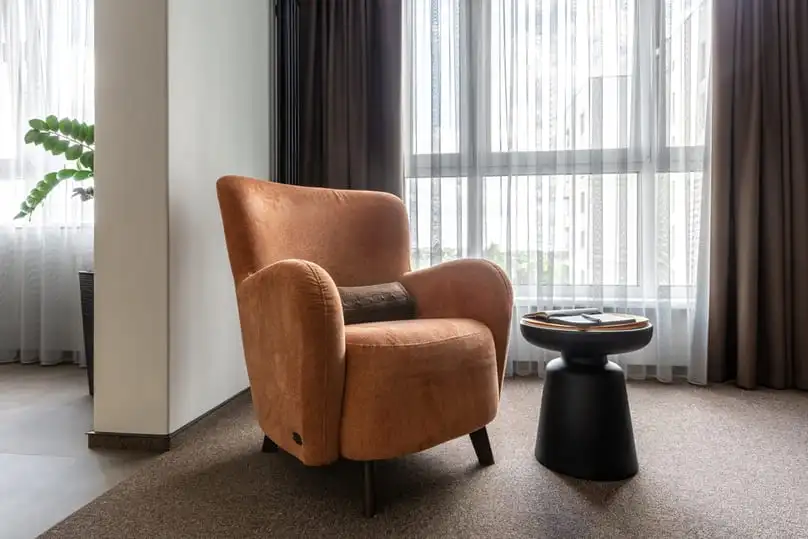
An armchair can collect dust, body oils, pet hair, and small spills long before it looks obviously dirty. Rubbing a spot or using the wrong cleaner may spread the stain, leave a ring, or affect the fabric’s texture.
Learning how to clean an armchair starts with its care label and a method that suits the material. This guide covers fabric and leather armchairs, safe spot cleaning, and routine care. If the chair is part of a wider home refresh, home deep cleaning services can help keep the surrounding spaces looking cared for, too.
What Is the Best Way to Clean Upholstered Chairs?
For most armchairs, start with the gentlest method the care label allows. These quick steps help with routine dust and small marks before you move to the detailed method below.
For most water-safe fabrics, the best way to clean upholstered chairs is to follow this reliable baseline routine:
- Vacuum with an upholstery brush.
- Spot clean stains using only a care-label-compatible cleaner.
- Blot the fabric gently, never rub.
- Allow it to air dry completely.
Important Note: Do not use water, vinegar, or a homemade mixture until you have checked the upholstery code and tested a hidden area. Some fabrics and leather finishes can be permanently affected by excess moisture or the wrong product.
Understanding Upholstery Cleaning Codes First
When cleaning upholstered furniture, the very first step should always be to check the chair’s labels meticulously.
Fabrics often include codes that indicate the safest cleaning method for that material:
- W: Suitable for cleaning with water.
- S: Requires solvent-based cleaners.
- WS: Can be cleaned with both water and solvents.
- X: Must be vacuumed only; liquids are not recommended.
If you can’t find labels or instructions, always test the product on a small, inconspicuous area to ensure it won’t damage the fabric.
Preparation Before Cleaning
Preparing the area before figuring out how to clean armchair upholstery significantly reduces the risk of accidental damage. Remove objects, vacuum up dirt and dust, and protect the living room and nearby woodwork with a dry cloth. Proper preparation makes cleaning easier and prevents residue from spreading.
Avoid adding water or cleaner until you confirm the care code. Does water ruin leather? Excess moisture can affect some leather finishes, so leather armchairs need their own method below. If the armchair has removable covers, wash them according to the instructions. Also have absorbent towels on hand to quickly remove any spilled liquids.
Identifying the Armchair’s Fabric Type
Before applying any product, check the armchair’s care label or consult the manufacturer to confirm whether the fabric is water-safe or dry-clean only. Fibers like cotton, linen, and polyester react differently to mild soap, liquid soap, or chemicals.
If you are wondering how to clean a leather armchair, these delicate materials require entirely different and highly specialized treatments. If you have any doubts, test first on an inconspicuous area with a clean cloth and wait for it to dry.
Materials and Tools Needed
Gather the following essential cleaning items:
- Vacuum cleaner with a soft-bristled upholstery attachment.
- Clean white microfiber cloths and absorbent towels.
- A cleaner that matches the armchair’s care code, plus a small container for dilution only when the label permits it.
- A soft-bristled brush only if the fabric tolerates it; avoid treating hydrogen peroxide, rubbing alcohol, vinegar, or baking soda as universal armchair cleaners.
Steps: How to Clean a Fabric Armchair
If you want to learn how to clean upholstered chairs safely and effectively, here you will find a clear step-by-step procedure. This achieves a deep clean that preserves the fibers, prevents damage, and keeps your furniture looking like new.
Step 1: Vacuum the entire armchair
Begin by patiently vacuuming the entire armchair. Don’t just vacuum the visible parts. The seams, edges, and under the cushions trap a lot of dust. If you skip this step, damp cleaning will be less effective.
Step 2: Apply a compatible cleaner sparingly
Use the cleaner allowed by the care label. For water-safe fabric, work with a barely damp cloth or foam rather than soaking the cloth; clean a hidden test area first, then use smooth, even strokes in small sections.
Step 3: Brush only when appropriate
If you use a brush, make sure it has soft bristles. The goal is to loosen dirt, not damage the fibers. On delicate fabrics, aggressive brushing can raise lint and make the area look different from the rest of the armchair.
Step 4: Remove residue and dry
Afterward, remove the residue with another clean, slightly damp cloth. This step helps ensure no soap residue remains. Finally, dry with a clean towel and allow to air dry completely.
Step 5: Support air circulation
If there’s air conditioning, a fan, or good air circulation, even better. The faster it dries, the lower the risk of odors or marks.
How to Clean a Leather Armchair Safely
To tackle how to clean a leather armchair, first remove dust with a vacuum cleaner with soft bristles or a dry microfiber cloth. Follow the manufacturer’s care instructions and use a leather cleaner only when it is compatible with that finish; do not over-wet the surface.
Steps for Safe Cleaning
When deciding exactly how to clean an armchair crafted from leather, always follow these specific guidelines:
- Dust: Use a vacuum cleaner with a soft brush attachment or a dry microfiber cloth to remove crumbs and surface dirt.
- Test the product: Apply a small amount of a compatible leather cleaner to a hidden area and let it dry before treating a visible section.
- Clean without soaking: Dampen a microfiber cloth only as directed by the product, wring it out well so it doesn’t drip, and wipe the surface gently.
- Dry promptly: Buff lightly with a clean, dry towel and allow the leather to air-dry away from direct heat.
Conditioning the Leather to Prevent Cracking
Condition leather only when the manufacturer recommends it and with a product suitable for that specific finish. West Elm’s leather-care guidance likewise recommends testing care products in an inconspicuous area before using them more broadly.
Always clean the chair first, then run a hidden spot test, use the product sparingly in circular motions, and buff dry.
Test any product or homemade mixture on a hidden area of the chair before applying it to the visible part. Excess moisture is harmful to some leather finishes, so always apply products sparingly.
Common Mistakes When Cleaning an Armchair
Small cleaning mistakes can make a spot harder to remove or affect the armchair’s finish. The table below shows what to avoid and the safer alternative for each situation.
| Common Mistake | Why It Can Cause Problems | What to Do Instead |
| Over-wetting the armchair | May leave odors, water marks, or padding damage. | Use a barely damp cloth and let the chair air-dry completely. |
| Mixing cleaning products | Can leave residue or affect the fabric. | Use one care-label-compatible product at a time. |
| Rubbing a spill immediately | Can spread the stain or distort the fibers. | Blot gently with a clean cloth instead. |
| Using harsh cleaners | May discolor upholstery or damage leather. | Check the care label and test a hidden area first. |
Protecting Upholstered Furniture in West Palm Beach
In the humid subtropical climate of West Palm Beach, upholstered furniture must be protected from moisture, mold, intense sun fading, and common spills.
Knowing exactly how to clean an armchair correctly provides an excellent baseline for long-term subtropical maintenance across your entire home.
Managing Indoor Humidity to Prevent Mildew Smells
To protect upholstered furniture in West Palm Beach’s humid subtropical climate, keep it away from moisture, mold, heavy sun fading, and spills by:
- Control Humidity: Use air conditioning or a dehumidifier as needed, and dry spills promptly. The U.S. Environmental Protection Agency’s moisture-control guidance explains why controlling indoor moisture helps prevent related household problems.
- Block UV Rays: The sun in South Florida fades a lot. Use UV-tinted glass, shades, and sheer drapes, or move furniture away from windows.
Why Routine House Cleaning Keeps Your Furniture Cleaner Longer
It’s important to vacuum your armchair weekly to remove dust and lint. Wipe up spills promptly and use a light, code-compatible cleaning method only when the fabric needs it.
For homes with pets, regular removal of loose fur can help keep it from settling into cushions and seams. Removing pet hair from a couch uses similar tools, such as lint rollers, rubber gloves, and upholstery attachments.
Regular care will extend the life of your armchair. Ultimately, understanding exactly how to clean an armchair transforms your living space into a pristine and welcoming oasis for everyone.
Beyond Your Armchair: An Immaculate Environment for Your Florida Home
Why Consistent Cleaning Prevents Damage to Your Upholstery
Knowing how to clean an armchair is only one part of keeping upholstery presentable. Dust, crumbs, and pet hair can settle back onto furniture, so vacuuming the chair and maintaining the surrounding room both support routine care.
Rely on Our West Palm Beach Cleaning Services
For broader home-cleaning needs in West Palm Beach and Palm Beach County, contact Yorleny’s Cleaning Services to discuss the most appropriate next step for your home.
Armchair Cleaning FAQs
How do you deep clean a smelly fabric chair?
First check the care label and vacuum the chair thoroughly, including seams and beneath removable cushions. If the fabric allows it, test an odor-removal product in a hidden area; persistent odors, damp padding, or pet accidents may need professional assessment rather than more product.
Can I use carpet cleaner on an upholstered chair?
Only if the chair’s care label and the cleaner’s label both allow that use. Test a hidden spot first and do not use a carpet cleaner on code “S” or “X” upholstery unless the manufacturer specifically permits it.
What is the best homemade upholstery cleaner?
There is no single homemade cleaner that is safe for every upholstery fabric. The care code and manufacturer instructions should determine whether you use water, a solvent product, or vacuuming only.
How do you clean the arms of an upholstered chair naturally?
Vacuum first, then use only the method allowed by the care label. For water-safe fabric, a barely damp cloth and a compatible cleaner can be tested in a hidden spot; avoid scrubbing or using baking-soda paste on delicate upholstery.

Reviewed by:
Tony Loeffler is the Co-Founder of Yorleny's Cleaning Service and a leader in residential cleaning services. As a content reviewer and writer, he is an expert around the cleaning services in Florida, specifically West Palm Beach County.
Recent Articles

How to Clean Seasonal Decorations and Holiday Decor Safely
The holiday season is the perfect time to decorate our homes with lights, ornaments, and magical touches. However, before reusing decorations that…
How to Clean Up Glitter From Floors, Carpet, and Furniture
Glitter is a frustrating holiday mess, clinging to fabrics and sticking via static electricity. Knowing how to clean up glitter quickly prevents…
How to Get Food Coloring Off Skin, Clothes, Carpet, and Counters
If you or your children are dyeing Easter eggs or getting creative with crafts, it is very likely that some of the…
See below to check if our top-quality house cleaning services are available in your city and book your first appointment with just a few clicks.