

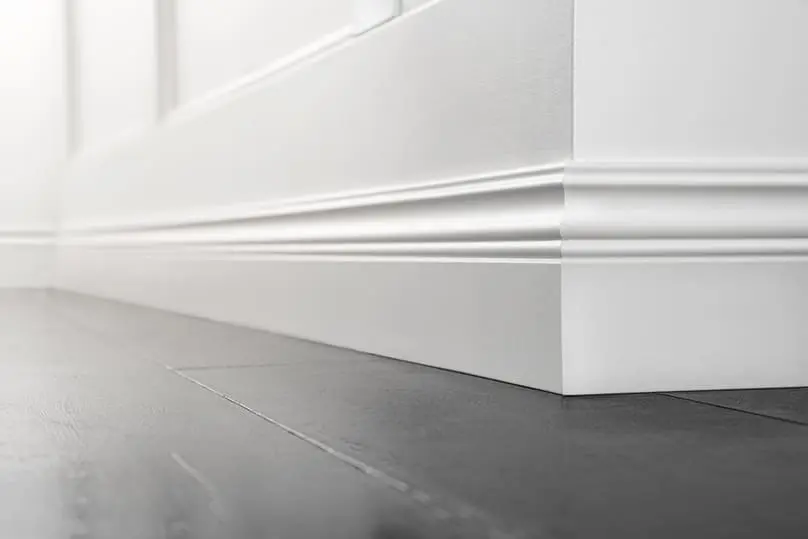
Learning how to clean baseboards starts with removing loose dust before adding moisture. Once the surface is dust-free, a damp microfiber cloth and a small amount of mild dish soap can handle most everyday grime without leaving streaks or soaking the trim.
The right method depends on whether your baseboards are painted wood, MDF, vinyl, unfinished wood, tile, or stone. This guide explains the safest process for each surface, how to remove scuff marks, and how to work without constant bending. If buildup extends beyond the trim to corners, doors, and other overlooked areas, Yorleny’s deep cleaning services can provide a more thorough reset.
How to Clean Baseboards: Quick Steps
Use this sequence for most painted or vinyl baseboards:
- Move light furniture and inspect the trim for damaged paint, moisture, or mold.
- Vacuum or dust the baseboards to remove loose dirt and pet hair.
- Protect nearby carpet or flooring with a towel.
- Test a mild cleaning solution in an inconspicuous area.
- Wipe the upper ledge and front of the baseboard in small sections.
- Treat remaining scuff marks gently, then dry the surface completely.
Dusting first is important. Adding water directly to dusty trim can turn loose particles into muddy residue and create more work.
What You Need Before You Start
Most homes do not require a specialized baseboard cleaner. Gather these basic supplies before moving around the room:
- A vacuum with a soft brush or crevice attachment
- Clean microfiber cloths
- A bucket of warm water
- A few drops of mild dish soap
- A nonabrasive sponge
- Clean towels to protect flooring and dry the trim
- Cotton swabs or a soft toothbrush for detailed corners
- A long-handled microfiber mop or duster when bending is difficult
- Gloves if you have sensitive skin or are treating greasy buildup
Before deciding how to clean baseboards, identify the material and check its condition. Peeling paint, swollen MDF, soft wood, or recurring discoloration may indicate damage that cleaning alone will not repair.
How to Clean Baseboards Step by Step
The safest way to learn how to clean baseboards is to begin with the least aggressive method and add more cleaning power only where necessary. This protects the finish while preventing dirt from being spread around the room.
1. Remove Loose Dust and Debris
Vacuum along the upper ledge, decorative grooves, wall joint, and floor edge using a soft brush attachment. Use the crevice tool for corners and narrow gaps. If you do not have a vacuum attachment, a dry microfiber cloth or soft duster can collect loose dust.
Work from one side of the room to the other so you know which sections are complete. In homes with pets, make a second pass along the floor edge because hair often gathers in corners and behind furniture.
2. Protect Floors, Carpets, and Nearby Walls
Place a clean towel along the section you plan to wash. This catches drips and keeps moisture away from carpet edges, hardwood seams, and laminate flooring. Do not spray cleaner directly onto the baseboard because overspray can reach the wall and floor.
Apply the solution to a cloth instead. It should feel damp, not saturated. This precaution is especially important for MDF and wood trim, which can swell, warp, or develop finish damage when water reaches unsealed edges.
3. Choose and Test a Gentle Cleaner
For most washable painted or vinyl baseboards, mix a few drops of mild dish soap into a bucket of warm water. Dampen a microfiber cloth, wring it thoroughly, and test the solution in a hidden corner.
Check the test area after it dries. Stop if the cloth lifts paint, changes the sheen, softens the finish, or leaves discoloration. Paint manufacturers generally recommend nonabrasive cleaners and testing first; Sherwin-Williams notes that mild soapy water is usually sufficient for water-based painted surfaces.
4. Wash in Small Sections
Start with the narrow upper ledge because it usually holds the most dust. Next, wipe the face of the baseboard and finish along the floor edge. Fold or rinse the cloth as it becomes dirty instead of moving residue to the next section.
Use light, even pressure. For grooves and corners, use a damp cotton swab or soft toothbrush without forcing water into seams. When learning how to clean baseboards, controlling moisture is more important than making the cloth wetter.
5. Treat Scuff Marks and Stubborn Spots
Try another pass with mild soapy water before using an abrasive product. For a persistent mark on a washable painted surface, apply a small amount of baking soda paste or use a damp melamine sponge with very light pressure. Test first because both methods can change the sheen or dull some paints.
Avoid aggressive scrubbing. If a dark spot remains but the surrounding paint begins to look lighter, stop cleaning. The mark may require a paint touch-up rather than additional friction.
6. Dry and Inspect the Baseboards
Wipe each cleaned section with a dry microfiber cloth. Drying prevents water spots and limits moisture around joints, flooring, and porous trim. Inspect the surface from different angles for missed grime or cleaner residue.
Return furniture only after the baseboards and nearby floor are dry. Leave a small gap between heavy furniture and the wall when possible so air can circulate and future cleaning is easier.
Best Cleaning Method for Each Baseboard Type
Materials and finishes respond differently to moisture and cleaning products. If you are unsure how to clean baseboards made from a particular material, use the surface itself, not just the color, to choose your method.
| Baseboard type | Recommended method | What to avoid |
|---|---|---|
| Painted wood | Dust first, then use a well-wrung microfiber cloth with mild soapy water | Saturating joints, harsh chemicals, and forceful scrubbing |
| MDF or fiberboard | Dry dusting followed by a nearly dry cloth when the finish is intact | Water around chips, seams, raw edges, or swollen areas |
| Unfinished or stained wood | Soft brush or dry microfiber, followed by a cleaner approved for the finish | Vinegar, excess water, and all-purpose products not labeled for wood |
| Vinyl or PVC | Warm water, mild dish soap, and a soft cloth or sponge | Rough scrubbers and strong solvents |
| Tile or natural stone | A pH-neutral product compatible with the specific material | Acidic cleaners on marble, limestone, travertine, or acid-sensitive stone |
Vinegar should not be treated as a universal option. The Natural Stone Institute warns against using it on calcareous stones such as marble, limestone, and travertine. It may also affect some stone sealers and finishes.
How to Clean Baseboards Without Damaging Paint
Fresh paint needs time to develop its expected durability, so follow the paint manufacturer’s curing and cleaning instructions. For established paint, begin with dry dusting and then test mild soapy water in a concealed spot.
Use a white microfiber cloth when possible. A white cloth makes it easier to see whether paint color is transferring. Keep your pressure gentle and avoid soaking chipped or peeling areas. Products marketed as erasers can be mildly abrasive, while baking soda can also alter the sheen if scrubbed too firmly.
If ordinary washing removes dirt but leaves the trim looking uneven, the issue may be worn or damaged paint. Additional cleaning will not restore missing finish and may make the difference more visible.
How to Clean Baseboards Without Bending Over
A long handle can reduce kneeling and back strain, particularly during routine dusting. These options work well:
- Vacuum wand: Attach a soft brush and guide it along the ledge and front surface while standing.
- Flat microfiber mop: Use a clean, lightly dampened pad for washable baseboards. Move slowly to keep the pad in contact with the trim.
- Broom-handle method: Secure a clean microfiber cloth around a flat broom head or suitable tool, making sure no hard edge can scratch the paint.
- Adjustable duster: Use it for dry weekly maintenance, corners, and trim behind light furniture.
- Reach tool: Attach a soft cloth when limited mobility makes low areas difficult to access.
Long-handled tools provide less control than cleaning by hand. Test the pressure and moisture level on a small section first, and do not use this method on peeling paint, swollen MDF, or detailed trim that requires close inspection.
How to Clean Really Dirty Baseboards
Learning how to clean baseboards with heavy buildup does not mean starting with the strongest product. Heavily soiled trim may need more than one gentle pass, so identify the type of buildup and treat only the affected area.
Kitchen Grease and Sticky Residue
Add a small amount of mild dish soap to warm water and hold the damp cloth against the greasy spot for several seconds. This helps soften the film before wiping. Repeat with a clean section of cloth, then rinse with another lightly dampened cloth and dry.
Avoid flooding the seam where the baseboard meets the floor. If the finish is damaged or the material is unfinished wood, use a product specifically approved for that surface.
Shoe Scuffs and Dark Marks
Begin with mild soapy water and a microfiber cloth. If the mark remains, test a small amount of baking soda paste or a damp melamine sponge in a hidden area. Apply minimal pressure and stop immediately if the paint loses gloss or transfers to the cloth.
Some marks penetrate the coating or reveal damaged paint beneath. In that situation, a small paint repair produces a better result than repeated scrubbing.
Mold or Mildew on Baseboards
Small spots on a hard, washable surface may be cleaned with detergent and water, followed by complete drying. The U.S. Environmental Protection Agency recommends controlling the moisture source, because cleaning without repairing a leak or humidity problem allows growth to return.
Wear appropriate protection, ventilate the room, and never mix cleaning products. Porous or swollen trim may need replacement because growth can penetrate the material. Consult a qualified mold professional when the affected area is extensive, keeps returning, follows major water damage, involves contaminated water, or creates a health concern.
How Often Should You Clean Baseboards?
The right schedule depends on pets, foot traffic, cooking activity, open windows, and household allergies. Use this practical starting point:
- Weekly or biweekly: Vacuum visible dust, hair, and cobwebs in high-traffic rooms.
- Monthly: Wipe kitchen, hallway, entryway, and pet-area baseboards as needed.
- Every two or three months: Perform a detailed whole-home cleaning.
- Immediately: Address spills, moisture, greasy splashes, and new scuff marks.
Knowing how to clean baseboards as part of your normal floor routine prevents grime from hardening. Frequent dry maintenance also means you will need less water and scrubbing during a deeper clean.
How to Keep Baseboards Clean Longer
A consistent approach to how to clean baseboards can reduce the time required for the next detailed cleaning:
- Vacuum floors and baseboard ledges regularly.
- Wipe spills and splashes before they dry.
- Use an exhaust fan while cooking to reduce airborne grease.
- Keep indoor humidity under control and correct leaks promptly.
- Leave a small space between furniture and the wall when practical.
- Add baseboards to your recurring room-by-room cleaning checklist.
- Keep one clean long-handled duster available for quick touch-ups.
Avoid applying products solely to create an anti-static coating unless the baseboard manufacturer or paint company confirms they are compatible. Residue from fabric softener, dryer sheets, oils, or polishes can attract dirt, alter paint sheen, or complicate future repainting.
Clean Baseboards Without Spending Hours Scrubbing
Once you know how to clean baseboards in the correct order, the job becomes much more manageable: remove dry debris, protect the flooring, test a mild solution, wash in sections, treat only the remaining marks, and dry the trim. Matching the cleaner to the material protects painted wood, MDF, vinyl, and stone from unnecessary damage.
Regular dusting prevents most heavy buildup. When baseboards, corners, doors, and other overlooked surfaces need a more complete reset, Yorleny’s Cleaning Service can help. Contact our team to discuss the condition of your home and the cleaning service that best matches your needs.
FAQs About Cleaning Baseboards
What Is the Fastest Way to Clean Baseboards?
The fastest way to learn how to clean baseboards is to vacuum the trim with a brush attachment and then use a lightly dampened microfiber pad on a flat mop. Dry dust removal should always come first so the wet cloth does not turn loose dust into residue. Clean detailed corners by hand when the mop cannot reach them safely.
What Is the Best Thing to Use When Cleaning Baseboards?
For most washable painted or vinyl baseboards, warm water with a few drops of mild dish soap is a practical starting point. Use a well-wrung microfiber cloth and test the solution in an inconspicuous area. Unfinished wood, MDF with exposed edges, and natural stone require material-specific care.
Can You Use Vinegar to Clean Baseboards?
It depends on the baseboard material and finish. Diluted vinegar may be compatible with some durable surfaces, but it can damage acid-sensitive stone, certain sealers, and some wood or paint finishes. Consult the manufacturer’s instructions and test first. For more alternatives and precautions, see our natural cleaning products guide.
Can You Use a Magic Eraser on Painted Baseboards?
A melamine sponge can remove some scuff marks, but it is mildly abrasive and may dull paint or change its sheen. Test it in a hidden area, use very light pressure, and stop if color transfers to the sponge. Mild soapy water should be your first method.
Do You Need to Remove Furniture First?
Move light furniture when it blocks access to the trim. Heavy pieces do not always need to leave the room, but pulling them a short distance from the wall makes vacuuming and drying easier. Do not attempt to move furniture that could cause injury or floor damage.
Can You Use a Mop to Clean Baseboards?
Yes. A clean flat microfiber mop can clean smooth, washable baseboards while you remain standing. Use minimal moisture and gentle pressure. A mop is less suitable for peeling paint, swollen MDF, intricate molding, or stains that require close inspection.
How Often Should Baseboards Be Cleaned?
Dust high-traffic areas every week or two and wipe them when visible grime appears. A detailed whole-home cleaning every two or three months works for many households, although homes with pets, open windows, or heavy foot traffic may need more frequent attention.

Reviewed by:
Tony Loeffler is the Co-Founder of Yorleny's Cleaning Service and a leader in residential cleaning services. As a content reviewer and writer, he is an expert around the cleaning services in Florida, specifically West Palm Beach County.
Recent Articles

How to Clean Before Fall Guests Arrive: Quick Tips for Busy Hosts
Welcoming friends and family into your home for the autumn holidays can be a rewarding experience. However, figuring out exactly how to…

The Benefits of Property Management Cleaning Services for Florida Hosts
As a landlord, you run a business where tenants are customers and rental units are assets, meaning you must maintain your property…
How to Clean Concrete Floors Without Damaging the Surface
Polished concrete is known for being durable, low-maintenance, and attractive. However, “low-maintenance” does not mean “no maintenance.” Knowing how to clean concrete…
See below to check if our top-quality house cleaning services are available in your city and book your first appointment with just a few clicks.