

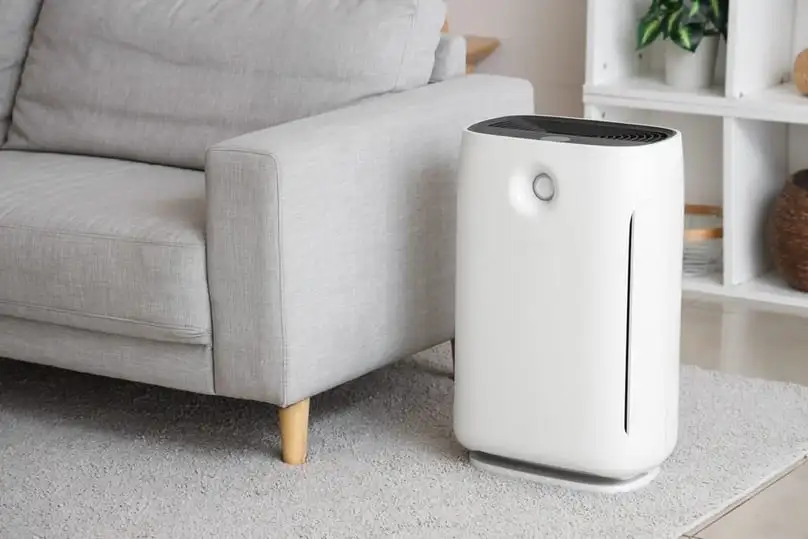
The best air purifiers for allergies can help improve indoor air quality and give you peace of mind knowing you’re breathing cleaner air at home. If pollen, dust, or pet dander keeps bothering you indoors, you may have considered buying an air purifier.
Choosing top-rated air purifiers for allergies can seem like a daunting task. There are many factors to consider when choosing, and with a market flooded with products and options, it can be overwhelming. Don’t worry: we’re here to help! Yorleny’s Cleaning Services explains which filtration features to compare and how to match a purifier to your room.
What Are the Best Air Purifiers for Allergies?
The best air purifiers for allergies combine effective particle filtration with a Clean Air Delivery Rate (CADR) suited to your room size. The Coway Airmega AP-1512HH, Levoit Core 400S-P, and Alen BreatheSmart 75i are three options to compare below, depending on your space and budget.
The essential features to compare are:
- High-efficiency particulate air (HEPA) filtration: Captures airborne particles such as pollen and pet dander. Check the filter specification for the exact model.
- High CADR: Shows how quickly a unit delivers filtered air; match it to your room size.
- A properly fitted filter: Check that the filter is installed correctly, without gaps around its edges.
- Activated carbon filter: Useful when odors are also a concern; performance depends on the amount and type of carbon. It does not replace particle filtration.
Important Note: Compare coverage at the same number of air changes per hour (ACH). The Association of Home Appliance Manufacturers (AHAM) bases its verified suggested room sizes on 4.8 ACH. A larger area advertised at one ACH is not equivalent to that same area at 4.8 ACH.
What Makes an Air Purifier Good for Allergies and Asthma?
We spend about 90% of our time indoors, and the air in our homes can be contaminated with allergens, dust, and other particles. In fact, the Environmental Protection Agency (EPA) reports that concentrations of some pollutants are often two to five times higher indoors than outdoors in the United States.
Consequently, indoor air quality significantly impacts both your comfort and health. An air purifier may help reduce exposure to airborne particles, but symptom improvement varies. Before buying an air purifier, you must consider four crucial factors that make all the difference:
Filter Type: HEPA and Activated Carbon
Filter type is critical. A HEPA filter can theoretically capture at least 99.97% of particles measuring 0.3 microns under the relevant test conditions. This is a filter specification, not a promise to remove 99.97% of allergens from your entire room.
Unlike “HEPA-type” marketing, a stated filter standard provides a clearer specification. Still, assess the complete purifier’s CADR as well as its filter. Activated carbon addresses some gases and odors; HEPA targets particles.
Room Size and Coverage
Avoid the common mistake of placing a 215-square-foot model in a 375-square-foot living room; it won’t handle the volume at its stated air-change rate. Check the CADR and manufacturer-recommended square footage, including the ACH used for that rating. Actual coverage is a key factor for noticeable results.
Noise Level and Operating Modes
Even the best air purifiers for allergies are less useful if they are too loud to keep on. Look for models with quiet night modes for bedrooms, but check the airflow at the speed you will actually use. A low noise rating and maximum CADR usually describe different operating settings.
Air Quality Sensors and Smart Features
Some air purifiers for allergies feature sensors that automatically adjust speed based on detected particles. A changing sensor reading does not identify a specific allergen or prove symptom relief. Real-time displays and app control are great bonuses, though not strictly necessary.
Best Air Purifiers for Different Rooms and Allergy Triggers
The best room air purifier for allergies depends on the size of the room and your particular trigger. The models compared below already appear in this guide; their specifications come from manufacturer documentation, not hands-on testing by Yorleny’s.
Best Bedroom Air Purifier for Allergies
The best bedroom air purifier for allergies combines effective particle filtration with a noise level you can tolerate overnight. The Coway Airmega AP-1512HH and Levoit Core 400S-P list room coverage of 361 and 358 square feet respectively at 4.8 ACH. Compare these ratings with your bedroom’s size before choosing a sleep setting.
Best Living Room Air Purifier for Allergies
The best air purifiers for allergies in living rooms combine strong particle filtration with high clean air delivery rates for large rooms. The Alen BreatheSmart 75i lists a higher CADR than the other two models below, but its advertised 1,400-square-foot coverage uses two air changes per hour. Account for the full connected space in an open-plan living room.
Best Air Purifier for Pollen
Compare pollen CADR where available, along with room size. For example, Coway lists a pollen CADR of 240 cubic feet per minute (CFM) for the AP-1512HH. Capturing airborne pollen does not guarantee immediate symptom relief.
Best Air Purifier for Pet Dander and Dust
The best air purifiers for allergies caused by pet dander and dust need effective particle filtration and sufficient airflow. A pre-filter helps collect hair, while activated carbon may help with odors. Only wash a pre-filter if the manufacturer allows it; a washable pre-filter does not mean the main filter is washable.
How to Choose the Best Air Purifier for Your Home
To choose the right one, make sure it captures airborne particles and is appropriate for the size of your room. Use the exact model number when comparing specifications and replacement filters.
Match the Air Purifier to Your Room Size
Below are manufacturer-reported specifications for three options already mentioned in this article. These are comparison candidates, not a tested ranking.
| Model and official specifications | Reported CADR | Reported room coverage |
| Coway Airmega AP-1512HH | 233 smoke / 246 dust / 240 pollen CFM | 361 sq. ft. at 4.8 ACH |
| Levoit Core 400S-P | 231 CFM; pollutant not specified in the cited specification block | 358 sq. ft. at 4.8 ACH |
| Alen BreatheSmart 75i | 375; the page does not identify the test pollutant | 1,400 sq. ft. at 2 ACH; 4.8-ACH coverage not stated on the cited page |
Specifications checked September 19, 2026. The Alen coverage figure uses a different ACH, so do not compare the three floor-area figures as equivalent ratings. The CADR entries also differ in how their manufacturers identify the test pollutant.
For a practical starting point, AHAM’s room-sizing rule calls for a smoke CADR of at least two-thirds of the room’s area in square feet. For example, a 300-square-foot room calls for at least 200 CFM. Higher ceilings than eight feet require greater capacity.
How Much Do Air Purifiers Cost?
The three models above were listed at approximately $190 to $799 on their manufacturer pages when checked on September 19, 2026; promotions and filter configurations can change the price. The initial purchase price is primarily influenced by the room size capacity, filtration technology, and smart features.
Also compare replacement-filter prices, replacement intervals, and electricity use. A lower purchase price does not necessarily mean a lower ongoing cost.
Air Purifier vs Home Cleaning: What Actually Helps Allergies?
Air purifiers and home cleaning address different parts of allergen control. The best air purifiers for allergies capture floating particles such as pollen and pet dander; however, they cannot clean settled dust, existing mold, and stuck-on stains from surfaces. They only filter pollutants that are actively floating in the air.
On the other hand, cleaning removes heavy dust and pet hair that has accumulated on flooring and furniture. The EPA explains why particles settled on surfaces cannot be removed by an air cleaner unless they become airborne again.
If your home also uses central heating, ventilation, and air conditioning (HVAC), choosing a compatible home air filter for allergies addresses filtration through that system, alongside a portable purifier in an individual room.
When Allergy Problems Need More Than an Air Purifier
Mold-Prone Areas in Humid West Palm Beach Homes
Researching the best air purifiers for allergies is a smart move, but humid West Palm Beach homes face moisture-related challenges. High moisture can encourage mold growth in damp areas. A purifier may capture airborne spores, but it cannot fix a leak or remove mold growing on a surface. The EPA’s mold and moisture guidance emphasizes correcting the moisture source and cleaning up the mold.
When Professional Deep Cleaning May Help
Even the best air purifiers for allergies cannot remove settled pet dander or dust from your carpets. When airborne particles settle onto your floors and furniture, they require physical cleaning. Professional deep cleaning can help address accumulated dust on household surfaces as part of regular home care.
House cleaning complements air filtration; it does not guarantee an allergen-free home or replace specialist mold remediation.
Need help keeping household dust under control in West Palm Beach? Contact Yorleny’s Cleaning Services today to schedule your professional cleaning service!
Air Purifier FAQs for Allergies
What Is the Best Air Purifier for Allergies?
The best air purifier for people with allergies is one with effective particle filtration, enough CADR for their room, and settings they can comfortably use. Compare the model’s specifications and upkeep rather than relying on a “best” label alone.
What Is the Best Air Purifier for Allergies and Asthma?
Look for sufficient particle filtration and room coverage. The EPA’s guidance on air cleaners notes that symptom improvements vary and advises avoiding devices that intentionally produce ozone. An air purifier does not replace prescribed asthma treatment.
Do Air Purifiers Help with Pollen?
Yes, high-efficiency filtration systems can trap wind-blown pollen that enters your home while it is airborne. They cannot remove pollen already settled on furniture or guarantee relief from seasonal symptoms.
What Size Air Purifier Do I Need for a Bedroom?
You need a unit rated for your room’s square footage and ceiling height. Multiply the bedroom’s length by its width, then compare the model’s suggested room size at the stated ACH. For example, a 12-by-15-foot bedroom is 180 square feet.
How Much Do Air Purifiers Cost?
Prices vary widely based on room coverage, smart features, and replacement filter expenses. For the three models compared here, the listed purchase prices were approximately $190–$799 at the time checked. Budget for replacement filters and electricity as well.

Reviewed by:
Tony Loeffler is the Co-Founder of Yorleny's Cleaning Service and a leader in residential cleaning services. As a content reviewer and writer, he is an expert around the cleaning services in Florida, specifically West Palm Beach County.
Recent Articles

How to Clean Before Fall Guests Arrive: Quick Tips for Busy Hosts
Welcoming friends and family into your home for the autumn holidays can be a rewarding experience. However, figuring out exactly how to…

The Benefits of Property Management Cleaning Services for Florida Hosts
As a landlord, you run a business where tenants are customers and rental units are assets, meaning you must maintain your property…
How to Clean Concrete Floors Without Damaging the Surface
Polished concrete is known for being durable, low-maintenance, and attractive. However, “low-maintenance” does not mean “no maintenance.” Knowing how to clean concrete…
See below to check if our top-quality house cleaning services are available in your city and book your first appointment with just a few clicks.