

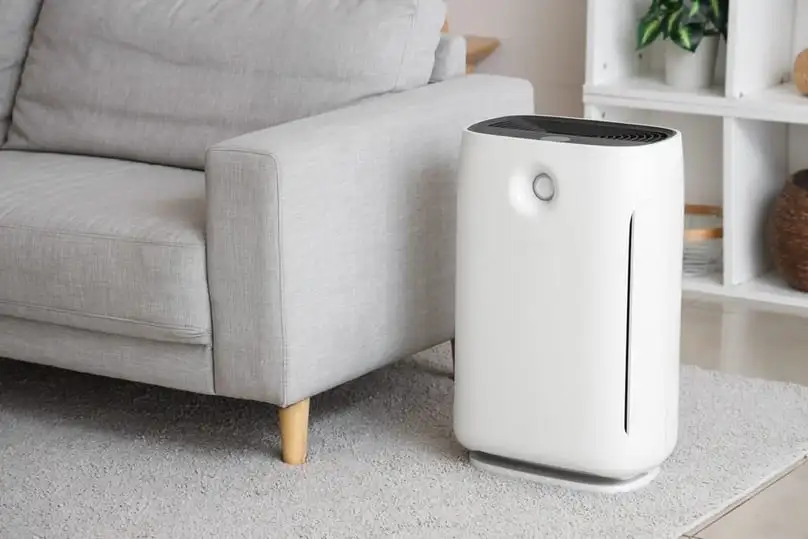
The best air purifiers for allergies help improve indoor air quality and give you peace of mind knowing you’re breathing cleaner air at home. Pollen allergies, asthma, pets, respiratory illnesses are an increasingly common reality, and their prevalence continues to rise. If this is your case, you may have considered buying an air purifier.
Choosing top rated air purifiers for allergies can seem like a daunting task. There are many factors to consider when choosing, and with a market flooded with products and options, it can be overwhelming. Don’t worry: we’re here to help! Yorleny’s Cleaning Services tells you which are the best recommended air filtration technologies.
What Are the Best Air Purifiers for Allergies?
The best air purifiers for allergies must have a True HEPA filter, a high Clean Air Delivery Rate (CADR), and a sealed system. Users on Reddit agree that targeting fine particulates requires powerful, specific features rather than basic fan units.
The essential features that the best purifier for allergies must have are:
- True HEPA Filter: Captures 99.97% of tiny airborne particles down to 0.3 microns (and often smaller), trapping pollen, dust mites, mold spores, and pet dander.
- High CADR (Clean Air Delivery Rate): Delivers fast air cleaning power matched to your room size, ensuring at least 4 to 6 complete air changes per hour.
- A Sealed Housing System: Ensures dirty air cannot leak past the filter edges back into the room.
- Activated Carbon Filter: Absorbs household odors, gases, and volatile organic compounds (VOCs) that can worsen irritated airways.
Important Note: The CDC recommends that an air purifier process room air 5 times per hour. Checking the manufacturer’s recommended room size ensures you select a machine ideal for your space.
What Makes an Air Purifier Good for Allergies and Asthma?
We spend up to 90% of our time indoors, and the air in our homes can be contaminated with allergens, dust, and other particles. In fact, studies by the Environmental Protection Agency (EPA) indicate that indoor air pollutant levels can be up to five times higher than outdoor levels.
Consequently, indoor air quality significantly impacts both your comfort and health. That is the importance of having the best air purifier for allergies and asthma. But before buying an air purifier, you must consider four crucial factors that make all the difference:
Filter Type: EPA vs. HEPA
Filter type is critical. Unlike “HEPA type” marketing, certified HEPA filters capture at least 99.95% of fine particles (PM2.5 and smaller), whereas EPA filters are less efficient. While a basic EPA filter helped me, those with allergies, asthma, or pets should always choose certified HEPA.
Room Size and Coverage
Avoid the common mistake of placing a 20m² model in a 35m² living room; it won’t handle the volume. Check the CADR and manufacturer-recommended square meters. Actual coverage is the most vital factor for noticeable results.
Noise Level and Operating Modes
Even the best air purifiers for allergies are useless if it is too loud to keep on. Look for models with quiet night modes below 25dB for bedrooms. Value a purifier that works unnoticeably in the background.
Air Quality Sensors and Smart Features
The best air purifiers for allergies feature sensors that automatically adjust speed based on detected particles, confirming effectiveness. For instance, when shaking out a hairy blanket, the indicator spiked and then decreased as it cleaned. Real-time displays and app control are great bonuses, though not strictly necessary.
Best Room Air Purifier for Allergies Need
The best room air purifier for allergies depends on the size of the room and your particular trigger. Top models include the Coway Airmega Mighty for dust and pollen, the Alen BreatheSmart 75i for large rooms, and the Levoit Core 400S for general allergies.
Best Bedroom Air Purifier for Allergies
The best bedroom air purifier for allergies combines full HEPA filtration with whisper-quiet night settings, with top models including the Levoit Core 400S, Coway Airmega AP-1512HH, and Winix 5500-2.
Best Living Room Air Purifier for Allergies
The best air purifiers for allergies in living rooms combine strong particle filtration with high clean air delivery rates (CADR) for large rooms, including top models such as the Philips Serie 600, Levoit Core 400S, and Philips PureProtect Series 3200 for large living room. These units successfully catch minuscule allergens such as pollen, dust mites, and pet dander in open environments.
Best Air Purifier for Pollen
Pollen grains are generally large (10 to 100 micrometers), therefore any high-Clean Air Delivery Rate (CADR) True HEPA filter can easily capture them; however, devices with strong multi-stage airflow provide the quickest relief. Xiaomi 4 Lite is a good option for small rooms and the Rowenta Intense Pure Air XL are good for large rooms.
Best Air Purifier for Pet Dander and Dust
The best air purifiers for allergies caused by pet dander and dust need a true HEPA filter, a washable pre-filter, and an activated carbon filter. Thus, these elements trap small particles, hair, and unpleasant odors from the air. The Xiaomi Mi Air Purifier 4 Pro and Philips PureProtect Series 3200 models come with these features.
How to Choose the Best Air Purifier for Your Home
The best air purifiers for allergies are those equipped with high-efficiency filters, with popular models like the LEVOIT Core 300S, the Xiaomi Smart Air Purifier 4 Pro, and the Philips PureProtect Series 3200 being particularly noteworthy. To choose the right one, make sure it captures microscopic allergens and is appropriate for the size of your room.
Match the Air Purifier to Your Room Size
Bello we present an air purifier comparison guide with recommended room types
| Model | Filter Type | Coverage Area | Recommended Room Type | Air Sensor | Noise Level | App Control |
| Cecotec TotalPure 1500 Connected | EPA | ~25 m² | Small Bedroom, Home Office, Nursery | No | 28–60 dB | Yes |
| Philips Serie 600 | HEPA | ~44 m² | Medium Bedroom, Standard Living Room | Yes | 20–49 dB | Yes |
| Philips PureProtect Serie 3200 | HEPA + Carbon | ~85 m² | Large Living Room, Open-Plan Space, Master Suite | Yes | 18–55 dB | Yes |
| Xiaomi 4 Lite | HEPA | ~43 m² | Medium Bedroom, Studio Apartment, Office | Yes | 33–61 dB | Yes |
| Xiaomi 4 Pro | HEPA + Carbon | ~60 m² | Large Bedroom, Medium-to-Large Living Area | Yes | 33–65 dB | Yes |
| LEVOIT Core 300S | HEPA + Carbon | ~41 m² | Bedroom, Quiet Workspace | Yes | 22–48 dB | Yes |
| Rowenta Intense Pure Air XL | HEPA + Carbon | ~120 m² | Extra-Large Living Room, Open-Plan Area, Whole Floor | Yes | 28–52 dB | Yes |
| WINIX ZERO | HEPA + PlasmaWave | ~99 m² | Large Living Area, Open-Plan Home | Yes | 26–54 dB | No |
| Dyson Hot+Cool | HEPA + Carbon | ~81 m² | Large Living Room, Master Bedroom | Yes | 30–63 dB | Yes |
How Much Do Air Purifiers Cost?
The best air purifiers for allergies, effective and portable, cost between $100 and $900, with prices ranging from $50 for modest desktop units to more than $2,600 for professionally fitted whole-house systems. The initial purchase price is primarily influenced by the room size capacity, filtration technology, and smart features.
Air Purifier vs Home Cleaning: What Actually Helps Allergies?
Air purifiers and home cleaning are both required to aid with allergies because they target distinct types of allergens. The best air purifiers for allergies capture floating particles such as pollen and pet dander, however, they cannot clean settled dust, existing mold, and stuck-on stains from surfaces. They only filter pollutants that are actively floating in the air.
On the other hand, cleaning eliminates heavy dust and pet hair that has accumulated on flooring and furniture. Air purifiers clean the air, however they cannot remove heavy dust, pet hair, or allergies from surfaces. Air purifiers, physical cleaning, and surface treatment all work together to protect your indoor air quality.
When Allergy Problems Need More Than an Air Purifier
Mold-Prone Areas in Humid West Palm Beach Homes
Researching the best air purifiers for allergies is a smart move, but humid West Palm Beach homes face unique challenges. High moisture often leads to hidden mold growth in bathrooms and vents that filters simply cannot catch. To truly eliminate these stubborn allergens, you must physically remove the source of the mold entirely.
When Professional Deep Cleaning May Help
Even the best air purifiers for allergies cannot remove deeply embedded pet dander or dust from your carpets. When airborne particles settle onto your floors and furniture, they require thorough physical extraction to stop them from recirculating. Professional deep cleaning effectively removes these hidden triggers, giving your air quality a massive boost.
Stop relying solely on machines to manage your home’s air quality and constant household dusting. For a truly healthy, allergen-free environment, let our expert cleaning team handle the deep sanitization. Contact Yorleny’s Cleaning Services today to schedule your professional cleaning service!
Air Purifier FAQs for Allergies
What Is the Best Air Purifier for Allergies?
The top choice for managing indoor allergies is a device featuring a true HEPA filter. When searching for the top rated air purifiers for allergies, ensure the model captures 99.97% of tiny airborne particles, including dust mites, pet dander, and microscopic mold spores.
What Is the Best Air Purifier for Allergies and Asthma?
Units combining a true HEPA filter with an activated carbon stage are ideal for sensitive respiratory conditions. The best air purifier for allergies and asthma removes both particulate allergens and chemical odors, significantly reducing sudden asthma triggers and respiratory irritation indoors.
Do Air Purifiers Help with Pollen?
Yes, high-efficiency filtration systems excel at trapping wind-blown pollen that enters your home. Utilizing the best air purifiers for allergies in your main living spaces prevents seasonal pollen from settling on furniture, offering immense relief during peak allergy months.
What Size Air Purifier Do I Need for a Bedroom?
You need a unit rated for your room’s exact square footage, measured by its Clean Air Delivery Rate. Finding the best air purifiers for allergies involves selecting a model that can completely circulate the bedroom air at least four to five times every single hour.
How Much Do Air Purifiers Cost?
Prices vary widely based on room coverage, smart features, and replacement filter expenses. While basic models start around $100, investing in the best purifier for allergies often requires a budget between $200 and $500 for long-term reliability and quiet operation.

Reviewed by:
Tony Loeffler is the Co-Founder of Yorleny's Cleaning Service and a leader in residential cleaning services. As a content reviewer and writer, he is an expert around the cleaning services in Florida, specifically West Palm Beach County.
Recent Articles
How to Get Rid of Green Mold and Algae on Your House Exterior
As the weather improves, it is common to notice that terraces, patios, and garden surfaces have completely changed in appearance. That discoloration…
Why Is My Shower Turning Orange? Causes and Solutions
It is never pleasant to see orange stains in a bathtub or shower. Finding them can lead to headaches and disgust, but…

How to Prepare for Maid Service: A Stress-Free Guide for Homeowners
Wondering how to prepare for maid service without feeling awkward or disorganized? Hiring a cleaning service is a great way for busy…
See below to check if our top-quality house cleaning services are available in your city and book your first appointment with just a few clicks.